Golf is a long journey. Therefore, your equipment should not feel disposable. Instead, it should evolve with you.
The best long-lasting golf clubs are not simply durable. They are adaptable. They maintain performance season after season. More importantly, they continue supporting your progress as your skills develop.
If you are tired of constant upgrades and short-term fixes, it is time to think differently. Let’s explore how to choose clubs that stand the test of time—and improve alongside your game.
What Makes the Best Long-Lasting Golf Clubs Different?
Not all clubs are built equally. Some are designed for quick appeal. Others are engineered for sustained performance.
The best long-lasting golf clubs share three core traits:
- Durable materials
- Adjustable features
- Timeless performance design
Durability prevents performance decline. Adjustability allows customization. Timeless design ensures they do not become obsolete after one product cycle.
When these factors align, your investment lasts far longer.
Durability: The Foundation of Long-Term Performance
Clubs endure thousands of impacts. Drivers face high-speed collisions. Irons repeatedly strike turf. Wedges grind through sand.
Therefore, construction quality matters.
Forged vs Cast Construction
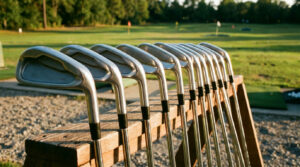
Forged irons are shaped from a single piece of metal. This process often produces softer feel and structural integrity.
Cast irons, however, are extremely durable and resist wear effectively. Many modern cast irons incorporate advanced face inserts for longevity.
Both options can qualify as best long-lasting golf clubs if built with quality materials.
Premium Face Materials
Drivers and fairway woods now feature titanium or multi-material faces designed to retain ball speed over time.
Lower-quality faces fatigue more quickly. As a result, distance declines.
Choosing premium materials ensures consistent performance across seasons.
Adjustability: Clubs That Adapt as You Improve
Your swing today may not match your swing in three years.
The best long-lasting golf clubs offer adjustability. Adjustable hosels allow loft and lie changes. Movable weights fine-tune ball flight.
For example, if your swing speed increases, you can reduce loft to optimize launch. If you struggle with a fade, weight adjustments can promote a draw bias.
Instead of replacing clubs, you refine them.
That adaptability extends lifespan significantly.
Timeless Design vs Trend-Driven Releases
Golf marketing moves fast. Each year promises revolutionary gains. However, real innovation evolves gradually.
The best long-lasting golf clubs focus on performance fundamentals rather than flashy trends.
Clean designs age better. Balanced weighting systems remain relevant. Classic shaping inspires confidence long after initial release.
Avoid clubs built solely around short-term buzz. Choose models rooted in consistent engineering principles.
Irons That Grow with Your Skill Level
Irons often remain in the bag longer than any other club category.
Game improvement irons offer forgiveness early. However, some designs allow progression. Players-distance irons, for example, blend forgiveness with workability.
These models support beginners yet remain useful as handicap decreases.
Therefore, irons with balanced forgiveness and control often become the best long-lasting golf clubs in a set.
Drivers Built for Multi-Year Performance
Drivers typically see faster replacement cycles. Yet certain features extend longevity.
Look for:
- Adjustable loft sleeves
- Interchangeable weight systems
- Durable titanium faces
- Stable, high-quality shafts
Drivers with these characteristics adapt to swing evolution.
If properly fitted, a quality driver can perform effectively for five years or more.
Wedges: Balancing Wear and Longevity
Wedges naturally wear faster due to groove usage. However, selecting high-quality materials extends lifespan.
Raw face wedges may rust slightly. Yet they maintain friction and spin consistency.
Although wedges eventually require replacement, investing in premium designs ensures predictable performance throughout their lifecycle.
Shaft Selection and Long-Term Value
Shafts influence timing, launch, and accuracy. Therefore, choosing versatile shafts enhances longevity.
Mid-weight shafts often accommodate gradual swing speed increases. Stable flex profiles maintain consistency.
Additionally, shafts can be replaced independently of clubheads. If your swing evolves, reshafting extends the life of otherwise excellent clubs.
The best long-lasting golf clubs allow this flexibility.
Professional Fitting: Maximizing Long-Term Performance
Clubs that fit properly from day one perform longer.
When loft, lie, and shaft align with your swing, wear patterns become consistent. Performance remains predictable.
Moreover, a fitting session ensures you are not buying excessive technology that may become unnecessary.
Fitted clubs evolve with minor adjustments rather than complete replacements.
Cost Per Round: A Smarter Way to Measure Value
Instead of focusing on sticker price, calculate cost per round.
If a $1,500 set lasts six years and you play 50 rounds annually, the cost drops dramatically when divided across usage.
When you frame the best long-lasting golf clubs this way, premium equipment often proves economical over time.
Additionally, quality clubs retain resale value, further reducing effective cost.
Signs You Already Own Long-Lasting Clubs
You may already have clubs that qualify.
Consider:
- Consistent ball speed
- Stable dispersion
- Minimal visible wear
- Adjustable features
- Continued confidence at address
If these traits remain strong, your clubs are serving you well.
Long-lasting equipment is not about constant upgrades. It is about sustained performance.
When It Is Time to Upgrade Anyway
Even the best long-lasting golf clubs eventually reach limits.
Technology may advance meaningfully. Shaft fatigue may appear. Groove wear may reduce spin control.
Upgrade when performance declines measurably—not simply because a new model launches.
Strategic replacement preserves value.
Psychological Stability of Reliable Equipment
There is comfort in familiarity.
When clubs feel predictable, you commit fully. You focus on execution rather than uncertainty.
The best long-lasting golf clubs create a stable foundation. That stability supports growth, confidence, and enjoyment.
Golf is challenging enough. Reliable equipment removes unnecessary doubt.
Building a Bag That Evolves with You
Think long-term when assembling your bag.
Choose irons that balance forgiveness and control. Select a driver with adjustable features. Invest in quality shafts. Replace wedges strategically.
Plan upgrades in phases rather than overhauls.
This method ensures your equipment evolves steadily instead of dramatically.
Conclusion: Invest in the Best Long-Lasting Golf Clubs for Sustainable Growth
Golf is not a sprint. It is a lifelong pursuit.
The best long-lasting golf clubs combine durability, adjustability, and timeless engineering. They support your swing today and adapt as it improves tomorrow.
Rather than chasing every release, focus on strategic investment. Choose quality materials. Get professionally fitted. Maintain your equipment carefully.
When your clubs grow with your game, performance remains steady. Confidence deepens. Enjoyment increases.
In the end, long-term value is not about owning the newest clubs. It is about owning the right ones—for years to come.
FAQs
- What makes golf clubs long-lasting?
Durable materials, adjustable features, and timeless performance design contribute to long-term value. - How long should quality golf clubs last?
High-quality clubs can perform effectively for five to eight years, depending on usage and maintenance. - Are adjustable drivers better for long-term use?
Yes, adjustable features allow loft and weight tuning as your swing evolves. - Can irons improve as my game improves?
Certain iron designs balance forgiveness and control, making them suitable for players who lower their handicap over time. - Is professional fitting important for long-lasting clubs?
Absolutely. Proper fitting ensures optimal performance and reduces the need for frequent replacements.