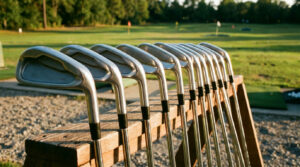
Most golfers focus on clubheads. They talk about loft, grooves, and forgiveness. However, the shaft is the engine of the club. It controls timing, launch, and stability.
Over time, even quality shafts lose performance. Materials fatigue. Flex profiles change subtly. Feel becomes inconsistent. Yet because these changes happen gradually, many players do not notice until dispersion widens or distance drops.
If your golf club shafts too old to perform, your swing may be working harder than necessary. Let’s break down the five clear signs it is time to evaluate your shafts and consider an upgrade.
Why Aging Shafts Impact Performance
Every swing loads and unloads the shaft. Steel bends. Graphite fibers compress and release. After thousands of repetitions, structural fatigue begins.
Although shafts rarely snap without warning, performance can degrade slowly. Launch angles shift. Spin rates vary. Face stability decreases.
Therefore, when golf club shafts too old to perform, distance and accuracy suffer quietly.
Understanding the warning signs protects both your scores and your confidence.
Sign 1: Increasing Shot Dispersion Without Swing Changes
If your swing feels consistent yet shots scatter more widely, the shaft may be the issue.
Shafts control how the clubhead returns to impact. When they fatigue, torsional stability declines. As a result, the face may twist slightly more at contact.
You might notice:
- Pushes that used to fly straight
- Hooks appearing unexpectedly
- Inconsistent start lines
If dispersion has widened despite stable mechanics, your golf club shafts too old to maintain proper stability.
Sign 2: Noticeable Loss of Distance
Distance loss often gets blamed on age or reduced swing speed. However, shaft fatigue can also reduce energy transfer.
A shaft that has softened over time may launch the ball higher with excess spin. Conversely, a shaft that has stiffened due to material breakdown may launch too low.
In either case, carry distance suffers.
If you compare launch monitor data and see reduced ball speed or inconsistent spin, your golf club shafts too old to perform efficiently.
Even a small drop in ball speed compounds across the bag.
Sign 3: Inconsistent Ball Flight Patterns
Ball flight should follow predictable windows. A 7-iron should launch and peak consistently.
When shafts age, flex characteristics may change. As a result, trajectory becomes unpredictable.
You may experience:
- Shots ballooning unexpectedly
- Low bullets without clear cause
- Irregular peak heights
These inconsistencies suggest the shaft is no longer responding the same way each swing.
If golf club shafts too old to hold their flex profile, control becomes unreliable.
Sign 4: Harsh or Unusual Feel at Impact
Feel provides immediate feedback.
Steel shafts that have endured years of vibration can transmit harsher sensations. Graphite shafts may lose their vibration dampening effectiveness.
If impact suddenly feels different—more brittle, more jarring, or less responsive—it may signal internal fatigue.
Although feel changes can be subtle, they influence tempo and confidence.
When golf club shafts too old to provide stable feedback, timing often suffers.
Sign 5: Visible Wear or Structural Changes
Sometimes the evidence is physical.
Inspect shafts carefully. Look for:
- Rust spots on steel
- Surface cracks in graphite
- Paint bubbling or splintering
- Small dents or bends
Even minor structural changes affect performance.
Additionally, shafts may loosen in the hosel over time. If you hear slight rattling or feel instability, have them checked immediately.
Visible wear often confirms that golf club shafts too old to perform reliably.
How Long Do Golf Club Shafts Last?
There is no universal timeline. However, patterns exist.
Steel shafts can last many years, especially with moderate play. Graphite shafts, while durable, may show fatigue sooner under heavy use.
Frequent range sessions accelerate wear. Hard range balls create more stress.
Golfers who play 40 or more rounds annually should evaluate shafts every few seasons.
Rather than counting years, monitor performance trends.
Can You Replace Shafts Without Buying New Clubs?
Yes, and often it is cost-effective.
Reshafting allows you to upgrade performance without replacing entire clubheads. If you like your irons but suspect golf club shafts too old, reshafting may restore consistency.
Professional fitting ensures new shafts match your current swing speed and tempo.
Sometimes, players discover their swing has evolved. A different weight or flex may now fit better.
Why Proper Fitting Matters When Replacing Old Shafts
Do not guess.
Launch monitor data reveals:
- Ball speed
- Launch angle
- Spin rate
- Dispersion
- Peak height
Testing different shafts highlights measurable differences.
If golf club shafts too old to maintain stability, fitting data will clearly show improvement with newer models.
Investing in fitting maximizes long-term value.
The Psychological Impact of Aging Shafts
Confidence erodes when performance feels inconsistent.
You may begin steering shots. You may overcompensate for perceived weaknesses.
Replacing outdated shafts often restores trust. When you believe the club will respond predictably, you swing more freely.
Accuracy improves not only mechanically but mentally.
Maintenance Tips to Extend Shaft Life
Although replacement becomes inevitable, proper care extends lifespan.
Avoid slamming clubs against hard surfaces. Store them in dry environments. Wipe down steel shafts to prevent rust.
For graphite shafts, inspect regularly for surface damage.
Maintenance delays deterioration but cannot prevent long-term fatigue entirely.
Conclusion: Don’t Let Golf Club Shafts Too Old Limit Your Game
Shafts are the hidden engine of every club. While clubheads attract attention, shaft performance dictates timing and stability.
If your golf club shafts too old to perform, you may notice wider dispersion, reduced distance, inconsistent flight, and altered feel.
These changes happen gradually. Therefore, regular evaluation is essential.
When you identify aging shafts early, you protect both your performance and confidence.
Test objectively. Fit professionally. Replace strategically.
Your swing deserves equipment that responds consistently. Do not let outdated shafts quietly undermine your potential.
FAQs
- How can I tell if my golf club shafts are too old?
Look for increased dispersion, reduced distance, inconsistent ball flight, unusual feel, or visible wear. - Do steel shafts wear out over time?
Yes, although durable, steel shafts can fatigue and lose stability after years of repeated stress. - Can old shafts affect accuracy?
Absolutely. Shaft fatigue can increase twisting at impact, leading to wider shot dispersion. - Is reshafting better than buying new clubs?
If the clubheads still perform well, reshafting can restore performance at a lower cost. - How often should shafts be replaced?
There is no fixed timeline, but frequent players should evaluate shafts every few seasons based on performance trends.