
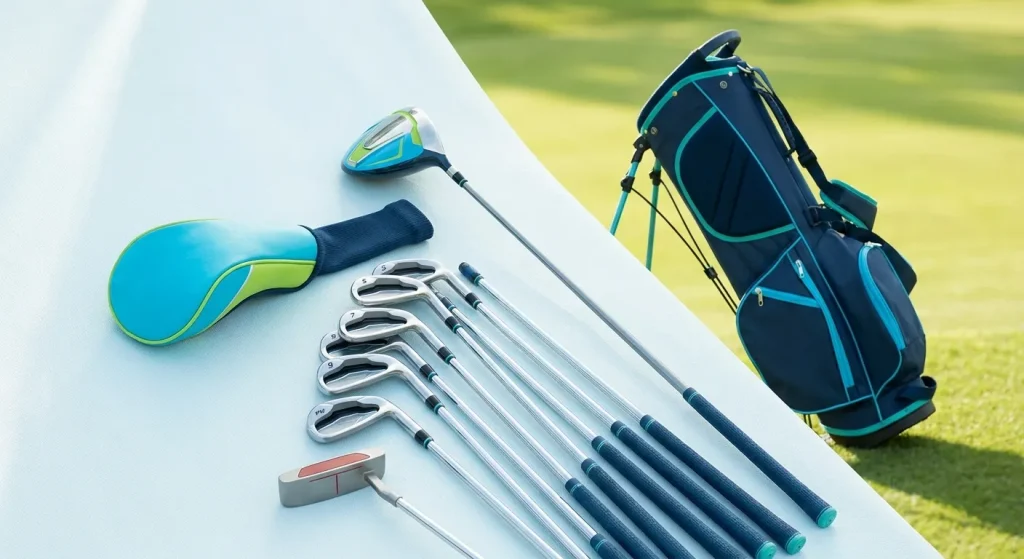
Starting golf can feel like stepping into a complex world of jargon and endless equipment choices. For new players, or those returning after a long break, the question often isn’t just ‘What clubs do I need?’ but ‘What are the essential golf clubs for beginners?’ It’s easy to get overwhelmed by the sheer number of options available, leading many to either overspend or buy clubs ill-suited for their developing game. At Best Golf Clubs, we believe in a straightforward, helpful approach to getting you started right.
This guide will demystify the initial equipment choices. We focus on the clubs that will genuinely help you learn, improve, and enjoy the game. You won’t need a full, expensive 14-club set right away. We’ll emphasize forgiveness and ease of use, ensuring your first foray onto the course is a positive one.
Do You Really Need 14 Clubs? Understanding the Essential Golf Clubs for Beginners
Golf rules allow for up to 14 clubs in your bag. However, for beginners, less is often more. Focusing on a smaller, more manageable set allows you to master the fundamentals with each club type. Then you can introduce more specialized equipment. Your goal at this stage is consistency and understanding, not having a club for every possible scenario on the course.
Driver: Power without Pressure
While the driver is iconic, many new golfers find it challenging to control. For your first set, consider a driver with a higher loft (10.5 to 12 degrees). This helps get the ball airborne more easily. Alternatively, a 3-wood or even a hybrid can serve as your primary long-game club from the tee. These offer more forgiveness and control as you develop your swing. Therefore, don’t feel pressured to bomb it 300 yards on day one; consistency is king. In fact, many experienced players prioritize accuracy over sheer distance.
Fairway Woods & Hybrids: Versatility is Key
These clubs are your versatile workhorses. A 3-wood or 5-wood can be hit from the tee or the fairway. They offer good distance with more control than a driver. Hybrids are incredibly useful for new golfers. They combine the ease of hitting an iron with the distance and trajectory of a wood. This makes them fantastic replacements for hard-to-hit long irons (like 3, 4, or 5 irons). Consequently, many beginner sets include a hybrid or two, and for good reason. They can truly simplify your long game.
Irons: The Workhorses of Your Bag
Irons are crucial for approach shots and mid-range play. For beginners, focus on ‘game-improvement’ or ‘super game-improvement’ irons. These typically feature larger clubheads, wider soles, and perimeter weighting. All these features are designed to make off-center hits fly straighter and further. You don’t need every iron from 3 to pitching wedge. A practical starting set might include a 6, 7, 8, 9 iron, and a Pitching Wedge (PW). This range covers most distances you’ll encounter as you learn. Furthermore, these specific irons are generally easier to hit than their lower-lofted counterparts.
Putter: The Scoring Club
Roughly 40% of your shots in a round of golf are putts. This makes the putter arguably the most important club. For beginners, choose a putter that feels comfortable and helps you align easily. Both blade and mallet-style putters are popular. Mallet putters often provide more stability and alignment aids, which can be beneficial for new players. The key is to find one that instills confidence on the green. Spending time practicing putting will significantly lower your scores.
Beyond the Basics: Expanding Your Collection of Beginner Golf Clubs
Once you’ve mastered the fundamentals with your core set, you might consider adding a few more clubs. This expansion should be gradual. It should also be based on your growing skill and specific needs on the course. Remember, the goal is to enhance your game, not complicate it.
Wedges: Finesse Around the Green
While a pitching wedge is included in most beginner sets, you might want to add a Sand Wedge (SW) or a Gap Wedge (GW). A sand wedge is essential for getting out of bunkers and for short shots around the green. A gap wedge, on the other hand, fills the distance gap between your pitching wedge and your sand wedge. This provides more precise control for approach shots. Many golfers find that having a dedicated sand wedge greatly improves their short game. You can learn more about Things to Consider When Looking for the Best Golf Club Sets as you progress.
More Hybrids and Fairway Woods
If you find yourself struggling with longer irons, adding another hybrid (e.g., a 4-hybrid or 5-hybrid) can be very beneficial. These clubs are much easier to hit consistently than long irons. Similarly, if you play on longer courses, a 7-wood can be a great addition. It offers a higher trajectory and more forgiveness than a 3-wood or 5-wood. For further reading, consider our guide on how to Replace Your Irons with Hybrids, for Easier Shots.
Choosing the Right Beginner Golf Clubs: Key Considerations
Selecting your first set involves more than just knowing which clubs to get. Several factors influence your choice. Paying attention to these will ensure your golf clubs for beginners truly support your learning journey.
Shaft Flex: A Crucial Detail
Shaft flex refers to how much the shaft bends during your swing. It’s a critical factor for distance and accuracy. Beginners typically benefit from more flexible shafts, such as ‘senior’ or ‘regular’ flex. These shafts help generate more clubhead speed for slower swingers. They also provide a better feel for the club during the swing. Choosing the correct shaft flex is important for consistent contact and ball flight. If you’re looking for clubs for older players, we have a resource on The Best Senior Golf Clubs.
Clubhead Design: Forgiveness is Your Friend
As mentioned earlier, ‘game-improvement’ and ‘super game-improvement’ clubheads are ideal for new players. These designs feature larger sweet spots and perimeter weighting. This means that even if you don’t hit the ball perfectly in the center, you’ll still get decent distance and accuracy. Forgiving clubs reduce frustration and make the learning process much more enjoyable. This is a primary consideration for any set of beginner golf clubs.
Budget: Quality Without Breaking the Bank
You don’t need to spend a fortune on your first set of clubs. Many reputable brands offer excellent complete sets specifically designed for beginners. These often include a driver, a few fairway woods/hybrids, a set of irons (6-PW), and a putter. Buying a complete set is usually more cost-effective than purchasing individual clubs. As your game progresses, you can always upgrade or add more specialized clubs. Remember, investment in lessons often yields greater returns than expensive equipment for new players.
Where to Find Your First Set of Golf Clubs for Beginners
There are several avenues to explore when purchasing your initial golf equipment. Each has its own advantages.
Retail Stores and Pro Shops
Visiting a golf retail store or a pro shop at a local course allows you to physically hold and swing different clubs. This can be invaluable for finding clubs that feel right. Staff can also offer advice and even provide basic fittings. A fitting ensures the club length and grip size are appropriate for your body. This personalized approach can make a significant difference in your comfort and performance with your new beginner golf clubs.
Online Retailers
Online stores often provide a wider selection and competitive prices. However, you miss the opportunity to feel the clubs in person. If buying online, make sure to read reviews and understand return policies. Many online retailers offer complete beginner sets, which can be a convenient option. Just be sure to research the specific models carefully.
Used Clubs: A Smart Option
For budget-conscious beginners, used clubs can be an excellent choice. Websites like GlobalGolf or 2nd Swing, along with local classifieds or pro shops, often have quality used equipment. Just inspect the clubs for significant damage before purchasing. Used clubs allow you to get better quality equipment for less money, which is ideal for a starting golfer. This also provides an opportunity to experiment with different types of clubs before committing to a brand-new set.
Practicing with Your Essential Golf Clubs for Beginners
Having the right clubs is only half the battle; consistent practice is key to improvement. Here’s how to make the most of your new equipment.
Range Time: Focus on Fundamentals
When you go to the driving range, don’t just hit balls aimlessly. Instead, focus on specific clubs and aspects of your swing. For example, dedicate a session to your 7-iron, working on consistent contact. Then, practice your driver, prioritizing a smooth tempo over raw power. Always remember to warm up properly before hitting balls. A structured practice routine with your essential golf clubs for beginners will accelerate your learning.
Short Game Practice: Putting and Chipping
Many beginners overlook the importance of the short game. However, a good short game can dramatically lower your scores. Spend time on the practice green with your putter and pitching wedge. Work on chipping from different distances and putting from various lengths. These skills are often easier to develop than a full swing. They also yield immediate results on the course. Consistent practice around the green is vital.
On-Course Experience: Learning as You Play
The best way to learn golf is to play golf. Start with a shorter course, or play fewer holes. Focus on enjoying the experience and applying what you’ve learned in practice. Don’t be afraid to pick up your ball if you’re holding up play. The goal is to build confidence and understand course management. Playing regularly with your essential golf clubs for beginners will help you identify areas for improvement.
Maintaining Your Beginner Golf Clubs
Proper care will extend the life of your clubs and maintain their performance. This is particularly true for your first set, which will see a lot of use.
Cleaning Your Clubs
After each round, wipe down your clubheads and grips with a damp towel. Dirt and grime can accumulate in the grooves of your irons and wedges. This impacts spin and control. Clean grips also provide better traction, preventing slippage during your swing. A simple cleaning routine keeps your essential golf clubs for beginners in top condition.
Storing Your Clubs
Always store your clubs in a dry place, away from extreme temperatures. Leaving them in a hot car trunk for extended periods can damage grips and epoxy. Using headcovers for your driver, fairway woods, and hybrids protects them from dings and scratches. Proper storage ensures your clubs are ready for your next round.
Conclusion: Embracing the Journey with Your First Golf Clubs
Embarking on your golf journey with the right equipment makes all the difference. By focusing on the essential golf clubs for beginners, you set yourself up for success and enjoyment. Remember, golf is a journey of continuous learning and improvement. Start with a forgiving, manageable set. Practice regularly, and most importantly, have fun out on the course. As your skills grow, you can gradually expand your arsenal. Best Golf Clubs is here to support you every step of the way, helping you navigate the world of golf equipment with confidence. We believe that with the right approach, anyone can enjoy this wonderful game. You can always visit our Blog for more tips and insights.
FAQ: Frequently Asked Questions About Starting Golf Clubs
What is the most important club for a beginner?
For a beginner, the putter is arguably the most important club. Approximately 40% of your shots in a round are putts. Mastering putting can significantly lower your scores and build confidence quickly.
How many clubs should a new golfer start with?
A new golfer should ideally start with 7-10 clubs. This typically includes a driver or 3-wood, a hybrid, 5-7 irons (like 6-PW), and a putter. This smaller set allows for better focus on technique without feeling overwhelmed.
Can I just buy a beginner golf set?
Yes, buying a complete beginner golf set is highly recommended. These sets are specifically designed with forgiveness in mind. They usually contain all the necessary clubs to get started at a more affordable price than buying individual clubs.
What type of irons are best for someone new to golf?
Game-improvement or super game-improvement irons are best for new golfers. These irons have larger clubheads, wider soles, and perimeter weighting. This design helps make off-center hits more forgiving and consistent.
Should a new golfer use a driver?
A new golfer can use a driver, but it’s not always the first club to master. Many beginners find more success and control starting with a 3-wood or hybrid off the tee. If using a driver, opt for one with a higher loft (10.5-12 degrees) for easier launch.