
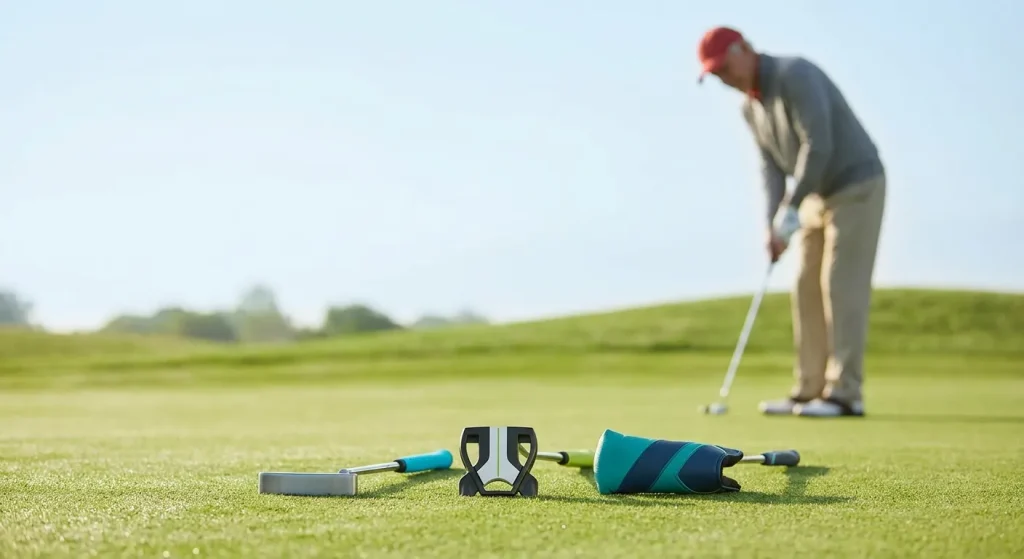
Consistency on the greens is often the fastest way to lower your scores. While practice is paramount, having a putter that complements your stroke can make a significant difference. For many golfers, finding putters for consistent putting means identifying a club that offers stability, excellent alignment features, and a feel that inspires confidence. This article will explore different putter types and recommend top choices designed to help you roll the ball more predictably, regardless of your skill level.
Understanding Putter Types and Their Impact on Consistency
Putters come in various shapes and sizes. Each is designed to suit different putting strokes and preferences. Understanding these categories is crucial for finding a stable putter that works for you.
Blade Putters
- Characteristics: Traditional, slender head, often heel-toe weighted.
- Best for: Golfers with an arc in their putting stroke. They offer a classic feel and excellent feedback.
- Consistency Factor: Requires a more precise strike, but can be very consistent for those with a natural arc.
Mallet Putters
- Characteristics: Larger, often geometric head shapes, with significant weight distributed to the perimeter.
- Best for: Golfers with a straight-back, straight-through stroke. The high MOI provides exceptional stability.
- Consistency Factor: Extremely forgiving on off-center hits, reducing distance loss and keeping the ball on line. Consequently, they often feature prominent alignment aids.
Mid-Mallet Putters
- Characteristics: A hybrid between blade and mallet, offering some of the forgiveness of a mallet with a slightly more compact feel.
- Best for: Golfers who want more stability than a blade but prefer a less bulky look than a full mallet. They can suit both slight-arc and straight strokes.
- Consistency Factor: A good balance of feel and forgiveness, appealing to a wide range of players.
Top Recommendations for Easy Alignment Putters and Stable Putters
Here are some of our favorite putters known for their ability to promote consistent putting:
Odyssey Versa Jailbird 3T Putter
The Odyssey Jailbird’s unique Versa alignment technology, featuring contrasting black and white stripes, makes it incredibly easy to square the face at address. Its mallet design offers a high MOI, ensuring great stability through the stroke, even on slight mishits. This putter is an excellent choice for golfers who struggle with alignment and seek a balanced putter that promotes a consistent roll.
Scotty Cameron Phantom X 5 Putter
While often associated with tour players, the Scotty Cameron Phantom X 5 is a mid-mallet that offers surprising forgiveness and a premium feel. Its precision-milled multi-material head provides optimal weight distribution for stability and a smooth roll. The clean alignment lines and solid feedback make it a fantastic option for golfers seeking reliable performance.
Selecting the Right Putter for Your Stroke
Choosing the right putter involves understanding your natural stroke. Do you have a straight-back, straight-through stroke, or do you have a noticeable arc? This is a fundamental question. Observing your stroke, perhaps with the help of a pro or even a simple putting mirror, can provide valuable insight. Furthermore, consider how the putter’s balance point affects your stroke. Face-balanced putters are generally better for straight strokes, while toe-hang putters suit an arcing stroke. This is a crucial distinction for finding putters for consistent putting.
Importance of Putter Length
Putter length is often overlooked, yet it significantly impacts your setup and stroke consistency. A putter that is too long or too short can force you into an uncomfortable or unnatural posture, leading to inconsistent strikes and poor alignment. Ideally, your eyes should be directly over or slightly inside the ball at address. For example, a proper length allows your arms to hang naturally, promoting a relaxed and repeatable stroke. Many golf pros recommend getting fitted for your putter length to ensure optimal performance. You can find more general advice on selecting clubs in our guide to Things to Consider When Looking for the Best Golf Club Sets.
Grip Style and Material
The putter grip is your primary connection to the club. Therefore, its size, shape, and material can all influence your feel and control. Thicker grips, for instance, can reduce wrist action, promoting a more stable stroke. Conversely, thinner grips offer more feedback and allow for greater feel. Some grips feature unique textures or ergonomic shapes designed to fit the hands more comfortably. Experimenting with different grips can help you find one that enhances your confidence and helps you make more putters for consistent putting. Additionally, a comfortable grip contributes to a relaxed setup, which is essential for a smooth stroke.
Advanced Features for Enhanced Consistency
Modern putter technology has introduced several innovations aimed at improving consistency. These features can significantly benefit golfers looking to refine their putting.
Alignment Aids
Beyond the simple lines, many putters now incorporate advanced alignment systems. These can include multiple lines, contrasting colors, or even visual cues that help frame the ball. For instance, the Odyssey Versa technology uses high-contrast black and white sections to highlight the face angle. Proper alignment is half the battle in putting, so these aids are invaluable. They help ensure your putter face is square to your target line, leading to more predictable rolls. Consequently, many players find these features incredibly helpful.
Insert Technology
The face of a putter often features an insert made from various materials like urethane, aluminum, or polymers. These inserts are designed to alter the feel and sound of impact, as well as influence the ball’s roll. Softer inserts typically provide a more muted feel and can help reduce skid, promoting an earlier, truer roll. Firmer inserts offer more feedback and a crisper sound. Finding an insert that matches your preference for feel and roll is crucial for building confidence on the greens. This is particularly important for putters for consistent putting.
Weighting Systems
Adjustable weighting systems are becoming more common in high-end putters. These systems allow golfers to customize the head weight and weight distribution, tailoring the putter to their specific stroke and feel preferences. Adding weight to the heel or toe can influence the putter’s balance and stability. This customization can be particularly beneficial for golfers who want to fine-tune their club for maximum performance. In fact, many players find that a perfectly weighted putter gives them a significant advantage.
Top Putters for Consistent Putting: More Recommendations
Beyond the initial suggestions, several other models excel in promoting a consistent stroke.
TaylorMade Spider Tour Putter
The TaylorMade Spider series has been a favorite among tour professionals and amateurs alike for years. Its high MOI (Moment of Inertia) design offers exceptional stability and forgiveness, making it one of the best putters for consistent putting. The perimeter weighting helps resist twisting on off-center strikes, ensuring the ball stays on its intended line. The Pure Roll insert provides a soft feel and promotes a forward roll, reducing skidding. Additionally, its distinctive shape and prominent alignment aid make it easy to set up square to the target.
Ping Sigma 2 Tyne 4 Putter
The Ping Sigma 2 Tyne 4 is a mid-mallet putter known for its adjustable length shaft, allowing golfers to fine-tune the putter to their exact preference. This adjustability is a significant advantage for achieving a consistent setup. The dual-durometer PEBAX face insert provides a soft, responsive feel for shorter putts and a firmer feel for longer putts, ensuring consistent distance control. Its distinctive alignment lines also help golfers maintain a square face through impact. This makes it an excellent choice for players seeking reliable performance.
Cleveland Frontline Elevado Putter
The Cleveland Frontline series strategically places the center of gravity closer to the face, which helps reduce unwanted side spin and promotes a straighter roll. The Elevado, with its winged mallet design, offers a high MOI and excellent stability. The Speed Optimized Face Technology ensures consistent ball speed across the entire face, meaning that even mishits travel a similar distance to center strikes. This technology is especially beneficial for golfers who struggle with distance control. Therefore, it is a great option for those seeking putters for consistent putting.
Practice Drills for Enhanced Putter Consistency
Even the best putter needs a consistent stroke. Incorporating specific practice drills into your routine can significantly improve your performance on the greens. Furthermore, consistent practice reinforces proper technique.
Gate Drill
Set up two tees slightly wider than your putter head, just behind the ball. Focus on swinging the putter back and through without hitting either tee. This drill helps ensure a straight-back, straight-through stroke path. Consequently, it improves your ability to deliver the putter face squarely to the ball. Many golfers find this drill invaluable for developing a smooth, consistent stroke.
Ladder Drill
Place several balls at increasing distances from the hole (e.g., 3, 5, 7, 9 feet). Try to sink each putt in succession. If you miss, start over. This drill builds confidence in your distance control and helps you learn to adjust your stroke for different lengths. As a result, your ability to judge pace improves dramatically. This is a crucial skill for putters for consistent putting.
Alignment Stick Drill
Place an alignment stick on the ground pointing directly at your target. Position your ball and putter head along this line. This drill helps train your eyes and body to consistently align the putter face to your intended target. In addition, it helps identify any tendencies to aim left or right. You can read more about improving your game in our Blog, which covers various aspects of golf.
Maintenance Tips for Your Putter
Proper care of your putter ensures its longevity and consistent performance. A well-maintained putter will always feel better in your hands.
- Keep it Clean: Regularly wipe down the putter head and face with a soft cloth. Dirt or debris on the face can affect the ball’s roll.
- Protect the Headcover: Always use a headcover when the putter is not in use. This prevents dings and scratches that can affect its appearance and performance.
- Check the Grip: Inspect your grip periodically for wear and tear. A worn grip can become slippery and reduce your control. Replace it when necessary. This is especially important for maintaining the feel of your putters for consistent putting.
By following these simple tips, you can ensure your putter remains in top condition, ready to help you sink those crucial putts. Maintaining your equipment is an often-underestimated aspect of improving your game. For instance, a clean putter face ensures optimal contact with the ball, leading to a truer roll. Furthermore, a fresh grip provides better traction and feel, allowing for more consistent control throughout your stroke. Just as you would maintain your irons, it is important to give your putter the same attention. If you are a beginner, you might also find our guide on Back to Basics With a Guide to the Best Golf Clubs for Beginners helpful for overall club care.
Conclusion
Achieving consistent putting is a combination of the right equipment and dedicated practice. Choosing from the best putters for consistent putting that matches your stroke type, offers excellent alignment, and provides a confident feel is a significant step towards lowering your scores. Whether you prefer the classic feedback of a blade, the stability of a mallet, or the balanced feel of a mid-mallet, there’s a perfect putter out there for you. Take the time to understand your stroke, experiment with different models, and commit to regular practice. With the right putter in hand and a focused approach, you’ll soon be rolling the ball more predictably and confidently on the greens. Remember, even small improvements in putting can lead to dramatic changes in your overall score. For more advice tailored to specific players, consider exploring our articles like Don’t Ever Consider Yourself Over the Hill – The Best Senior Golf Clubs are Ready and Waiting.
FAQ
What type of putter is best for a straight putting stroke?
For a straight-back, straight-through putting stroke, a face-balanced mallet putter is generally recommended. These putters have a higher Moment of Inertia (MOI), which helps keep the putter face square through impact and minimizes twisting on off-center hits. They offer excellent stability and often feature prominent alignment aids.
How important is putter length for consistent performance?
Putter length is very important for consistent performance. An incorrect length can force you into an unnatural posture, affecting your eye position over the ball and your ability to make a repeatable stroke. Ideally, your eyes should be directly over or slightly inside the ball, and your arms should hang naturally. Getting fitted for the correct length can significantly improve your consistency.
Can a different putter grip improve my putting?
Yes, a different putter grip can definitely improve your putting. Thicker grips can help reduce wrist movement, promoting a more stable stroke, while thinner grips offer more feedback. The material and shape also play a role in feel and control. Experimenting with various grips can help you find one that enhances your confidence and connection to the club.
What are the benefits of a putter with an insert?
Putters with face inserts are designed to modify the feel, sound, and roll of the ball off the putter face. Softer inserts can provide a more muted feel and promote an earlier, truer roll by reducing skid. Firmer inserts offer more feedback and a crisper sound. The right insert can enhance your distance control and overall confidence.
How can I practice to become a more consistent putter?
Consistent putting comes from practice. Drills like the Gate Drill (using tees to ensure a straight path) and the Ladder Drill (putting from increasing distances) are highly effective. Using an alignment stick to verify your setup and target line also helps. Regular practice with these drills will build muscle memory and improve your overall putting consistency.