
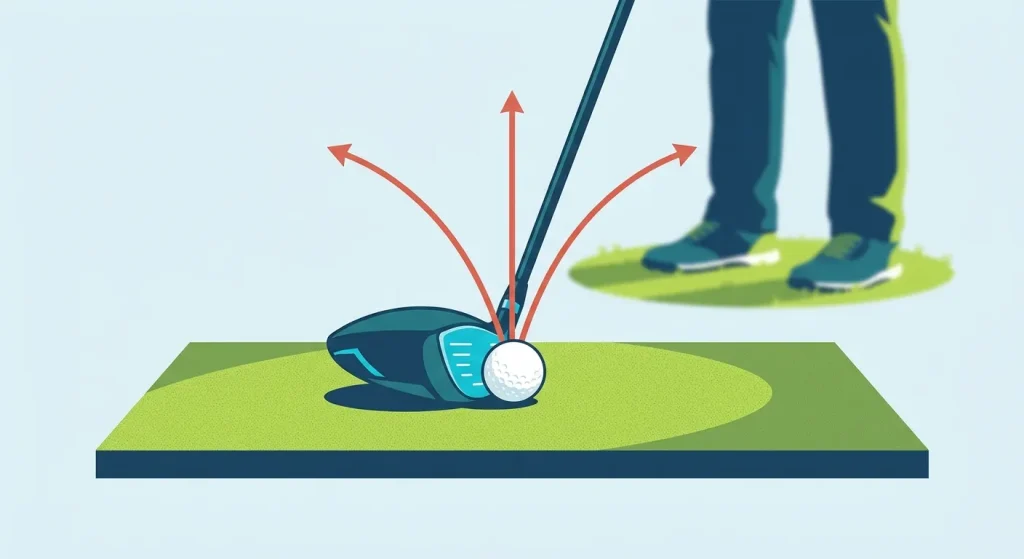
Many golfers focus on swing mechanics and clubhead speed, but often overlook a crucial aspect of equipment fitting: golf club lie angle. This seemingly minor detail can significantly impact ball flight, accuracy, and consistency, especially with irons. Understanding your golf club lie angle is essential for golfers of all skill levels, from beginners struggling with consistency to experienced players aiming for precision. An incorrect lie angle can lead to frustrating shots that veer off target, even with a perfect swing. This article will demystify lie angle and explain why it matters to your game.
What is Golf Club Lie Angle?
Simply put, the golf club lie angle is the angle between the shaft of the club and the sole (bottom) of the clubhead when it’s resting on the ground in its natural playing position. When you address the ball, if the toe of the club is pointing up, the club is too upright for you. If the heel is pointing up, the club is too flat. Ideally, the entire sole of the club should sit perfectly flush with the ground at impact. This ensures that the club face is square to your target line, allowing for optimal energy transfer and a straight ball flight. Even a slight deviation can have a noticeable effect on where your ball ends up.
How Lie Angle Affects Ball Flight
An incorrect lie angle can cause several common shot errors. If your club’s lie angle is too upright, the toe of the club will point upwards at impact. This causes the clubface to point slightly left (for a right-handed golfer), leading to pulls or hooks. Conversely, if the lie angle is too flat, the heel will point upwards, causing the clubface to point slightly right, resulting in pushes or slices. These effects are more pronounced with longer irons and wedges, where precision is paramount. A properly fitted lie angle ensures the clubface is delivered square to the target, allowing the ball to start on the intended line and fly true. This is why professional club fitting often includes a dynamic lie board test to observe how the club interacts with the ground during your swing.
Don’t underestimate the impact of your golf club lie angle on your game. A small adjustment can lead to a significant improvement in accuracy and consistency. By understanding this critical fitting parameter, you can take steps to ensure your clubs are perfectly matched to your swing, helping you hit straighter, more predictable shots.