
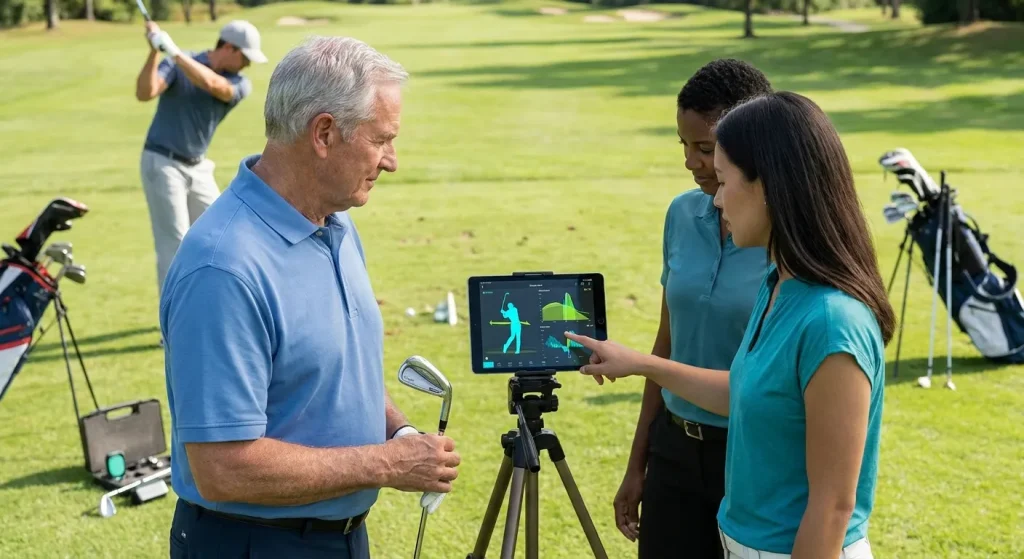
Improving your golf swing can feel like a complex puzzle. However, thanks to advancements in technology, understanding and refining your mechanics is more accessible than ever. For beginners looking to establish good habits, or seniors aiming to maintain consistency, modern golf swing analysis tools offer unprecedented insights. The industry is seeing a dynamic period of innovation, with AI-powered solutions transforming how golfers train and analyze performance. These advancements truly help players of all skill levels.
The Rise of Accessible Golf Tech
Sophisticated swing analysis was once reserved for professional tours. Now, however, the integration of technology into golf equipment and training aids means powerful feedback is available right on your phone or wrist. From smart clubs with embedded sensors to wearable technology, the focus is on providing real-time, actionable data. The global golf equipment market’s growth, projected to reach USD 13.1 billion by 2033, underscores this trend of technological adoption. Notably, North America is leading the charge.
How AI-Powered Analysis Transforms Your Swing
AI-powered swing analysis stands at the forefront of this technological revolution. Systems utilizing high-speed cameras, motion sensors, and machine learning algorithms provide real-time feedback on critical metrics. For example, they measure swing speed, club angle, grip pressure, and body alignment. This isn’t just about numbers; it’s about understanding the ‘why’ behind your shots. These devices can even compare your technique to professional models. Consequently, they offer specific, scientific accuracy to help you fine-tune mechanics. For a beginner, this means building a solid foundation from day one. Alternatively, for an experienced golfer, it means identifying subtle inefficiencies that have long gone unnoticed.
Beyond the Swing: Smart Equipment for Every Golfer
It’s not just dedicated analysis tools that are smart. Clubs, balls, and grips are increasingly featuring embedded sensors. Smart golf balls, for instance, use RFID, Bluetooth, GPS, and in-built sensors to track spin, speed, and trajectory. This provides a comprehensive understanding of your ball flight. They can even help locate lost balls, a benefit any golfer can appreciate! Wearable technology, like GPS-enabled smartwatches, extends beyond yardage to monitor swing speed, heart rate, hydration, and muscle fatigue. This offers a holistic view of your performance and physical state on the course. Ultimately, this integrated data empowers you to make smarter decisions during your round and tailor your practice sessions more effectively.
Making Tech Work for You: Practical Tips
To get the most out of your golf swing analysis tools, start simple. You don’t need every gadget on the market. A basic launch monitor or a wearable device that tracks swing speed can provide immense value. Focus on one or two key metrics at a time. For example, if you’re struggling with slices, concentrate on club face angle at impact. Record your sessions, too. Reviewing your swings later can reveal patterns you might miss in real time. Remember, consistency in practice is key, and these tools are designed to guide that consistency.
Choosing the Right Swing Analyzer for Your Needs
Selecting the ideal swing analyzer depends on your budget, skill level, and specific goals. Beginners might benefit from simpler devices focusing on fundamental mechanics. These often provide visual feedback on posture and basic club path. Conversely, more advanced players might seek devices offering detailed data on clubhead speed, launch angle, and spin rate. Consider also where you’ll be using the tool. Some are better suited for indoor simulators, while others excel on the driving range or even the course. Many modern golf swing analysis tools now integrate seamlessly with smartphone apps, making data review and sharing incredibly convenient.
Understanding Key Metrics from Your Swing Data
When you use a swing analyzer, you’ll encounter various metrics. Understanding these is crucial for improvement. Clubhead speed, for instance, directly impacts distance. Ball speed, similarly, shows how efficiently energy transfers to the ball. Launch angle and spin rate are vital for optimizing trajectory and carry. Furthermore, path and face angle at impact reveal why your ball might hook or slice. Many systems also provide tempo ratios, indicating the balance between your backswing and downswing. Learning to interpret these numbers will help you pinpoint areas for improvement and guide your practice sessions effectively. For those just starting, a look at A Guide to the Best Golf Clubs for Beginners can provide foundational knowledge.
The Role of AI in Personalized Coaching
AI-powered swing analysis extends beyond raw data. Many advanced systems now offer personalized coaching insights. They analyze your swing data against a vast database of professional swings, identifying deviations and suggesting specific drills. This virtual coaching can be invaluable, particularly for golfers without regular access to a professional instructor. The AI can adapt its recommendations as your swing evolves, providing a dynamic and tailored learning experience. This level of personalized feedback was once unimaginable for the average golfer, making these advanced golf swing analysis tools truly revolutionary.
Top Golf Swing Analysis Tools on the Market
The market offers a diverse range of swing analysis devices. Here are some popular categories and examples:
- Launch Monitors: Devices like the TrackMan or Foresight Sports GCQuad provide incredibly detailed data on ball flight and club delivery. While professional-grade, more affordable options such as the Garmin Approach R10 or FlightScope Mevo+ offer excellent value for recreational golfers, providing insights into club speed, ball speed, launch angle, and spin.
- Wearable Sensors: Products like the Blast Motion Golf sensor attach to your club and measure tempo, speed, and plane. These are often compact and easy to use, providing immediate feedback directly to your smartphone.
- Full-Body Motion Capture Systems: More advanced and often used by instructors, systems like K-VEST use sensors on the body to track 3D movement throughout the swing, offering a comprehensive biomechanical analysis.
- Smart Grips: Devices such as the Arccos Caddie Smart Grips not only track every shot on the course but also collect swing data, providing insights into club performance and on-course tendencies.
When considering your options, research reviews and watch demonstration videos. This will help you understand which device best aligns with your learning style and specific needs. Remember, the best tool is one you will consistently use.
Integrating Technology into Your Practice Routine
Incorporating golf swing analysis tools into your regular practice routine is crucial for maximizing their benefits. Start by establishing a baseline. Take several swings with your chosen tool to understand your current tendencies. Then, identify one or two areas for improvement based on the data. For example, if your club path is consistently out-to-in, focus on drills that encourage an in-to-out path. Practice with the tool, making small adjustments, and observe how the data changes. This iterative process of practice, analysis, and adjustment will lead to significant improvements over time. Furthermore, don’t forget to review your progress periodically to see how far you’ve come. For those interested in optimizing their equipment, consider reading Things to Consider When Looking for the Best Golf Club Sets.
Advanced Features: Video Analysis and Overlay
Many modern golf swing analysis tools offer integrated video recording and analysis capabilities. This feature allows you to capture your swing from different angles and then overlay professional swing models or previous recordings directly onto your own video. Visual feedback is incredibly powerful. Seeing exactly where your club path deviates or where your body position is incorrect can make abstract data points much clearer. Some systems even provide drawing tools to highlight specific angles or planes. This visual learning component significantly accelerates the improvement process, helping golfers of all levels understand and correct their movements more effectively.
Benefits for Different Golfer Segments
The advantages of using swing analysis extend across all golfer segments. For beginners, these tools provide immediate feedback, helping to ingrain good habits from the start and prevent the development of detrimental swing flaws. Senior golfers, who might be looking to maintain consistency or adapt their swing due to physical changes, can use these tools to monitor their mechanics and ensure efficient movement. Similarly, for experienced players, advanced golf swing analysis tools can pinpoint subtle inefficiencies that might be costing them strokes, allowing for targeted refinement. Even junior golfers can benefit, developing a data-driven understanding of their swing early on. Everyone can gain from this technology.
The Future of Golf Swing Analysis
The field of golf technology continues to evolve rapidly. We can anticipate even more sophisticated and integrated golf swing analysis tools in the coming years. Imagine AI systems that not only analyze your swing but also predict potential injuries based on biomechanical stress points, offering preventative exercises. Furthermore, augmented reality (AR) and virtual reality (VR) are likely to play a larger role, offering immersive training environments where golfers can practice in virtual courses with real-time feedback. The integration of data from multiple sources – such as smart clubs, wearables, and even smart golf courses – will create a truly holistic picture of a golfer’s performance. This continuous innovation promises an even brighter future for golfers striving to master their game. For more insights on improving your game, visit the Best Golf Clubs Blog.
Conclusion
Modern golf swing analysis tools have democratized access to sophisticated performance data, enabling golfers of all abilities to understand and improve their mechanics. From accessible launch monitors to AI-powered coaching systems, these technologies provide invaluable insights into every aspect of your swing. By embracing these tools, understanding the key metrics, and integrating them effectively into your practice routine, you can achieve a more consistent, powerful, and enjoyable golf game. The path to mastering your swing is now clearer and more data-driven than ever before. We encourage every golfer to explore these innovative solutions and experience the difference they can make. You can also learn more about specific equipment, such as The Best Senior Golf Clubs, on our website.
For further reading and insights into golf technology, you may want to consult resources like Golf.com or PGATour.com for expert articles and reviews.
Frequently Asked Questions About Swing Analysis
What are the primary benefits of using a golf swing analyzer?
Using a golf swing analyzer offers several benefits, including real-time feedback on your mechanics, identification of swing flaws, and tracking progress over time. It helps you understand the ‘why’ behind your shots and provides data-driven insights for targeted practice.
How do AI-powered swing analyzers differ from traditional ones?
AI-powered swing analyzers utilize machine learning algorithms to not only collect data but also interpret it. They can compare your swing to professional models, offer personalized coaching suggestions, and adapt feedback as your game evolves, providing a more intelligent and tailored experience.
Are these swing tracking devices suitable for beginners?
Absolutely. Swing tracking devices are excellent for beginners. They help establish good habits from the start, provide immediate feedback on fundamental mechanics, and prevent the development of common swing flaws. Simpler, more affordable options are ideal for those just starting.
What key metrics should I focus on with my swing analysis equipment?
Key metrics to focus on include clubhead speed, ball speed, launch angle, spin rate, club path, and face angle at impact. Understanding these helps you diagnose issues like slices or hooks and optimize your ball flight for greater distance and accuracy.
Can these swing improvement tools help me with on-course performance?
Yes, indirectly. By improving your swing mechanics through practice with these tools, you’ll build greater consistency and control. This translates to better shots and more confident play on the course. Some wearable devices also offer on-course tracking for a holistic view of your game.