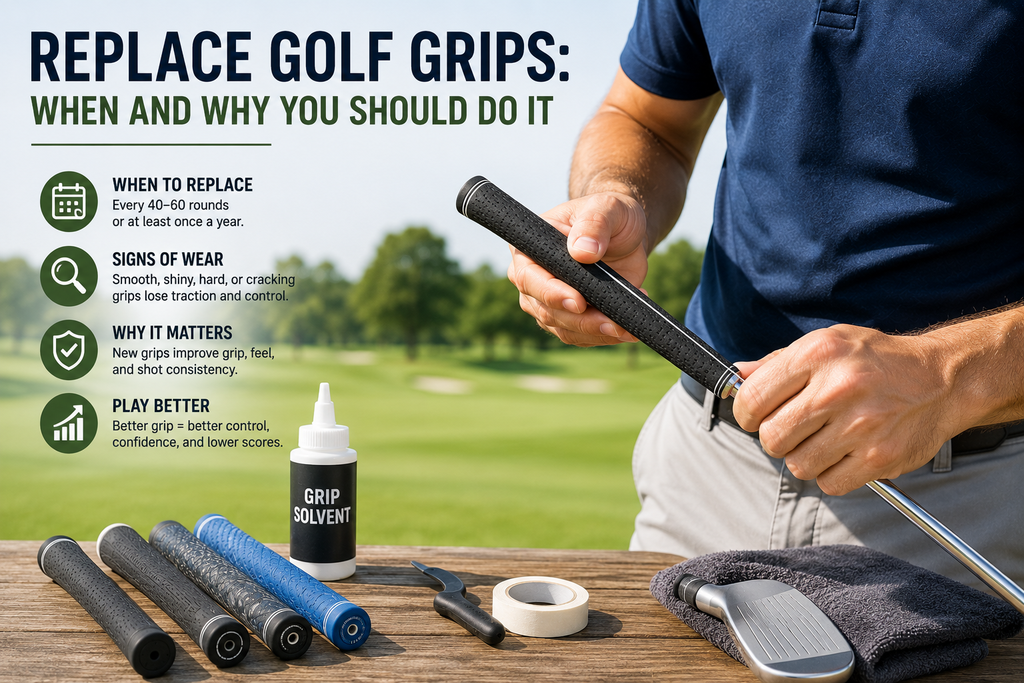
Knowing when to replace golf grips is an important part of golf club maintenance. Grips slowly lose their original texture because of repeated use, sweat, dirt, sunscreen, heat, and natural oils from your hands. Because the change happens gradually, many golfers do not notice how worn their grips have become. They simply begin holding the club more tightly to compensate. That added tension can affect comfort and make a free-flowing swing harder to produce. Fortunately, checking your grips only takes a few minutes. By recognizing the signs of wear and understanding how playing frequency affects grip life, you can replace them before they become a problem.
Why Golf Grip Condition Matters
Your grip is the only part of the golf club that remains in direct contact with your hands during the swing. Therefore, its condition deserves more attention than many golfers give it.
A grip should provide enough traction that you can hold the club securely without excessive pressure.
As the material becomes smooth or hard, maintaining the same control may require a tighter hold. That can create tension in your hands and forearms.
Grip condition also affects consistency. If several clubs have fresh grips while others feel slick, your grip pressure may change throughout the bag.
Weather makes the issue more noticeable. A slightly worn grip might feel manageable in dry conditions but become difficult to control when your hands are sweaty or the weather turns humid.
Knowing when to replace golf grips helps maintain a more consistent connection between your hands and equipment.
How Long Do Golf Grips Usually Last?
There is no universal lifespan for every grip.
Playing frequency has a major influence. Someone who plays and practices several times each week will wear grips faster than a golfer who plays once or twice per month.
Practice sessions count too. Hitting hundreds of range balls can place substantial wear on the grips, even if you do not play many full rounds.
Climate also matters. Heat, sunlight, humidity, and repeated exposure to moisture can affect grip materials.
How you store your clubs makes a difference as well. Leaving equipment in extremely hot environments for extended periods may accelerate deterioration.
Because these factors vary, a calendar alone should not determine when you replace golf grips.
Instead, combine time with physical inspection and feel. If a grip has lost traction, become damaged, or no longer feels secure, its actual condition matters more than its age.
Look for Smooth or Shiny Areas
One of the easiest signs of wear is a smooth, polished appearance.
Examine the areas where your hands normally contact the grip. These sections experience the most friction and often wear before the rest.
A new grip generally has noticeable surface texture. Over time, repeated use can make high-contact areas look smoother or shinier.
Run your fingers across the grip. Compare the heavily used section with an area near the bottom that receives less hand contact.
If the difference is significant, wear may be affecting traction.
However, dirt and oils can sometimes create a similar feeling. Clean the grip before assuming it needs replacement.
If it remains slippery after proper cleaning, it may be time to replace golf grips rather than trying to restore material that has physically worn away.
Regular inspection makes this change easier to identify.
Cracks and Hardening Are Warning Signs
Grip materials can change as they age.
Some grips become harder and less flexible. Others develop small cracks, particularly around heavily stressed areas.
Cracking is a clear sign that the material has deteriorated.
You may also notice that a once-comfortable grip feels firm, dry, or almost plastic-like. This change can reduce traction even if the surface does not look severely worn.
Check the entire grip, including the lower section and the area around the end cap.
Small cosmetic marks do not always require immediate action. However, widespread cracking or hardening suggests that the grip is approaching the end of its useful life.
When deciding whether to replace golf grips, trust both your hands and your eyes.
A grip should feel secure and comfortable. If the material has changed enough that you constantly adjust your hold, fresh grips may provide a noticeable improvement.
Clean Your Grips Before Replacing Them
Not every slippery grip is worn out.
Sweat, sunscreen, dirt, and skin oils can accumulate on the surface. As a result, a relatively healthy grip may begin feeling slick.
Cleaning can sometimes restore much of its original traction.
First, check any care instructions provided by the grip manufacturer. For many common rubber-style grips, mild soap and warm water work well.
Use a soft cloth or brush to clean the surface. Pay particular attention to the areas where your hands normally sit.
Next, remove the soap with a clean damp cloth. Dry the grip thoroughly before using the club.
Avoid harsh chemicals because they may damage some materials.
After cleaning, test the grip again. If it feels secure, replacement may not be necessary yet.
However, if cleaning produces little improvement, you may need to replace golf grips because the underlying texture has worn away.
Pay Attention to Grip Pressure
Your hands can reveal grip wear before your eyes notice it.
Think about how tightly you hold the club during a normal swing.
If you increasingly feel that the club might move unless you squeeze harder, inspect the grip.
Excessive grip pressure can introduce tension into your hands, wrists, and forearms. That tension may interfere with a comfortable swing.
Of course, grip pressure can also change because of technique. Therefore, do not assume the equipment is always responsible.
Compare several clubs. If your newer grips feel secure with light pressure while older ones require a tighter hold, the difference is meaningful.
This is a practical reason to replace golf grips before they become completely unusable.
The goal is not to create an extremely sticky surface. Instead, you want reliable traction that allows a secure, comfortable hold throughout the swing.
Check the Clubs You Use Most Often
Grips do not necessarily wear at the same rate.
Your driver, wedges, and favorite practice irons may receive much more use than other clubs.
For example, a golfer might hit dozens of wedge shots during each practice session while rarely using a long iron. Naturally, the wedge grip can deteriorate faster.
Inspect clubs individually rather than assuming the entire set has identical wear.
Pay attention to your lead-hand position because this area often experiences substantial friction.
The putter deserves inspection too. Although putting involves much less force, the club receives frequent use during every round.
If you decide to replace golf grips selectively, consider whether the resulting differences in texture and size will bother you.
Some golfers prefer replacing an entire iron set together to maintain a consistent feel. Others are comfortable changing only the grips that need attention.
Weather Can Expose Worn Grips Quickly
Rain and humidity can make grip problems much more obvious.
A grip that feels acceptable during a cool, dry practice session may become difficult to hold when moisture appears.
Sweaty hands can produce the same effect in hot weather.
If you frequently play in humid or rainy conditions, traction deserves additional attention.
Keep a dry towel available and rotate gloves if necessary. These habits can help, but they cannot fully compensate for severely worn grips.
Also, remember that different grip materials and surface patterns can behave differently when wet.
When you replace golf grips, consider the conditions you normally play in rather than choosing solely by appearance.
Golfers who often play in moisture may value a design that provides dependable traction under those conditions.
Testing different grip styles can help you find a better match.
Grip Size Is Just as Important as Condition
Replacement time provides an opportunity to reconsider grip size.
Standard, midsize, oversize, and undersize options are available, while additional tape layers can fine-tune the finished diameter.
The correct choice depends on hand size, comfort, technique, and personal preference.
A grip that feels too small may encourage some golfers to apply excessive hand pressure. Meanwhile, one that feels too large can make the club uncomfortable to control.
However, there is no universal size based only on glove measurement.
Test several options if possible.
When you replace golf grips, avoid automatically ordering the exact same size if your current setup has never felt comfortable.
A professional club fitter or repair technician can help you compare diameters and taper profiles.
The best grip should sit naturally in your hands and allow you to hold the club securely without unnecessary tension.
Different Grip Materials Offer Different Feel
Golf grips come in several materials and constructions.
Rubber-based designs are common because they can provide a balance of comfort, durability, and traction.
Corded grips include fibers designed to create additional texture. Golfers who play in humid conditions or prefer a firmer feel may appreciate them.
Hybrid designs combine characteristics from different grip styles. Meanwhile, softer compounds may prioritize comfort and tackiness.
Each construction can wear differently.
A soft grip may feel excellent but show wear sooner under heavy use. A firmer option may provide a different sensation and durability profile.
Therefore, when you replace golf grips, think beyond the model already installed.
Consider your climate, practice frequency, preferred firmness, and whether your hands tend to sweat.
The best choice should provide reliable traction while remaining comfortable during a complete round.
Should All Your Clubs Use the Same Grip?
Using the same grip across irons and woods can create a consistent feel throughout the bag.
When you switch clubs, your hands encounter the same texture, size, and general shape. Many golfers appreciate this familiarity.
However, there is no rule requiring every club to match.
Some players use different grips on wedges because they prefer a specific texture for short-game shots. Putters almost always use a specialized grip designed for putting.
You may also experiment with different sizes or taper profiles based on personal preference.
If you plan to replace golf grips across your set, consistency is a sensible starting point.
Install the same model on one or two clubs first if you are considering a major change. Play or practice with them before committing to the entire set.
This approach can prevent an expensive mistake if the new design does not feel comfortable.
Can New Grips Improve Your Golf Swing?
Fresh grips will not correct a slice, hook, or poor swing path by themselves.
However, they can remove an unnecessary equipment problem.
If worn grips force you to squeeze harder, replacing them may allow a more comfortable hold. That can make it easier to swing without excessive hand and forearm tension.
Consistent grips can also create a familiar feel from club to club.
The biggest improvement may simply be confidence. Knowing that the club feels secure can reduce the instinct to grip it excessively.
Still, keep expectations realistic.
You should replace golf grips because they are worn, damaged, unsuitable, or uncomfortable. Do not expect them to transform your mechanics overnight.
Think of fresh grips as basic maintenance. Like clean grooves and properly fitted equipment, they help your clubs function as intended while allowing your technique to do the real work.
DIY Regripping vs Professional Installation
Golfers can replace grips at home with the proper tools, materials, and knowledge.
A typical regripping job may involve removing the old grip, preparing the shaft, applying suitable tape, using the appropriate installation method, and aligning the new grip correctly.
Doing the work yourself can be convenient if you regularly maintain several clubs.
However, incorrect installation can create problems. Poor alignment, incomplete seating, damaged shafts, or unsafe cutting techniques can turn a simple job into a costly mistake.
Professional installation is often affordable and removes much of the uncertainty.
If you need to replace golf grips for an entire set and have never done the job before, professional service may be the easier option.
Graphite shafts deserve particular care during grip removal because careless cutting can damage the shaft.
Whichever route you choose, follow proper safety procedures and the grip manufacturer’s installation guidance.
How to Choose Your Next Golf Grips
Start by identifying what you dislike about your current grips.
Are they too firm? Too soft? Too thin? Do they become slippery in humid conditions?
Next, test several textures and sizes.
Hold each grip using your normal golf posture rather than squeezing it casually in a store. Notice whether your hands feel relaxed.
Consider firmness too. Some golfers like clear feedback, while others prefer additional cushioning.
Weight can also affect the overall balance of the club, particularly when changing to a significantly heavier or lighter model.
When you replace golf grips, think about the complete set rather than choosing based on color or appearance alone.
If possible, install your preferred option on one club and test it during a practice session.
A small trial can reveal much more than simply holding an uninstalled grip for a few seconds.
Do Not Forget Your Putter Grip
The putter grip operates differently from grips used on full-swing clubs.
Putter grips come in many shapes, including traditional narrow designs and much larger profiles.
A larger grip may help some golfers reduce excessive hand action. However, it can also change the balance and overall feel of the putter.
Inspect your current putter grip for smooth areas, cracking, peeling, or other damage.
Because putting requires precise distance control, a comfortable connection with the club is important.
You do not necessarily need to change your putter grip whenever you replace golf grips on your irons and woods.
Evaluate it separately.
If you putt confidently and the grip remains in good condition, there may be no reason to change it. On the other hand, replacement time offers an opportunity to test a different size if your current grip has never felt comfortable.
Storage Habits Can Help Grips Last Longer
Good storage can slow unnecessary deterioration.
Avoid leaving clubs in extremely hot locations for long periods. A vehicle trunk, for example, can experience significant temperature changes.
Direct sunlight is also unnecessary during storage.
Keep grips clean and allow them to dry after wet rounds. Do not leave soaked towels or gloves pressed against equipment inside the bag.
Before storing clubs for an extended period, clean the grips and inspect them for existing wear.
A dry indoor environment with relatively stable temperatures is generally a sensible choice.
These habits will not prevent normal wear, but they can help you avoid premature damage.
Even with excellent care, you will eventually need to replace golf grips because repeated use gradually changes the material.
Maintenance simply helps you get useful performance from them for as long as reasonably possible.
Common Grip Replacement Mistakes
Waiting until a grip becomes severely cracked or completely smooth is a common mistake.
By that point, you may have spent months compensating with excessive pressure.
Another mistake is replacing grips based only on a fixed calendar. Playing frequency varies too much for one schedule to suit everyone.
Choosing size based solely on hand measurements can also be limiting. Measurements provide a starting point, but comfort and performance should influence the final decision.
Do not choose a grip only because a professional golfer uses it. Their preferences and playing conditions may differ significantly from yours.
Golfers also sometimes replace golf grips with a completely different model across the entire set without testing one first.
Finally, do not overlook installation quality. Even an excellent grip can feel wrong when installed incorrectly or inconsistently.
Create a Simple Grip Inspection Routine
Checking your grips does not need to become a complicated maintenance task.
Every few rounds, look at the high-contact areas. Check for shiny spots, cracks, peeling, or unusual hardness.
Then hold each club using normal pressure.
Ask yourself whether it feels secure. If you immediately want to squeeze harder, cleaning or replacement may be worth considering.
Compare your most frequently used club with one that receives less play. This can make gradual wear easier to notice.
Clean dirty grips and evaluate them again after drying.
Before an important tournament or golf trip, inspect the entire set rather than discovering a problem on the first tee.
A simple routine helps you replace golf grips based on actual condition instead of waiting until they become obviously unusable.
Conclusion
Golf grips are easy to overlook because they wear gradually. However, they play an essential role in connecting your hands to every club.
Watch for smooth or shiny areas, cracking, hardening, and lost traction. Also, notice whether you have started holding the club more tightly than usual.
Before replacing a slippery grip, clean it properly. Dirt, sweat, and oils can sometimes reduce traction even when the underlying material remains healthy.
When replacement becomes necessary, consider size, texture, firmness, material, and playing conditions. Do not simply choose the same model out of habit if it never felt ideal.
Most importantly, replace golf grips according to condition and usage rather than relying only on age. Fresh, properly fitted grips will not fix your swing, but they can provide the secure and comfortable connection needed to swing with confidence. Regular inspections and basic cleaning can help you recognize the right time to make the change.
FAQ
1. How often should golf grips normally be changed?
There is no exact schedule for every golfer. Playing frequency, practice time, climate, grip material, cleaning, and storage all influence how quickly they wear.
2. Can cleaning make old grips feel tacky again?
Sometimes. Cleaning can remove oils, sweat, and dirt that make healthy grips slippery. However, it cannot restore texture that has physically worn away.
3. Should I change every grip at the same time?
Not always. You can change individual worn grips. However, replacing a full iron set together can provide more consistent texture and feel across those clubs.
4. Are larger golf grips better?
They are better for some golfers, but not everyone. The ideal diameter should feel comfortable and allow you to hold the club securely without excessive tension.
5. Can worn grips affect golf performance?
Yes. Worn grips may encourage excessive grip pressure or make the club feel less secure, particularly in wet or humid conditions.