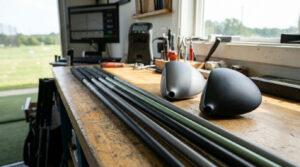
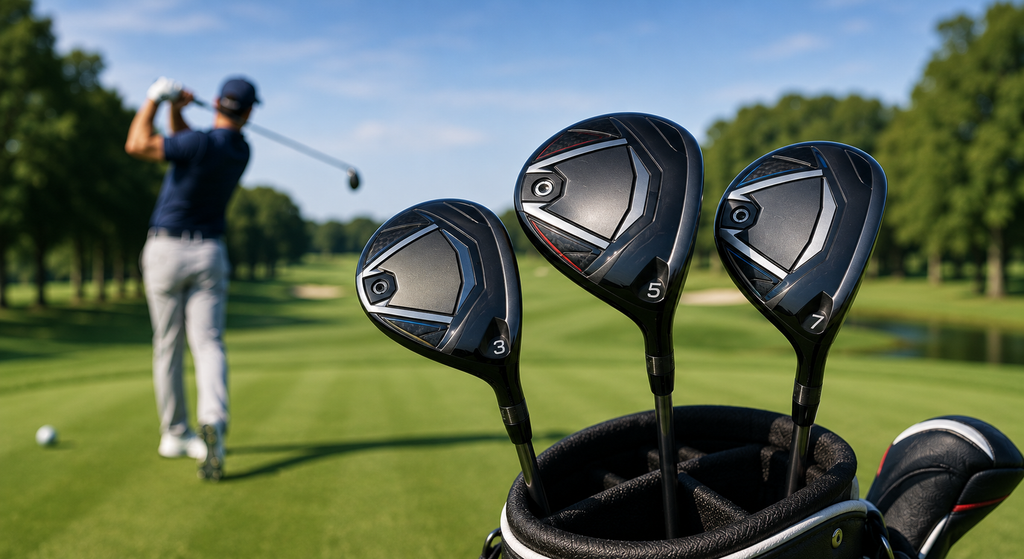
The best fairway woods can give you dependable distance without demanding perfect contact on every swing. They can serve as alternatives to the driver from the tee, help you attack longer holes, and bridge the distance between your longest iron or hybrid and driver. However, choosing the right model involves more than finding the club with the strongest loft. Launch, forgiveness, head shape, shaft length, adjustability, and your own swing all matter. In 2026, golfers have many options, so understanding these features can help you find a fairway wood that delivers useful distance while remaining comfortable to hit.
What Makes a Great Fairway Wood?
A good fairway wood should produce a combination of distance, launch, control, and consistency.
Maximum distance alone does not make a club useful.
If a fairway wood occasionally produces a huge shot but becomes difficult to launch from the turf, it may create more problems than it solves.
Forgiveness matters because fairway woods have relatively long shafts. Therefore, center contact can be harder to produce than with shorter irons.
The best fairway woods help preserve useful ball speed when contact moves away from the center of the face.
They should also provide a flight that matches your needs.
Some golfers need help launching the ball higher. Others already create plenty of height and want a more penetrating trajectory.
Before comparing clubs, decide what job the fairway wood needs to perform in your bag.
Distance Should Be Usable
Golf equipment marketing often focuses on maximum distance.
However, golfers should pay just as much attention to repeatable distance.
Imagine one fairway wood carries between 190 and 220 yards because your contact varies significantly. Another consistently carries between 200 and 210.
The second club may be more useful on the course, even though its longest shot is shorter.
Predictability makes club selection easier.
The best fairway woods for distance should therefore combine ball speed with manageable dispersion and consistent launch.
Your goal is to know roughly where the ball will finish after a normal swing.
During testing, compare average carry rather than your longest strike.
Also note how often you produce an acceptable result when contact is slightly low, high, toward the heel, or toward the toe.
Why Forgiveness Matters
Fairway woods are commonly used for demanding shots.
You may hit one from a tight fairway lie, light rough, or the tee. In each situation, a small strike error can change the result.
Forgiving designs aim to reduce the penalty from those misses.
Manufacturers can use head shaping, weighting, face construction, and other design choices to improve stability and maintain performance across more of the face.
However, no club can completely correct a poor swing.
The best fairway woods provide enough assistance to make ordinary mishits more playable.
When testing forgiveness, do not judge only perfect shots.
Pay attention to your average strike.
If one model consistently produces better results from your normal contact pattern, it may suit you better than a club that performs brilliantly only from the center.
3-Wood: Distance With More Demands
The traditional 3-wood remains a popular option at the top of the bag.
It can provide strong distance from the tee while giving golfers another option on long fairway shots.
However, lower loft makes many 3-woods harder to launch from the ground.
Golfers with enough speed and reliable contact may appreciate the combination of distance and versatility.
Others may discover that their 3-wood carries only slightly farther than a higher-lofted wood because they struggle to launch it properly.
When searching for the best fairway woods, do not assume a 3-wood is mandatory.
Test it from the turf as well as from a tee.
If you mainly want a controlled alternative to your driver, a 3-wood may fit perfectly.
If you need easy launch from the fairway, another loft could perform better.
5-Wood: A Versatile Choice
A 5-wood can offer an excellent balance of distance and launch.
The additional loft usually makes it easier to elevate than a typical 3-wood.
For many recreational golfers, that can produce more consistent carry from the fairway.
A 5-wood can also replace a difficult long iron or complement a hybrid.
Its higher flight may help the ball land more softly on longer approach shots.
Many of the best fairway woods are especially useful in 5-wood configurations because they combine enough loft for easier launch with enough shaft length to generate useful speed.
However, check your distance gaps before adding one.
If your 5-wood and hybrid carry nearly the same distance, you may not need both unless they produce clearly different trajectories or serve different purposes.
7-Wood: Forgiveness and Easy Launch
Higher-lofted fairway woods have become attractive options for golfers who want help launching longer shots.
A 7-wood can produce a higher trajectory than many long irons.
Its design may also inspire more confidence for players who struggle with low-lofted clubs.
The additional height can be useful when attacking greens because the ball may land more steeply.
However, wind and individual swing characteristics can influence whether that flight suits your game.
The best fairway woods are not always the lowest-lofted or longest models.
For some golfers, a 7-wood becomes one of the most dependable clubs in the bag.
Compare it against hybrids and long irons at similar distances.
Choose the club that gives you the best combination of carry, dispersion, trajectory, and confidence.
Higher-Lofted Woods Can Replace Long Irons
Some golfers struggle to generate enough height with 3-irons, 4-irons, or even 5-irons.
When loft decreases, their iron distances may begin to bunch together.
A higher-lofted fairway wood can provide another solution.
Its longer shaft and larger head create a different launch profile from an iron.
As a result, you may produce more useful carry.
When comparing the best fairway woods, test higher lofts instead of automatically choosing the traditional 3-wood.
You might discover that a 5-wood and 7-wood combination gives you better coverage than a 3-wood plus long iron.
There is no requirement to build your bag traditionally.
Use the clubs that make difficult shots easier and create sensible distance gaps.
Look for a Low and Helpful Center of Gravity
Center-of-gravity placement influences launch, spin, and stability.
Although exact designs vary, many forgiving fairway woods position weight to help golfers produce an easier launch.
A golfer who struggles to get the ball airborne may benefit from a design built around that goal.
Meanwhile, stronger players may prefer a different flight profile.
You do not need to become an equipment engineer to choose correctly.
Instead, use design claims as a starting point and confirm them through testing.
The best fairway woods for your swing should create an appropriate launch without requiring you to manipulate your normal motion.
If you constantly feel as though you need to scoop the ball into the air, the club or setup may not suit you.
Good equipment should support a confident swing.
Head Size and Shape Affect Confidence
Fairway wood head shapes range from compact profiles to larger, more confidence-inspiring designs.
A larger footprint may feel easier to hit for golfers who prioritize forgiveness.
Compact heads may appeal to players who prefer a traditional look or want greater versatility.
Neither style is automatically better.
Address position matters because confidence influences how freely you swing.
If a club looks difficult before you even start the backswing, you may never produce your best motion.
When evaluating the best fairway woods, place each model behind a ball and examine the shape.
Does the face look easy to align?
Does the head sit naturally?
Can you imagine using it from a tight fairway lie?
Appearance is subjective, but it still affects performance.
Choose a design that encourages commitment rather than hesitation.
Shaft Weight Can Change the Experience
The shaft plays an important role in how a fairway wood feels.
Weight, flex, length, and overall profile can influence timing and delivery.
A lighter shaft may help some golfers generate speed. However, lighter does not automatically mean longer or better.
Some players lose control when the club becomes too light.
A heavier option may provide a more stable feel, although it could become difficult to swing for golfers with less speed or strength.
The best fairway woods should be tested with an appropriate shaft whenever possible.
Avoid choosing solely from a generic flex label such as regular or stiff.
Those labels are not perfectly standardized between manufacturers.
Focus on ball flight, contact, dispersion, and how naturally you can control the club.
Shaft Length Matters Too
Fairway woods use longer shafts than most irons.
That extra length can help generate clubhead speed, but it can also make center contact more difficult.
A golfer who struggles with a standard-length 3-wood might gain consistency with a slightly different setup.
However, changing shaft length can affect swing weight, feel, launch, and distance.
Therefore, modifications should be made carefully.
When testing the best fairway woods, pay attention to strike location.
If you repeatedly hit the heel or toe, simply chasing more clubhead speed may not help.
A fairway wood that produces slightly less speed but much better contact could deliver greater average distance.
Consistent impact remains one of the strongest foundations for useful performance.
Adjustability Adds Flexibility
Many modern fairway woods offer adjustable hosels.
Depending on the model, you may be able to alter loft or other settings.
Some designs also use adjustable or interchangeable weighting.
These features can help golfers fine-tune launch, spin, or distance gapping.
However, adjustability should not become an excuse to change settings after every poor round.
Find a configuration that produces reliable performance, then give yourself time to learn it.
The best fairway woods with adjustable features are most useful when those settings solve a specific problem.
For example, a small loft change might improve the distance separation between your fairway wood and hybrid.
Follow manufacturer instructions and use the proper adjustment tool.
Turf Interaction Is Important
A fairway wood must move through the turf effectively when used from the ground.
Sole shape can influence how the club interacts with different lies.
During testing, do not hit every shot from a perfect mat.
Whenever possible, test from real grass.
Try a clean fairway lie first. Then consider how the club performs from slightly uneven or light rough conditions.
The best fairway woods should give you confidence from the lies you commonly face.
However, avoid expecting a fairway wood to perform from every situation.
Deep rough may require a different club and a more conservative strategy.
Knowing when not to use a fairway wood is part of playing it effectively.
Compare Carry Distance and Total Distance
Both carry and total distance can be useful when evaluating fairway woods.
Carry is particularly important when you must clear a bunker, water hazard, or another obstacle.
Total distance becomes valuable on tee shots or long shots where rollout is welcome.
Measure both if possible.
A lower flight may create more roll, while a higher-launching club could provide greater carry and a softer landing.
The best fairway woods match the type of distance you actually need.
If you regularly attack greens with the club, carry and stopping ability may matter more.
If it mainly serves as a tee club on tight holes, total distance and accuracy could receive greater priority.
Dispersion Can Matter More Than Extra Yards
Distance is exciting, but fairway woods are often chosen because they offer control compared with a driver.
Therefore, dispersion deserves serious attention.
Track how far shots finish left or right of your intended target.
A club that adds five yards but produces a much wider pattern may not improve your scoring.
Likewise, a slightly shorter option could become more valuable if it keeps more shots in playable positions.
When comparing the best fairway woods, look at the entire shot pattern.
Do not evaluate only the longest ball.
A tight group of predictable shots provides much more useful information than one exceptional strike surrounded by several large misses.
Match Your Fairway Wood to Your Driver
Your fairway wood does not need to come from the same product family as your driver.
Some golfers prefer matching equipment because the appearance and feel are familiar.
However, performance should come first.
Your driver may suit you perfectly while another brand or design produces better fairway wood results.
The best fairway woods should earn their place independently.
Test them against the clubs immediately above and below them in your bag.
For example, if your driver carries 240 yards and your hybrid carries 190, your fairway wood should provide a useful role between those numbers.
Brand consistency is less important than functional distance coverage.
Do Not Ignore Sound and Feel
Sound and feel do not directly determine distance, but they influence confidence.
Some golfers prefer a solid, muted impact. Others enjoy a sharper response.
A club that feels unpleasant may be difficult to trust, even if the launch-monitor numbers look reasonable.
Feedback can also help you recognize strike quality.
When comparing the best fairway woods, notice whether you can tell when contact moves away from the center.
Useful feedback can support practice without making mishits feel excessively harsh.
Still, treat sound and feel as part of the overall decision.
Performance data should remain important, but golf is easier when you enjoy hitting the club.
Who Should Prioritize Maximum Forgiveness?
Beginners, high handicappers, and golfers with inconsistent strike patterns often benefit from forgiveness.
Players with moderate swing speeds may also prefer designs that make launching the ball easier.
However, forgiveness is not only for beginners.
Even skilled golfers miss the center of the face.
A stable head can help keep those misses more manageable.
For golfers who prioritize consistency, the best fairway woods are often models that produce reliable results across a wider portion of the face.
During testing, intentionally pay attention to ordinary strikes rather than waiting for perfect ones.
Your normal swing should determine the winner.
Who Might Prefer a More Compact Design?
Better ball strikers sometimes prefer smaller or more traditional fairway wood profiles.
A compact design may feel easier to manipulate for different trajectories.
However, a smaller appearance does not automatically mean the club lacks modern technology.
The key is finding the right balance between control and forgiveness.
Golfers who regularly use a fairway wood from tight lies may also appreciate a head shape that sits comfortably behind the ball.
Even when shopping for the best fairway woods, do not choose based on handicap labels alone.
A low-handicap golfer may love a forgiving model, while a confident mid-handicap player might prefer something more compact.
Test what suits your eye and swing.
How to Test Fairway Woods Properly
Begin with your normal warm-up.
Then hit several shots with your current fairway wood to establish a baseline.
Test potential replacements using the same ball whenever possible.
Record carry distance, total distance, launch, dispersion, and strike consistency.
Do not delete every poor swing. Mishits reveal how the club performs when your swing is less than perfect.
Next, hit the club from different lies if the fitting environment allows it.
Testing the best fairway woods only from a tee does not tell you how they will perform from the fairway.
Finally, compare each candidate with the clubs next to it in your bag.
A fairway wood must fit your overall setup, not simply produce impressive numbers by itself.
Avoid Buying Based Only on Loft
Loft is important, but it is only one part of performance.
Two fairway woods with the same stated loft can produce different launch, spin, speed, and carry.
Head design, shaft length, center of gravity, face construction, and your delivery all contribute.
Therefore, do not assume every 15-degree club will perform like another 15-degree club.
When evaluating the best fairway woods, treat loft as a starting point.
Test the complete club.
This is particularly important if you are replacing an older model.
A new club with the same stated loft may create a different distance, so verify your gapping before putting it into play.
Common Fairway Wood Buying Mistakes
One common mistake is automatically buying a 3-wood because it seems standard.
A 5-wood may perform better if you need more launch.
Another mistake is focusing only on maximum distance.
Consistency and dispersion can matter more.
Golfers also overlook distance overlap. A new fairway wood that travels the same distance as your hybrid adds little unless it serves another clear purpose.
Buying the best fairway woods requires looking beyond advertising claims.
Do not ignore shaft fit, turf interaction, head shape, or confidence at address.
Finally, avoid judging a club after only two or three swings.
Give yourself enough shots to see a realistic pattern.
Building the Right Fairway Wood Setup
Start by defining the job.
Do you need a driver alternative from the tee? A club for long approaches? A replacement for difficult long irons?
Next, measure the clubs already in your bag.
Identify the distance range you need to fill.
Then test several lofts and head styles.
For some golfers, one fairway wood is enough. Others may benefit from two.
The best fairway woods should make your bag easier to use, not simply add more choices.
If a 5-wood and 7-wood provide clear yardages and reliable contact, there is no rule saying you must also carry a 3-wood.
Build around your performance.
Conclusion
A great fairway wood should give you more than occasional long shots.
It should provide dependable carry, manageable dispersion, useful launch, and enough forgiveness for normal strike variation.
Consider whether you need a 3-wood for distance, a versatile 5-wood, or a higher-lofted option that can replace a difficult long iron.
Then compare head shape, shaft characteristics, adjustability, turf interaction, and distance gapping.
Most importantly, test clubs using realistic swings and evaluate average results rather than your longest shot.
The best fairway woods for 2026 are ultimately the ones that fit your swing and solve a genuine problem in your bag. Choose predictable performance over impressive marketing numbers, and your fairway wood can become a trusted option from both the tee and the turf.
FAQ
1. Is a 3-wood or 5-wood easier to hit?
Many recreational golfers find a 5-wood easier to launch because it generally has more loft. However, individual swing characteristics can change the result.
2. Can a 7-wood replace a long iron?
Yes. A 7-wood can replace a long iron for golfers who produce better launch, carry, and consistency with the fairway wood.
3. Should my fairway wood match my driver brand?
No. Matching can provide familiar looks and feel, but performance and distance gapping are more important than using the same brand.
4. How many fairway woods should I carry?
There is no fixed number. Some golfers need only one, while others benefit from two or more. Each should provide a useful distance or shot type.
5. Should I get fitted for a fairway wood?
A fitting can be valuable because loft, shaft, head design, and launch characteristics all affect performance. It can also help prevent unwanted distance overlap.