
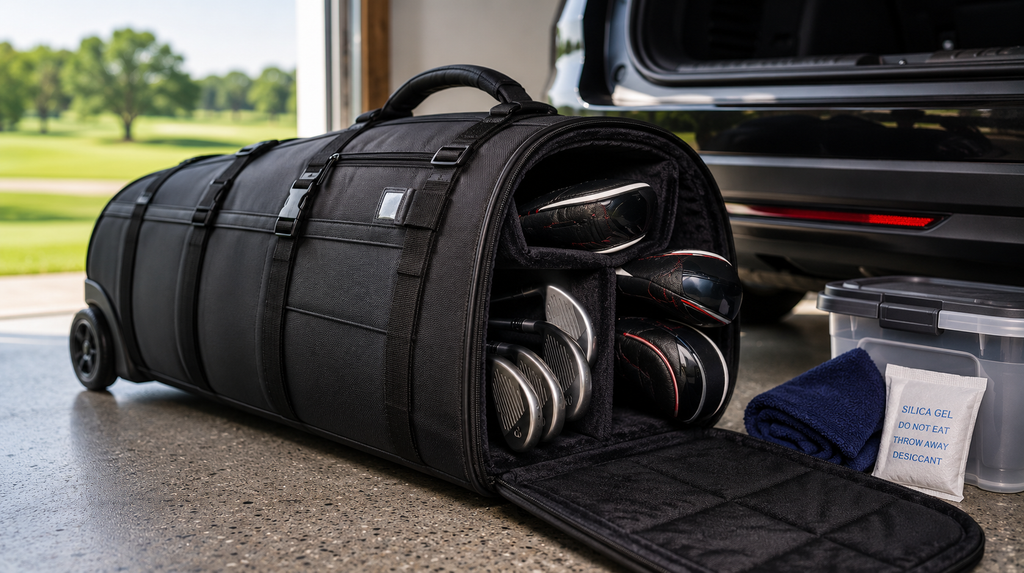
Golf equipment can handle thousands of swings, but careless transportation or poor storage can still cause serious damage. Learning how to protect golf clubs is especially important when flying, taking a road trip, or putting your equipment away for several months. Clubheads can collide, graphite shafts can crack, grips can deteriorate, and moisture can encourage rust. Fortunately, most problems are easy to prevent. A sturdy travel setup, careful packing, proper cleaning, and a dry storage environment can significantly reduce unnecessary wear. Whether you are traveling for a golf vacation or storing your clubs between seasons, a few simple precautions can help your equipment remain ready for the next round.
Why Golf Clubs Need Protection
Golf clubs are designed to withstand impact with a ball and the ground. However, that does not mean every part of a club is resistant to uncontrolled pressure or poor storage conditions.
Shafts can be damaged when heavy objects press against them. Clubheads may develop scratches or dents after repeatedly hitting each other. Meanwhile, moisture left on wedges and irons can encourage corrosion.
Grips also require attention. Excessive heat, dirt, oils, and poor storage conditions may shorten their useful life.
Therefore, learning to protect golf clubs involves more than putting a cover over your driver.
You need to consider the entire club, including the head, shaft, ferrule, and grip. Your golf bag and accessories also deserve protection.
Good care can reduce avoidable damage and help your equipment perform consistently.
Clean Your Clubs Before Packing Them
One of the easiest ways to prepare golf equipment for travel or storage is to clean it.
Dirt and grass can trap moisture against clubheads. Sand and other debris may also work into grooves or remain inside the golf bag.
Start by wiping each clubhead with a damp cloth. Use a soft brush to clean dirt from the grooves when necessary.
Avoid soaking clubheads unnecessarily, particularly around areas where water could enter or affect components.
After cleaning, dry every club thoroughly.
This step is especially important when you want to protect golf clubs for several weeks or months.
Never place wet equipment directly into long-term storage.
Also check your bag for damp towels, gloves, food, or other items that could create moisture or odor.
Inspect Your Equipment Before Traveling
A quick inspection can reveal existing problems before they become worse.
Look closely at graphite shafts for unusual marks, cracks, or damaged areas. Check steel shafts for rust or bending.
Inspect ferrules and clubheads for anything that appears loose.
Then examine your grips.
If a grip is already cracked, badly worn, or separating from the shaft, travel may make the problem more noticeable.
You should also check your golf bag.
Make sure zippers work correctly, straps are secure, and pockets are not damaged.
Taking a few minutes to inspect everything makes it easier to protect golf clubs because you know their condition before the trip begins.
It also prevents you from blaming transportation for damage that was already present.
Use a Proper Golf Travel Bag
If you are flying with golf equipment, a purpose-built travel bag provides valuable protection.
Hard-shell cases offer strong external protection against impacts and compression. However, they can be heavier and harder to store.
Soft travel bags are generally lighter and easier to handle. Many include padding around the top, where clubheads need additional protection.
Whichever style you choose, look for durable construction, reliable zippers, reinforced areas, and enough room for your golf bag without excessive movement.
A quality travel case is one of the simplest ways to protect golf clubs when they will pass through airports and baggage systems.
Before flying, check your airline’s current baggage size, weight, and sports-equipment rules because policies can vary.
Add a Support Rod to Your Travel Bag
A support rod can provide additional protection inside a soft travel case.
These devices extend beyond the longest club in your bag. If the travel case receives pressure from above, the support takes some of the force instead of allowing it to transfer directly to your driver or other long clubs.
Some golfers use purpose-built travel protectors with a broad top section.
The concept is simple: create a rigid point that extends above the clubheads.
When trying to protect golf clubs, this can be particularly helpful for graphite-shafted woods.
However, a support rod does not make your bag indestructible.
You should still pack the clubs carefully and use adequate padding.
Think of the rod as one part of a complete protection system rather than the only precaution you need.
Remove Adjustable Driver Heads When Practical
Many modern drivers and fairway woods use adjustable hosels that allow the clubhead to be removed.
If your club is designed for safe head removal, taking the head off before air travel can reduce the risk of damage to the longest shaft.
Place the clubhead inside its headcover and pack it securely in a protected compartment.
Do not leave it loose inside the travel bag.
You should also keep the correct adjustment tool with your golf equipment.
Before removing anything, understand the manufacturer’s instructions.
To protect golf clubs effectively, never force components apart or attempt to remove a fixed clubhead.
If you are uncertain about the process, leave the club assembled and use other protective packing methods.
Use Headcovers for Woods and Putters
Headcovers are not merely decorative.
They reduce contact between clubheads and help prevent scratches, chips, and other cosmetic damage.
Drivers, fairway woods, hybrids, and many putters benefit from dedicated covers.
Make sure each cover fits securely before traveling.
A loose headcover can fall off inside the travel case and provide little protection.
When you protect golf clubs for storage, keeping headcovers on can also reduce accidental contact while the bag is moved.
However, never place a wet headcover over a damp clubhead for long periods.
Allow both items to dry completely first.
Trapping moisture under a cover can create the exact problem you are trying to avoid.
Create Padding Around the Clubheads
The top of the golf bag deserves extra attention because several clubheads and shafts are concentrated in a relatively small space.
You can use clean clothing, towels, or purpose-built padding to reduce movement.
Wrap padding around the upper section of the clubs rather than simply stuffing items loosely into the travel bag.
Your goal is to limit club-to-club impact while avoiding excessive pressure.
Do not pack so tightly that shafts become bent or stressed.
A sensible amount of cushioning can help protect golf clubs without creating new risks.
After packing, gently move the travel bag.
If the clubs shift significantly or you hear excessive contact, adjust the padding before leaving.
Organize Clubs Inside the Bag
Good organization makes travel safer.
Instead of allowing every club to move freely, use the dividers in your golf bag.
Keep longer clubs grouped logically and ensure exposed shafts are not rubbing against hard or sharp objects.
If your bag has full-length dividers, they can help reduce tangling.
Still, check that nothing inside the bag places pressure against a shaft.
When preparing to protect golf clubs, remove unnecessary heavy objects from the main club compartment.
Shoes, tools, large accessories, and other equipment should be stored where they cannot crush or scratch the clubs.
A tidy bag is easier to inspect and easier to pack securely.
Be Careful With Towels and Clothing
Using clothing as padding can be practical during a golf trip.
However, do not assume that more padding is always better.
Heavy or tightly compressed items can create pressure against shafts.
Wet towels are another concern.
After a rainy round, remove damp materials rather than packing them next to your clubs for an extended period.
Moisture is one of the biggest enemies when you want to protect golf clubs from corrosion.
Allow towels, gloves, headcovers, and the golf bag itself to dry whenever possible.
If you must pack immediately after playing, unpack the equipment when you reach your destination and let everything air out.
Keep Valuable Accessories With You
Golf bags often contain more than clubs.
Rangefinders, GPS devices, watches, electronics, keys, and other small valuables can easily be forgotten in side pockets.
Before checking a golf bag for a flight, remove expensive or fragile accessories when airline rules allow.
Carry important personal items separately.
This does not directly protect golf clubs, but it improves the overall security of your golf equipment.
Also empty unnecessary liquids and containers from the bag.
Reducing clutter makes packing easier and can lower the overall weight of your travel case.
Always check applicable airline and security requirements before deciding what belongs in checked or carry-on baggage.
Check Your Bag’s Weight Before Flying
Airlines may impose weight limits or additional charges on checked sports equipment.
An overloaded travel bag can become expensive and harder to handle.
More importantly, stuffing too much equipment into one case can increase pressure on the clubs.
Use a luggage scale before leaving home.
Pack only what you need.
If you are trying to protect golf clubs, avoid using the travel case as storage for every heavy item on your trip.
Shoes and clothing can provide some cushioning, but excessive weight offers little benefit.
Confirm your airline’s current policies before departure because baggage rules and fees can change.
Protect Clubs During Road Trips
Driving with golf clubs may seem safer than flying, but damage can still occur.
Do not throw heavy luggage on top of your golf bag.
Place the clubs where they cannot slide around aggressively during turns or sudden stops.
If the clubs are in a trunk or cargo area, position them carefully and secure other heavy objects.
Never allow sharp tools or equipment to rest against graphite shafts.
To protect golf clubs during long road trips, also consider temperature.
A parked vehicle can become extremely hot.
Avoid leaving clubs inside a hot car for extended periods, particularly when you could store them in a more controlled indoor environment.
Avoid Long-Term Storage in Your Car
A vehicle may be convenient, but it is not ideal for long-term golf club storage.
Temperatures inside a parked car can fluctuate significantly.
Heat can be hard on grips and other components over time.
Vehicles can also experience humidity and condensation.
There is another practical concern: leaving expensive golf equipment visible or accessible may increase theft risk.
If you want to protect golf clubs between rounds, move them indoors when possible.
A dry, temperature-stable room is generally a better choice than a trunk, garage with extreme temperature changes, or outdoor shed.
Convenience should not come at the cost of equipment life.
Choose a Dry Indoor Storage Area
Long-term storage conditions matter.
Look for a clean, dry area that does not experience major temperature or humidity changes.
An interior closet or similar indoor location can work well.
Avoid areas where water leaks, condensation, or flooding could reach the bag.
Basements and garages vary widely, so evaluate the actual conditions rather than assuming they are automatically suitable or unsuitable.
The best place to protect golf clubs is somewhere reasonably stable and dry.
Keep the bag away from direct sources of heat.
You should also avoid leaving equipment where it may be knocked over frequently.
A secure corner or organized storage area reduces accidental damage.
Make Sure Everything Is Completely Dry
Never store clubs immediately after a wet round without drying them.
Remove the rain cover, towels, gloves, and headcovers.
Open bag pockets and allow moisture to escape.
Wipe down clubheads and shafts.
Then let the equipment dry naturally in a ventilated area.
This is one of the most important habits for golfers who want to protect golf clubs over the long term.
Moisture can contribute to rust on susceptible metal surfaces and create unpleasant odors inside the bag.
Do not forget your golf shoes.
Wet shoes stored inside a closed pocket can introduce moisture even when the clubs themselves appear dry.
Clean and Inspect the Grooves
Grooves collect soil, grass, and sand during normal play.
Leaving debris packed into them for months is unnecessary and can retain moisture.
Use a suitable soft brush and water to loosen dirt.
Then wipe the face clean and dry it thoroughly.
Avoid aggressive tools that could damage the clubface or finish.
Cleaning grooves before storage helps protect golf clubs while ensuring they are ready when you return to the course.
It also gives you an opportunity to inspect wedge and iron faces for normal wear.
If grooves or faces appear heavily worn, you can evaluate replacement before your next playing season instead of discovering the problem on your first round back.
Inspect Shafts Carefully
Shaft damage deserves attention because it can become a safety and performance concern.
Look along steel shafts for rust, dents, or unusual bending.
Graphite shafts should be inspected for cracks, deep scratches, splintering, or other suspicious damage.
Pay particular attention to areas that regularly contact the edge of your golf bag.
If you notice significant damage, have the club inspected by a qualified professional before using it again.
Proper packing helps protect golf clubs, but inspection helps catch problems that may already exist.
Do not attempt to hide or repair serious shaft damage with tape.
A compromised shaft may require professional repair or replacement.
Take Care of Your Grips
Grips are your only direct connection to the club, so their condition matters.
Before long-term storage, clean them according to the grip manufacturer’s recommendations.
Remove dirt, sweat, sunscreen, and oils that have accumulated through regular play.
Dry them completely afterward.
Avoid storing clubs where grips receive prolonged direct sunlight or excessive heat.
When you protect golf clubs, remember that preserving grip texture can help you maintain comfortable control when you start playing again.
Inspect each grip for cracks, smooth spots, hardening, or loss of traction.
If they already need replacement, you can address the issue before your next season begins.
Store the Golf Bag Upright and Secure
A golf bag filled with clubs can be heavy.
If it falls repeatedly or has other equipment stacked on top of it, shafts and clubheads may experience unnecessary stress.
Store the bag upright when the design allows and make sure it cannot easily tip.
Alternatively, use a secure rack or storage system designed for golf equipment.
Do not suspend a heavy bag from a weak strap for months.
To protect golf clubs, the storage position should be stable and free from pressure.
Keep heavy boxes, tools, and household items away from the shafts.
Good organization prevents many accidental problems.
Do Not Seal Damp Equipment in Plastic
Wrapping equipment in plastic may appear to provide extra protection from dust.
However, sealing damp equipment can trap moisture.
That creates an unfavorable storage environment.
If you use a protective cover, make sure the clubs and bag are completely dry first.
Choose a storage approach that does not trap existing moisture.
You can protect golf clubs from dust without creating a sealed humid environment.
The priority is keeping the equipment clean, dry, and secure.
If your storage space naturally experiences high humidity, consider improving the environment rather than relying solely on wrapping.
Check Stored Clubs Occasionally
Long-term storage should not mean completely forgetting about your equipment.
Every few weeks or months, depending on storage conditions, inspect the bag.
Check for unexpected moisture, rust, pests, odors, or damage.
Make sure the storage area itself remains dry.
This is particularly useful if your clubs are stored in a basement, garage, or another space where conditions may change.
An occasional inspection makes it easier to protect golf clubs because small issues can be corrected before they become serious.
You may discover a leak, condensation problem, or damaged bag pocket early enough to prevent further trouble.
Prepare Clubs Before Returning to Play
When you take clubs out of long-term storage, inspect them before heading directly to the course.
Check clubheads, shafts, ferrules, and grips.
Make sure adjustable clubheads are correctly installed and tightened according to manufacturer guidance.
Clean any dust from the equipment.
Then take a few practice swings.
If a club feels unusual or shows visible damage, have it checked before hitting full shots.
The effort you made to protect golf clubs during storage should leave them in good condition, but a final inspection adds another layer of safety.
You can also use this opportunity to check your golf bag, glove supply, tees, and other accessories.
Common Travel and Storage Mistakes
One common mistake is packing clubs while they are still wet.
Another is leaving them in a vehicle for weeks because unloading the bag feels inconvenient.
Golfers may also travel without sufficient protection around their longest clubs.
Overpacking creates another risk because heavy objects can press against shafts.
During long-term storage, stacking boxes on top of a golf bag is also a poor idea.
If your goal is to protect golf clubs, keep the process simple.
Clean them, dry them, inspect them, reduce movement during travel, and choose a stable storage environment.
These habits require little time compared with the cost of replacing damaged equipment.
Travel Checklist for Golf Clubs
Before a trip, clean and dry your equipment.
Inspect the clubs and golf bag for existing damage.
Use headcovers where appropriate.
If flying, place the golf bag inside a suitable travel case and consider adding a support rod.
Secure removable clubheads properly when applicable.
Add reasonable padding around the upper portion of the bag.
Remove valuable electronics and unnecessary items.
Finally, check baggage weight and current airline requirements.
Following this routine makes it much easier to protect golf clubs throughout the journey.
When you arrive, inspect your equipment before playing and report any travel-related damage through the appropriate process as soon as possible.
Long-Term Storage Checklist
Start by removing everything from the golf bag that does not need to remain there.
Clean the clubheads and grooves.
Wipe down the shafts and clean the grips.
Dry every component completely.
Wash or dry towels and headcovers separately before returning them to the bag.
Choose a stable indoor storage area with low moisture and reasonable temperature control.
Keep heavy objects away from the clubs.
Store the bag securely so it cannot fall.
Finally, inspect the equipment periodically.
These simple steps help protect golf clubs without requiring expensive storage equipment.
Consistent basic care is usually more valuable than complicated solutions.
Conclusion
Golf clubs are durable, but they still benefit from thoughtful care when traveling or sitting unused for long periods.
The biggest risks are often simple ones: uncontrolled movement, heavy pressure, moisture, heat, poor organization, and accidental impacts.
Before traveling, clean your equipment, inspect the shafts and clubheads, use a suitable travel case, add sensible padding, and secure your longest clubs.
For long-term storage, choose a clean and dry indoor environment. Make sure every club, towel, headcover, and bag pocket is completely dry before putting the equipment away.
Most importantly, do not forget about your clubs for months without checking them.
Learning how to protect golf clubs requires only a few practical habits, yet those habits can help prevent scratches, corrosion, grip deterioration, and more serious damage. Take care of your equipment between rounds, during trips, and throughout the off-season so it remains ready whenever you return to the course.
FAQ
1. What is the safest way to fly with golf clubs?
Use a sturdy golf travel case, secure the clubs inside, add protection around the clubheads, and consider a support rod for a soft-sided case. Always check your airline’s current rules.
2. Should I remove my driver head before flying?
If your driver has a removable adjustable head and you understand the manufacturer’s procedure, removing it can reduce stress on the long shaft. Store the head securely in its cover.
3. Is it safe to keep golf equipment in a garage?
It depends on the conditions. A dry garage with relatively stable temperatures may be suitable, while a damp space with major temperature changes is less desirable.
4. Can I leave my clubs in the car between rounds?
Short periods may be convenient, but a vehicle is not ideal for long-term storage. Heat, humidity, accidental damage, and theft are additional concerns.
5. Should golf clubs be cleaned before long-term storage?
Yes. Remove dirt from clubheads and grooves, clean the grips when appropriate, and make sure every component is completely dry before storing the bag.