
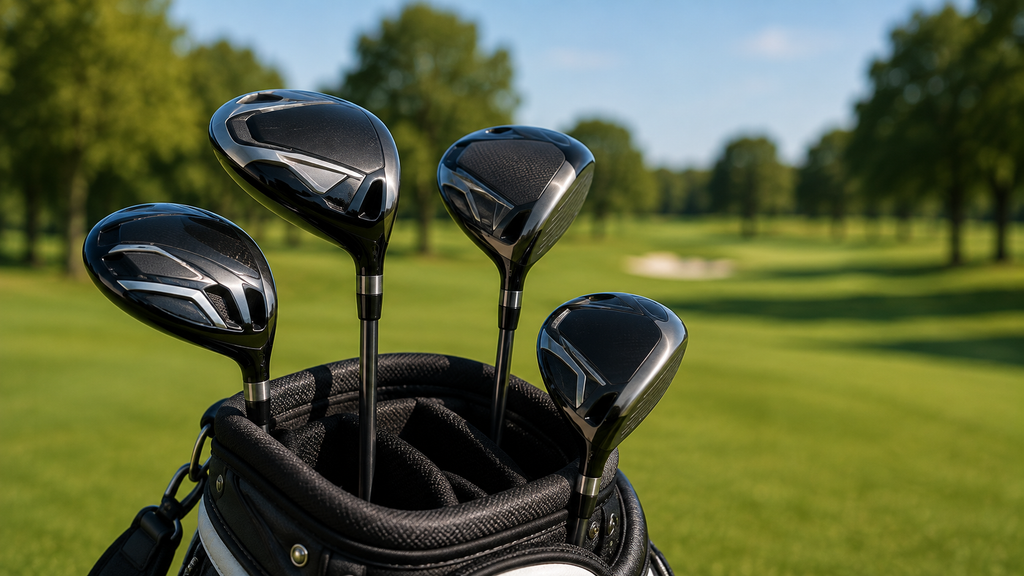
Finding the best drivers for seniors is less about buying the newest club and more about matching equipment to your current swing. Many golfers experience changes in speed, flexibility, tempo, or strength over time. However, the right driver can help you make better use of the speed you still produce. Modern designs offer large clubheads, adjustable lofts, lighter components, and weighting intended to improve stability on off-center strikes. The key is finding a combination that launches efficiently without becoming difficult to control. In this guide, we will look at several driver families worth considering in 2026, along with the specifications that matter most when choosing one.
What Senior Golfers Should Look for in a Driver
A driver should help you create useful launch, carry distance, and reasonable accuracy.
For many senior golfers, that means prioritizing forgiveness before chasing the lowest-spin or most demanding head.
Weight matters too.
A lighter overall club can help some players generate speed more comfortably. However, going too light may make the club difficult to control.
Loft and shaft specifications also deserve careful attention.
The best drivers for seniors should work with your natural tempo instead of forcing you to swing harder.
Therefore, fitting and testing remain more important than the word “senior” printed on a shaft or product description.
Ping G440 MAX: A Strong Forgiveness Option
Ping’s G440 MAX family deserves consideration for golfers who place a high priority on stability and forgiveness.
Ping has traditionally offered MAX-style drivers aimed at maintaining performance across a larger portion of the face.
That can benefit players whose strike location moves between the heel, center, and toe during a round.
The ideal loft and shaft still depend on your swing.
Therefore, do not simply choose the lightest available configuration.
When comparing the best drivers for seniors, the G440 MAX is worth testing if consistent ball flight matters more than trying to play an extremely low-spin setup.
Callaway Elyte X: Built With Forgiveness in Mind
Callaway’s Elyte family includes configurations designed for different player needs.
The Elyte X is particularly relevant for golfers looking for a forgiving profile with assistance producing an easy launch.
For senior players who tend to miss across the face, a more forgiving head can help maintain usable distance.
However, golfers should still compare the X configuration against other models within the family.
Your launch, spin, strike pattern, and directional miss determine which head works best.
Among the best drivers for seniors, Callaway’s more forgiving options deserve testing rather than purchasing solely from brand familiarity.
TaylorMade Qi35 Max: Stability for Off-Center Strikes
TaylorMade’s Qi35 family offers several configurations, including models that emphasize forgiveness.
The Qi35 Max is the logical starting point for senior golfers who want additional stability.
A forgiving driver does not eliminate mishits, but it can reduce some of the distance and directional penalties when contact moves away from center.
That can make tee shots more playable throughout an entire round.
When evaluating the best drivers for seniors, compare the Qi35 Max with TaylorMade’s other head options.
A player who already launches the ball very high may need a different loft or configuration than someone struggling to get enough carry.
Titleist GT2: Balanced Performance and Forgiveness
Titleist’s GT2 provides another option for golfers seeking a combination of speed and stability.
While Titleist drivers are often associated with accomplished players, forgiving models can suit a much wider range of handicaps.
Senior golfers should test how the head performs on normal swings rather than assuming a particular brand targets only faster players.
Pay attention to carry distance and dispersion.
Also compare your average strike rather than only your best drive.
The best drivers for seniors should make your typical tee shot more useful, not simply produce one impressive launch-monitor number.
Cobra DS-ADAPT MAX-K: Forgiveness With Adjustability
Cobra’s DS-ADAPT driver family provides several configurations, including the MAX-K, which places a strong emphasis on forgiveness.
This type of head can appeal to golfers who want stability while retaining fitting and adjustability options.
However, adjustable technology is most useful when you understand what needs changing.
Do not constantly alter settings after every poor drive.
Instead, establish a configuration during a fitting or structured practice session.
For golfers comparing the best drivers for seniors, the Cobra MAX-oriented model is worth considering when forgiveness and customization are priorities.
Mizuno ST-MAX 230: Another Forgiving Alternative
Mizuno may be best known by some golfers for irons, but its driver offerings also deserve consideration.
The ST-MAX 230 is designed around stability and can provide another alternative for players seeking a forgiving profile.
As always, head design should be evaluated together with loft and shaft.
A club that performs well for another senior golfer may produce completely different launch conditions for you.
Test it against several options.
Sometimes the driver that receives less attention in marketing ends up producing the best numbers for an individual swing.
Cleveland Launcher XL 2: Easy-Going Performance
Cleveland has long targeted recreational golfers with equipment designed around forgiveness and ease of use.
The Launcher XL 2 remains relevant for senior golfers who prefer a straightforward driver without feeling the need to chase every premium feature.
Its larger profile can inspire confidence at address.
Depending on your swing, it may also offer an attractive balance of launch and forgiveness.
The best drivers for seniors do not have to be the most expensive clubs available.
A model that fits your swing and produces predictable drives can provide far more value than a premium head with unsuitable specifications.
Do Not Ignore Previous-Generation Drivers
A 2026 buying guide does not mean you must purchase a model released this year.
Previous-generation drivers can offer excellent performance at lower prices.
Modern driver technology generally evolves through incremental improvements rather than making a good club obsolete overnight.
If a 2024 or 2025 driver fits your swing and costs significantly less, it may represent excellent value.
Compare older models against current options whenever possible.
Your goal is finding performance, not owning the newest release date.
Why Forgiveness Matters More as Speed Changes
When clubhead speed decreases, maintaining efficient contact becomes especially valuable.
A mishit that loses ball speed can reduce carry distance substantially.
Therefore, a stable driver head may help preserve more useful performance when contact moves away from center.
This does not mean every senior golfer needs the largest or highest-MOI driver available.
Players with consistent strike patterns may prefer another configuration.
Still, forgiveness deserves serious consideration when comparing the best drivers for seniors.
Choose Enough Loft
Many golfers choose too little driver loft because they associate low loft with powerful players.
However, insufficient launch can reduce carry distance, especially at moderate swing speeds.
A higher-lofted driver may help produce a more useful trajectory.
That does not mean everyone should automatically buy a 12-degree head.
Dynamic loft, attack angle, ball speed, spin, and strike location all matter.
Use launch-monitor data when possible.
The correct loft is the one that creates efficient flight for your swing.
More Loft Does Not Always Mean More Distance
Adding loft can improve carry for some golfers, but too much can create excessive launch or spin.
Therefore, avoid making changes based on one specification alone.
A fitter can adjust loft while monitoring ball speed, launch angle, spin rate, peak height, and landing conditions.
This process provides a clearer picture.
The best drivers for seniors produce a trajectory that uses available speed efficiently without sacrificing too much control.
Senior Flex Is Not Automatically the Right Shaft
The label “senior flex” can be useful as a broad category, but flex standards are not identical across manufacturers.
One company’s senior shaft may feel different from another’s.
Additionally, swing speed is not the only factor.
Tempo, transition, release, shaft weight, and personal feel influence the fit.
Some senior golfers perform better with regular flex.
Others benefit from softer or lighter options.
Test rather than choosing from age alone.
Your birth year does not determine the ideal shaft.
Shaft Weight Can Make a Major Difference
Weight often deserves as much attention as flex.
A lighter shaft may help some golfers swing more freely and generate additional speed.
However, extremely light equipment can reduce awareness of the clubhead for certain players.
That may hurt strike consistency.
Compare several weights while keeping other variables reasonably consistent.
The best drivers for seniors should feel manageable throughout an entire round, including the final few holes when fatigue may become more noticeable.
Driver Length Affects Contact
Longer shafts can potentially create more clubhead speed, but they can also make center contact harder.
Many recreational golfers may benefit from testing a slightly shorter driver.
If shortening the club improves strike location substantially, average distance can actually increase despite a small reduction in potential speed.
Do not assume the longest legal configuration provides the longest real-world drives.
Ask a fitter to compare different lengths while monitoring strike pattern and dispersion.
Check Where You Hit the Face
Strike location provides valuable information.
Use face spray designed for golf practice or another appropriate impact indicator.
Hit several drives and look for a pattern.
Consistent heel strikes may require different adjustments than toe strikes.
Likewise, contact very low on the face can affect launch and spin.
Before buying one of the best drivers for seniors, identify what your current driver is actually doing.
A new club should solve a measurable problem.
Understand Draw-Biased Drivers
Some forgiving drivers position weight to make it easier for certain golfers to reduce a rightward miss.
These are often called draw-biased models.
They can be useful for players whose typical shot curves excessively right as a right-handed golfer.
Left-handed players reverse the direction.
However, a draw-biased head cannot correct every swing problem.
If your face and path relationship produces a severe slice, instruction may still be necessary.
Test draw-oriented models instead of assuming they are automatically better.
High-MOI Drivers Can Help With Stability
Moment of inertia, commonly shortened to MOI, relates to resistance to twisting.
In driver design, higher stability can help maintain performance when the ball is struck away from the center.
This is why manufacturers increasingly promote high-MOI heads.
For golfers with variable contact, this technology can be useful.
However, MOI should not become the only number you consider.
Launch, spin, shape preference, sound, shaft fit, and total weight still matter.
The best drivers for seniors combine forgiveness with a configuration you can deliver consistently.
Do You Need an Adjustable Driver?
Adjustable hosels and movable weights can help fine-tune performance.
A fitter may use them to change loft, face presentation, or center-of-gravity characteristics.
However, more adjustability is not automatically better.
Some golfers prefer a simpler club.
If you buy an adjustable driver, find a setting that performs well and leave it there unless your swing or needs change.
Constantly adjusting the club can make it difficult to identify whether the equipment or swing caused a poor result.
Ball Speed Matters More Than Clubhead Speed Alone
Golfers often focus heavily on swing speed.
However, the amount of ball speed you create from that swing also matters.
Centered contact generally transfers energy more efficiently.
Therefore, a slightly slower swing that finds the center can outperform a harder swing that strikes the heel or toe.
When comparing drivers, look at ball speed consistency across several shots.
The best drivers for seniors should help turn your available speed into useful ball flight.
Carry Distance Is More Important Than One Long Drive
Launch-monitor sessions can become competitive.
You hit one drive farther than everything else and immediately prefer that club.
However, golf rewards repeatability.
Look at average carry and total distance across a meaningful sample.
Also examine dispersion.
A driver that averages five yards less but keeps far more balls in playable positions may help you score better.
Do not let one perfect swing determine a purchase that you may use for years.
Launch and Spin Need to Work Together
An effective drive needs an appropriate combination of launch and spin.
Too little launch can reduce carry.
Excessive spin may create a flight that climbs too much and loses efficiency.
Very low spin can also become difficult to control and may not stay airborne long enough at moderate speeds.
There is no single ideal number for every golfer.
A fitter can evaluate your complete trajectory.
This is particularly helpful when choosing among the best drivers for seniors because speed profiles vary significantly between players.
Test Your Current Driver First
Before trying new equipment, hit several shots with your existing driver.
Record average carry, ball speed, launch, spin, and dispersion.
Then test new clubs.
Without a baseline, every new driver can feel impressive.
A proper comparison reveals whether the new model actually improves performance.
You may discover that your current head is still excellent and only needs a different shaft or loft setting.
That could save considerable money.
Test More Than One Brand
Brand loyalty is understandable, especially if you have enjoyed previous equipment.
However, driver fitting is highly individual.
A Ping head may work beautifully for one golfer, while a Cobra, Callaway, TaylorMade, Titleist, Cleveland, or Mizuno model performs better for another.
Try several options without looking at the logo first.
Let the ball flight and dispersion guide you.
The best drivers for seniors exist across multiple manufacturers.
Do Not Ignore Sound and Feel
Performance data matters, but so does confidence.
Some drivers produce a sharper sound, while others feel more muted.
Head shape also varies.
If two clubs produce similar numbers, choose the one you enjoy hitting.
A driver you like looking at and hearing can encourage a more committed swing.
However, avoid selecting entirely from sound if another model clearly produces better performance.
Balance subjective preference with measurable results.
Consider Physical Comfort
Golf should not require you to fight your equipment.
If a driver feels excessively heavy or difficult to swing repeatedly, consider another configuration.
Similarly, a grip that feels too small or large may reduce comfort.
Golfers with limited mobility may benefit from lighter equipment, additional loft, or other fitting adjustments.
However, physical limitations vary greatly.
A professional fitter can help identify a setup that feels manageable without making assumptions based only on age.
Grip Size Deserves Attention
Grip size affects comfort and how you interact with the club.
Many golfers simply use whatever grip comes installed.
During a fitting, test whether another size feels more natural.
Hand dimensions, grip pressure, and personal preference all matter.
A grip that promotes comfortable control can support more consistent swings.
Replacing a grip is also far less expensive than buying a new driver, so inspect your current one before assuming the entire club needs replacement.
Do Not Swing Harder Because the Driver Is New
New equipment often creates excitement.
Golfers step onto the range and immediately swing at maximum effort to see how far the new driver can go.
That is not the best way to evaluate it.
Start with normal swings.
Build speed gradually.
You want to know how the driver performs with the motion you can repeat on the course.
The best drivers for seniors should provide useful performance without requiring an exhausting swing.
A Shorter Backswing Can Still Produce Distance
Some senior golfers lose flexibility and assume they must force a longer backswing to maintain distance.
That can hurt balance.
Instead, create the turn you can comfortably manage.
Focus on sequencing, centered contact, and a smooth acceleration through the ball.
Efficient movement often produces better results than chasing positions your body no longer reaches comfortably.
Equipment can then complement that motion through suitable weight, loft, and shaft characteristics.
Consider a Professional Driver Fitting
A driver fitting can be particularly valuable because so many variables interact.
A fitter can compare heads, lofts, shafts, lengths, and settings.
They can also identify strike patterns.
Bring your current driver so you have a baseline.
Hit enough shots to represent your normal swing.
Do not hide mishits.
Those poor strikes are important because forgiveness should help with the shots you actually produce.
Buying Used Can Offer Excellent Value
Senior golfers do not need to buy the newest driver every season.
A properly fitted previous-generation model can perform extremely well.
Used drivers can also allow you to purchase a higher-tier model within a smaller budget.
Inspect the crown, face, shaft, hosel, and adjustment mechanism.
Confirm the specifications and make sure the shaft has not been altered unexpectedly.
Buy from a reputable seller whenever possible.
Do Not Replace a Driver That Still Works
Marketing makes every new release sound transformative.
However, if your current driver produces good launch, acceptable distance, and predictable dispersion, replacement may not be necessary.
Instead, consider a fitting check.
Small adjustments to loft, shaft, grip, or length may provide enough improvement.
The best drivers for seniors include the club already in your bag when it continues to fit your swing well.
Our 2026 Senior Driver Shortlist
For golfers prioritizing forgiveness, several current and recent driver families deserve testing.
The Ping G440 MAX offers a strong stability-focused option.
Callaway’s Elyte X can suit players seeking an easy-launching, forgiving profile.
TaylorMade’s Qi35 Max targets golfers who want substantial stability.
Titleist GT2 provides a balanced combination of performance and forgiveness.
Cobra DS-ADAPT MAX-K deserves attention for its forgiving design and fitting options.
Mizuno ST-MAX 230 and Cleveland Launcher XL 2 can provide additional alternatives.
Availability and model lineups can vary by market, so confirm current specifications before purchasing.
How to Compare Drivers Properly
Warm up before testing.
Start with your current driver and record baseline numbers.
Then test each candidate using the same golf ball when possible.
Hit enough shots to include your normal misses.
Compare average carry, total distance, launch, spin, ball speed, and dispersion.
Check strike location.
After narrowing the field, hit the finalists again.
The best drivers for seniors should perform well across a group of swings rather than winning because of one perfect drive.
Common Driver-Buying Mistakes
One mistake is automatically selecting a senior-flex shaft.
Another is buying too little loft because lower loft appears more powerful.
Golfers may also chase the longest shaft or lightest possible setup without considering contact.
Choosing from one launch-monitor shot is another common error.
Finally, do not assume a more expensive driver must perform better.
Fit matters more than price.
Conclusion
The right driver can help senior golfers make better use of their available speed while improving confidence from the tee.
Start with forgiveness.
A stable head can reduce some of the performance loss caused by off-center contact. Next, make sure you have enough loft to create useful carry.
Shaft weight and flex should match your tempo and delivery rather than your age alone.
Driver length deserves attention too. A slightly shorter configuration may improve center contact enough to increase real-world distance.
Models such as the Ping G440 MAX, Callaway Elyte X, TaylorMade Qi35 Max, Titleist GT2, Cobra DS-ADAPT MAX-K, Mizuno ST-MAX 230, and Cleveland Launcher XL 2 provide useful starting points for comparison. Previous-generation models can also offer excellent value.
Most importantly, test against your current club.
The best drivers for seniors are not defined by a single brand, loft, shaft label, or price. The right driver is the one that gives your swing reliable launch, useful distance, manageable dispersion, and enough comfort to keep making confident swings throughout the round.
FAQ
1. What driver loft is best for an older golfer?
There is no universal loft. Your speed, attack angle, dynamic loft, strike location, and spin all influence the ideal setting. A fitting can identify the most efficient option.
2. Should senior golfers always use senior-flex shafts?
No. Shaft labels vary between manufacturers, and tempo, weight, transition, and delivery also matter. Some older golfers perform better with regular or other flexes.
3. Can a lighter driver help increase distance?
A lighter setup may help some golfers create more speed, but going too light can reduce control. Test several weights and compare strike consistency.
4. Is a high-MOI driver better for senior golfers?
It can be helpful for golfers with inconsistent strike locations because greater stability can reduce losses on certain mishits. However, fitting remains important.
5. How often should I replace my driver?
There is no fixed replacement schedule. If your current driver fits well and remains in good condition, you can continue using it for many seasons.