One day your drives soar, and the next they fall short of the fairway bunker. If you’re suddenly losing distance with old golf clubs, it may not be your swing. Age, wear, and outdated technology can quietly rob you of precious yards without you noticing.
Why Old Clubs Lose Power
Clubs wear out like running shoes. Even if they look fine, subtle breakdowns affect performance.
- Worn Grooves: Irons and wedges lose spin control.
- Weakened Shafts: Flex changes alter launch and distance.
- Dull Faces: Drivers and woods lose spring-like effect.
Over time, the club simply doesn’t deliver the same energy to the ball.
Technology Marches Forward
Golf technology has advanced dramatically in the last decade. Today’s drivers have larger sweet spots, adjustable lofts, and lighter shafts. New irons optimize weight for higher launch. If you’re playing a set that’s 10 years old, you’re competing against science itself.
Signs Your Clubs Are Costing You Yards
Wondering if your gear is the culprit? Look for these red flags:
- Shots feel softer or dull at impact.
- You’ve lost 10+ yards without swing changes.
- Your clubs look clean, but your consistency fades.
- Playing partners with similar swings hit much farther.
Drivers: The Distance Workhorse
Drivers suffer the most with age. The face loses rebound, reducing ball speed. Compare your driver’s carry distance to when it was new. If you’ve lost more than 10–15 yards, it may be time for an upgrade.
Irons: Precision and Power Decline
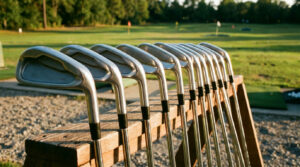
Older irons lose loft integrity and groove sharpness. That means less backspin, reduced stopping power, and shorter shots. Testing them on a launch monitor shows just how much carry you’ve lost.
Wedges: Spin Slips Away
Fresh grooves bite the ball for control. After years of bunker shots and rough lies, those grooves wear smooth. Without spin, wedge shots fly lower, roll out farther, and cost you scoring opportunities.
Putters: Subtle, but Important
Putters don’t lose distance, but worn faces affect roll consistency. A small change here can mean more three-putts—robbing you of strokes instead of yards.
Fitting vs Replacing
Not all old clubs need replacing. A professional fitting may revive them. Shaft changes, loft adjustments, and regripping breathe new life into aging sets. But if technology has passed your clubs by, an upgrade could return the distance you’ve lost.
Mindset: It’s Not Always You
Many golfers blame themselves for lost distance. But the reality is equipment plays a big role. Old gear can hold you back even if your swing hasn’t changed. Recognizing this fact is the first step toward smarter improvement.
How to Regain Lost Distance
- Get a professional club fitting.
- Test new models against your old clubs.
- Replace wedges every 2–3 years.
- Upgrade drivers and irons every 5–7 years.
- Keep grips fresh for consistent control.
Conclusion
If you’re losing distance with old golf clubs, don’t assume your swing has fallen apart. Worn grooves, outdated shafts, and aging technology all steal power from your game. By recognizing the signs and making smart upgrades, you’ll bring back lost yardage—and the confidence that comes with it.
FAQ
1. How long do golf clubs usually last?
Drivers and irons often last 5–7 years, while wedges should be replaced every 2–3 years.
2. Can re-shafting old clubs restore distance?
Yes, re-shafting can add life to old clubs, especially if the shaft has weakened or no longer matches your swing.
3. Do new drivers really add distance?
Modern drivers often add 5–15 yards compared to models more than 7 years old.
4. How can I test if my old clubs are costing me distance?
Use a launch monitor or test side-by-side with new models to compare carry, spin, and ball speed.
5. Should beginners worry about losing distance with old clubs?
Not as much. Beginners benefit more from forgiveness and consistency. But upgrading eventually helps as skills improve.