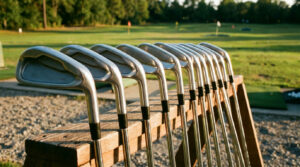

Golfers love new clubs. Whether it’s the promise of more distance, better forgiveness, or tighter control, the idea of upgrading your equipment is always tempting. But knowing when to upgrade your golf clubs based on handicap is a trickier question. Many golfers upgrade too early, expecting miracles, while others upgrade far too late—losing performance without even realizing it.
Your handicap tells a story. It reflects your strengths, weaknesses, tendencies, and the true state of your game. Because handicap evolves as your skills develop, your equipment needs evolve with it. Understanding how and when to upgrade your golf clubs based on handicap ensures that every purchase actually improves performance rather than becoming an expensive disappointment.
This in-depth guide breaks down the best times to upgrade your clubs based on your handicap level. You’ll learn how to spot the signs your equipment is holding you back, how handicap influences club selection, and what upgrades make the biggest impact at every stage of your development. Whether you’re a beginner climbing quickly or a seasoned player sharpening precision, this guide is designed to help you upgrade smarter.
Why Handicap Should Influence When You Upgrade Your Golf Clubs
Your handicap is more than a number. It reflects your progress, consistency, and capability. As your handicap shifts, so do your swing tendencies, ball-striking patterns, and expectations. Clubs designed for beginners may limit intermediate golfers, while clubs made for advanced players can punish those who aren’t ready.
Using handicap as your guide helps you:
- Avoid buying clubs before you’re ready
- Stop using outdated clubs that limit performance
- Match your equipment to your evolving swing
- Invest in gear that accelerates improvement
- Understand which upgrades make a real difference
Your handicap is the most honest indicator of your game. By matching club upgrades to handicap milestones, you avoid wasted money and unlock more consistent performance.
When to Upgrade Your Golf Clubs as a High Handicapper (20+)
High handicappers face a double challenge: inconsistency and learning curve. At this stage, the wrong equipment can significantly slow improvement. But upgrading too early also leads to confusion.
To upgrade your golf clubs based on handicap as a high-handicapper, focus on essential criteria:
Upgrade when your clubs are too hard to hit consistently.
If your current clubs feel unforgiving, heavy, or require perfect contact to perform, they’re limiting your learning. High handicappers benefit most from:
- High-MOI drivers
- Cavity-back irons
- Wide-sole wedges
- Hybrids instead of long irons
- Lightweight shafts
These clubs help stabilize contact and reduce big misses.
Upgrade when distance gaps are unpredictable.
If your 7-iron sometimes goes 90 yards and sometimes 140, the issue might be poor club fit. High handicappers almost always benefit from:
- More flexible shafts
- Higher-lofted drivers
- Game-improvement irons
Better fit equals better consistency.
Upgrade when you’re using very old equipment.
If your clubs are older than 10–12 years, advancements in forgiveness and ball speed can dramatically help your game. High handicappers gain the most noticeable improvement from modern tech.
Avoid upgrading to “player’s clubs.”
Blades, muscle backs, and tour-level drivers are designed for consistency—not correction. High handicappers should wait until their handicap drops significantly before considering them.
At this stage, your priority is forgiveness. Choose clubs that help you build confidence.
When to Upgrade Your Golf Clubs as a Mid Handicapper (10–19)
Mid handicappers sit in the most exciting—and challenging—phase of improvement. You’ve built a repeatable swing, but you’re still refining control. You’re no longer a beginner, yet not quite at advanced precision level. This is the stage where upgrading the right clubs makes a dramatic difference.
Mid handicappers should upgrade their golf clubs when:
Your current clubs no longer match your improving swing.
As your swing becomes more efficient, game-improvement clubs might start launching shots too high or too spinny. You may outgrow flexible shafts or overly offset irons.
Signs include:
- Shots ballooning in the wind
- Overly high launch
- Lack of control on approach shots
- Driver spins more than ideal
You want more control instead of just more forgiveness.
Mid handicappers benefit from transitioning to:
- Players-distance irons
- Mid-spin drivers
- Wedges with better groove design
- Consistent-feel putters
These clubs give you feedback without punishing slight mishits.
Your dispersion is wide even on well-struck shots.
If your swing is consistent but your shots are not, your shaft or loft configuration might be wrong.
This is the perfect time for a professional fitting.
You’re starting to shape shots intentionally.
Mid handicappers often reach a stage where they want to:
- Hit lower punch shots
- Hit higher soft shots
- Work the ball left or right
- Control distance better
Upgrading to clubs that support this versatility accelerates growth.
Avoid upgrading to blades unless you’re consistently <10.
Players-distance irons and high-performing hybrids are better suited at this stage.
When to Upgrade Your Golf Clubs as a Low Handicapper (0–9)
Low handicappers understand their game, know their tendencies, and want precision, control, and performance. Upgrading at this stage is about refining details—not fixing fundamentals.
Low handicappers should upgrade their golf clubs when:
Your distance control becomes inconsistent with older irons.
Worn grooves, inconsistent lofts, and old shafts can disrupt the precision low handicappers rely on.
You want more workability and shot shaping ability.
This is when players often transition to:
- Players irons
- Combo sets (forged short irons, forgiving long irons)
- Low-spin drivers
- Specialty wedges
These clubs reward precision and allow for advanced control.
Your wedges are losing spin.
Low handicappers rely heavily on spin consistency. Replace wedges every 1–2 years to maintain performance.
You’re preparing for competitive play.
Competition demands:
- Tighter dispersion
- Precise flight windows
- Consistent feel
A well-fitted modern set gives you every advantage.
Avoid overly forgiving clubs unless your swing changes.
Low handicappers want feedback. Too much forgiveness can hinder shot-making.
Handicap-Based Upgrading: What Club to Change First?
Many golfers assume they need to replace their entire set at once. That’s rarely true. Instead, upgrade strategically based on the clubs that affect your scoring the most.
Here’s the best club-upgrade order based on handicap trends:
High Handicappers (20–36)
- Driver
- Irons
- Hybrids
- Wedges
- Putter
Mid Handicappers (10–19)
- Irons
- Wedges
- Driver
- Hybrids/fairways
- Putter
Low Handicappers (0–9)
- Wedges
- Irons
- Driver
- Fairways
- Putter
This order reflects how much impact each club has at each handicap level.
Signs It’s Time to Upgrade Your Golf Clubs (Regardless of Handicap)
While handicap is a major factor, there are universal signs your clubs need upgrading:
- Your distances are inconsistent
- Your ball height is too high or too low
- You never hit the sweet spot
- Your shafts feel too stiff or too soft
- Your greenside shots lack spin
- Your driver misses are extreme
- Your clubs are physically worn
- You lack confidence at address
Confidence is underrated. If a club makes you nervous, it’s holding you back.
Why a Fitting Matters When Upgrading Based on Handicap
A fitting becomes more important as your handicap improves. High handicappers benefit from basic fit adjustments, while mid and low-handicap golfers require precise optimization.
A fitting helps you:
- Find the right shaft flex
- Fix loft and lie issues
- Improve dispersion
- Optimize spin and launch
- Choose the right grip size
- Understand your swing tendencies
Golfers who skip fittings often regret their purchases. Those who get fitted almost always play better immediately.
Avoiding Common Mistakes When Upgrading Your Golf Clubs
Regardless of your handicap, avoid the biggest equipment-upgrade mistakes:
- Upgrading out of frustration
- Choosing clubs based on brand loyalty
- Buying the most expensive model “just because”
- Copying a PGA Tour player’s setup
- Ignoring shaft fitting
- Forgetting the importance of wedges
- Believing new clubs fix bad swings
Equipment enhances skill—it doesn’t replace it.
Conclusion
Upgrading your golf clubs based on handicap is one of the smartest decisions you can make for long-term improvement. Your handicap reveals where you are in your development and what equipment best supports your game. High handicappers thrive with forgiveness. Mid handicappers grow with added control. Low handicappers excel with precision-focused gear.
The key is timing. Upgrade when your swing improves, your clubs no longer match your needs, or your performance plateaus. Avoid impulsive decisions, focus on measurable benefits, and let your handicap guide your path.
When you upgrade your golf clubs based on handicap, you make powerful equipment choices that match your journey—and unlock the next level of your game.
FAQ
1. Should high handicappers upgrade their clubs early?
Yes—if their current clubs are too unforgiving or outdated. Modern forgiving clubs help speed improvement.
2. When should mid handicappers move to players-distance irons?
Around a 12–15 handicap, when ball striking becomes more consistent and control becomes a priority.
3. How often should low handicappers upgrade wedges?
Every 12–24 months to maintain spin consistency and control.
4. Does getting fitted matter at high handicap?
Absolutely. A basic fitting prevents major mistakes and improves early development.
5. Do new clubs lower your handicap immediately?
They can—but only if they match your needs. Proper fit and timing create the fastest improvement.