
Off-center hits happen to everyone. Even skilled golfers miss the sweet spot more often than they admit. The difference between frustration and progress usually comes down to equipment. When you’re playing with forgiving clubs built to protect mishits, the game feels fair again. Instead of watching balls dive offline or come up painfully short, you start seeing playable shots. That change alone can reshape your confidence.
So what really separates the best clubs for mishits from standard options? It’s not marketing hype. It’s physics, design, and smart engineering working quietly in your favor. In this guide, we’ll break down exactly how certain clubs reduce the damage of off-center strikes and which designs consistently perform best. If you’re tired of punishing feedback and unpredictable results, you’re in the right place.
Understanding Why Off-Center Hits Cost You So Much
Off-center hits rob distance first. When impact drifts toward the toe or heel, energy transfer drops. Ball speed falls, spin changes, and direction becomes unreliable. Even a half-inch miss can mean the difference between hitting a green or scrambling from trouble. While swing mechanics matter, equipment plays a huge role in limiting those penalties.
Forgiving clubs are designed to fight back against physics. They reposition weight, enlarge the sweet spot, and stabilize the clubhead through impact. As a result, mishits fly straighter and retain more speed. That doesn’t mean bad swings magically disappear. However, the punishment becomes manageable instead of brutal.
What Makes the Best Clubs for Mishits So Effective
The best clubs for mishits share common design traits. First, they feature perimeter weighting. By distributing mass around the edges of the clubhead, stability increases. When the ball strikes off-center, the head resists twisting. That resistance preserves launch and direction.
Another critical factor is a low and deep center of gravity. This design helps launch the ball higher, even when contact isn’t perfect. It also reduces excessive side spin, which keeps shots closer to target. Additionally, flexible face technology boosts ball speed across a larger impact area. That means toe and heel strikes still travel with authority.
Drivers That Correct Off-Center Hits
Drivers are often the biggest offenders when it comes to mishits. Longer shafts and faster swing speeds magnify errors. Fortunately, forgiving drivers have evolved dramatically. Modern models use adjustable weighting, aerodynamic shaping, and ultra-thin faces to maintain consistency.
If you struggle with heel or toe strikes, look for drivers with rear weighting and high moment of inertia. These drivers reduce spin variation and keep shots in play. Draw-biased options can also help golfers who miss right. Meanwhile, higher lofts often outperform low-loft heads for consistency, despite what ego might suggest.
Fairway Woods That Stabilize Mishits
Fairway woods are frequently hit from uneven lies. Because of that, forgiveness matters even more. The best clubs for mishits in this category feature shallow faces and wide soles. These designs improve turf interaction and reduce digging.
Weight positioned low and back helps launch the ball easily. At the same time, flexible faces ensure ball speed stays high across the face. Many golfers benefit from slightly shorter shafts, which increase control and center contact. Ultimately, forgiving fairway woods turn risky shots into reliable tools.
Hybrids That Replace Long Iron Struggles
Long irons punish mishits severely. Hybrids exist to solve that exact problem. They combine iron precision with wood forgiveness. Because of their compact shape and wide sole, hybrids glide through turf smoothly. That design minimizes fat shots and thin strikes alike.
Most forgiving hybrids feature internal weighting that centers the sweet spot. As a result, mishits launch higher and land softer. If your long irons feel intimidating, hybrids are often the fastest way to improve consistency without swing changes.
Irons Built for Maximum Forgiveness
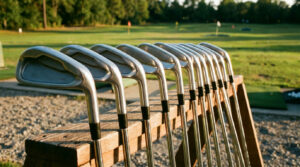
When discussing the best clubs for mishits, irons deserve special attention. Game-improvement and super game-improvement irons dominate this space. They feature cavity backs, wide soles, and perimeter weighting. Each element helps stabilize the clubface and protect distance.
Modern irons also use multi-material construction. Tungsten inserts lower the center of gravity while maintaining a clean look. Thin faces flex more at impact, boosting ball speed. Even when contact drifts low or toward the toe, results remain playable. That consistency builds trust quickly.
Why Shaft Choice Matters More Than You Think
Clubheads get most of the attention, yet shafts quietly influence mishits. A shaft that’s too stiff can reduce face control. Conversely, a shaft that’s too flexible may exaggerate timing issues. Proper shaft weight and flex improve consistency and strike quality.
Lighter shafts often help golfers generate speed without forcing swings. Meanwhile, higher torque shafts can reduce harsh feedback on mishits. When paired correctly, the shaft complements forgiving clubheads rather than working against them.
Wedges That Protect Partial Mishits
Short game mishits hurt scores fast. Chunked chips and thin pitches destroy momentum. Forgiving wedges focus on sole design and bounce versatility. Wider soles prevent digging, while higher bounce protects against fat shots.
Groove design also matters. Consistent spin across the face helps maintain control, even on slight mishits. While no wedge eliminates errors completely, forgiving designs reduce disaster outcomes around the green.
Putters That Save Mishits on the Green
Off-center hits happen on the green too. Fortunately, modern putters are extremely forgiving. High-MOI mallet putters resist twisting, keeping speed consistent. As a result, mishits finish closer to the hole.
Face inserts also improve roll consistency. When the ball starts rolling smoothly, distance control improves naturally. For golfers who miss the center often, forgiving putters can shave strokes immediately.
Choosing the Right Forgiving Clubs for Your Game
Not all forgiving clubs suit every golfer. Skill level, swing speed, and miss tendencies matter. Some players miss high on the face, while others struggle with heel strikes. Understanding your common patterns helps narrow options.
Club fitting accelerates this process. Even a basic fitting reveals strike location and launch data. Armed with that information, selecting the best clubs for mishits becomes far easier. Instead of guessing, you make informed decisions.
Confidence Is the Real Benefit of Forgiving Clubs
Forgiving clubs don’t just improve numbers. They change how you approach shots. When fear disappears, swings relax. That relaxation improves tempo and contact. It becomes a positive feedback loop.
Over time, better strikes occur naturally. Ironically, the more forgiving your clubs, the better your swing often becomes. Confidence fuels improvement far more than punishment ever could.
Technology Continues to Raise the Floor
Golf technology keeps advancing. Manufacturers now design clubs to protect the worst swings, not just reward perfect ones. Artificial intelligence optimizes face patterns. Advanced materials redistribute weight precisely. These innovations widen the performance window.
As a result, mishits today travel farther and straighter than ever before. That trend benefits recreational golfers immensely. Instead of chasing perfection, you can focus on enjoyment and steady progress.
Balancing Forgiveness and Feel
Some golfers worry forgiving clubs feel dull. While older designs sacrificed feedback, modern clubs strike a balance. Engineers preserve feel while increasing stability. Soft inserts and vibration dampening improve sound and sensation.
You still know when you miss. However, the feedback is constructive rather than punishing. That balance makes improvement sustainable.
When Forgiveness Becomes a Competitive Advantage
Even elite players use forgiving clubs strategically. Many tour professionals carry forgiving long irons or hybrids. They understand consistency beats perfection. That mindset applies at every level.
Using the best clubs for mishits doesn’t mean settling. It means playing smarter. Golf rewards strategy, not pride.
Final Thoughts on Fixing Off-Center Hits
Off-center hits don’t define your ability. Equipment choices shape outcomes more than most golfers realize. By choosing forgiving drivers, hybrids, irons, wedges, and putters, you protect your scorecard from unnecessary damage. More importantly, you protect your confidence.
The best clubs for mishits don’t fix swings overnight. However, they create a forgiving environment where improvement thrives. When the game feels fair, progress follows naturally.
Conclusion
Golf becomes enjoyable when mistakes stay manageable. The best clubs for mishits reduce punishment, preserve distance, and keep shots playable. By embracing forgiveness in your equipment, you build confidence, consistency, and long-term improvement. Smart club choices won’t just fix off-center hits. They’ll change how you experience the game.
FAQ
1. Do forgiving clubs really help off-center hits?
Yes. Forgiving clubs reduce twisting, preserve ball speed, and limit distance loss on mishits.
2. Are forgiving clubs only for beginners?
No. Many mid and low handicappers use forgiving clubs for consistency and confidence.
3. Should I choose hybrids over long irons?
For most golfers, hybrids provide better launch and forgiveness on mishits.
4. Does shaft choice affect mishits?
Absolutely. Proper shaft flex and weight improve timing and strike consistency.
5. Will forgiving clubs prevent improvement?
No. They often accelerate improvement by reducing fear and promoting better swings.