Over time, many golfers notice subtle changes in their game without understanding the cause. Often, aging golf clubs performance is the hidden factor behind reduced ball speed and inconsistent launch. While swing mechanics get most of the attention, worn equipment can quietly affect how your shots behave.
At first, these changes are easy to ignore. You might hit a few shorter shots or struggle with trajectory. However, as wear continues, the impact becomes more noticeable. Therefore, understanding how aging golf clubs performance influences your results is essential if you want to maintain consistency.
Rather than assuming your swing is the problem, it’s worth taking a closer look at your equipment. In many cases, the condition of your clubs plays a bigger role than expected.
What Happens to Clubs as They Age
Golf clubs are built for durability, yet they are not immune to wear. Every swing creates stress on the clubface, grooves, and shaft. As a result, aging golf clubs performance gradually declines.
Grooves on irons and wedges wear down over time. This reduces their ability to generate spin. Consequently, your shots may fly differently and lose control upon landing.
Clubfaces also experience micro-damage from repeated impacts. While not always visible, this affects how energy transfers to the ball. As a result, ball speed decreases slightly with each strike over time.
Shafts can also lose responsiveness. Although the change is subtle, it still influences timing and consistency. Therefore, aging golf clubs performance is not just about appearance but also about internal changes.
Understanding these factors helps you recognize why your results may change even if your swing stays the same.
How Ball Speed Is Affected by Wear
Ball speed is one of the most important factors in distance. However, aging golf clubs performance can reduce it in ways that are not immediately obvious.
When the clubface wears down, energy transfer becomes less efficient. As a result, the ball leaves the face with less speed. Even small losses can lead to noticeable distance reductions over time.
Additionally, worn grooves affect how the ball interacts with the clubface. This can change spin rates and reduce overall efficiency. Consequently, your shots may not travel as far as they once did.
Another factor is impact consistency. Older clubs may not provide the same feedback. Therefore, it becomes harder to strike the ball cleanly. This further reduces ball speed.
By understanding these effects, you can see how aging golf clubs performance directly influences your distance.
The Impact on Launch and Trajectory
Launch angle plays a crucial role in how your shots perform. Aging golf clubs performance can significantly affect this aspect of your game.
Worn grooves reduce spin, which often leads to lower or less controlled launch angles. As a result, your shots may not reach optimal height. This can cause the ball to fall short of its intended target.
Inconsistent launch is another issue. Older clubs may produce varying trajectories, even with similar swings. Consequently, distance control becomes more difficult.
Clubface wear can also alter loft slightly over time. While the change may be small, it still impacts launch conditions. Therefore, aging golf clubs performance affects both height and consistency.
Understanding these changes helps explain why your shots may behave differently than before.
Why Distance Loss Happens Gradually
Distance loss rarely happens overnight. Instead, it occurs gradually as clubs wear down. Aging golf clubs performance declines slowly, making it harder to notice at first.
You might initially lose a few yards on each shot. However, over time, this adds up. Consequently, you may find yourself using longer clubs more often.
Because the change is gradual, many golfers blame their technique. Yet, equipment wear is often the real cause. Therefore, recognizing this pattern is important.
Tracking your distances can help identify these changes. If your averages decrease despite consistent swings, aging golf clubs performance may be the reason.
By paying attention to these signs, you can address the issue before it significantly affects your game.
Signs Your Clubs Are Losing Performance
It’s not always easy to tell when your clubs are worn. However, certain signs indicate declining aging golf clubs performance.
One common sign is reduced spin, especially with wedges. If your shots no longer stop quickly on the green, your grooves may be worn.
Inconsistent distances are another indicator. If similar swings produce different results, your clubs may be the problem.
You may also notice changes in feel. Older clubs often provide less feedback. Consequently, it becomes harder to judge your shots.
Visible wear on the clubface is another clue. Smooth grooves or deep scratches suggest that performance has declined.
Recognizing these signs helps you determine when action is needed.
Can Maintenance Slow Down Wear?
While aging is inevitable, proper maintenance can extend the life of your clubs. Taking care of your equipment helps preserve aging golf clubs performance for longer.
Cleaning your clubs regularly removes dirt and debris. This prevents buildup that can accelerate wear. As a result, grooves remain effective for a longer period.
Drying your clubs after use also prevents rust. Moisture can weaken materials over time. Therefore, proper storage is essential.
Using headcovers can protect your clubs during transport. Although often overlooked, this reduces unnecessary damage.
Regular inspections allow you to spot issues early. Consequently, you can address problems before they worsen.
While maintenance cannot stop aging completely, it helps maintain performance for as long as possible.
When to Consider Replacing Your Clubs
Eventually, all clubs reach a point where replacement becomes necessary. Aging golf clubs performance declines to a level where maintenance is no longer enough.
Frequent players may need to replace their irons every few years. However, this depends on usage and care. Therefore, there is no fixed timeline.
If performance issues persist despite practice, it may be time to upgrade. Testing newer clubs can reveal noticeable differences. As a result, you can determine whether replacement is worthwhile.
Advancements in technology also play a role. Newer clubs often offer better energy transfer and consistency. Consequently, upgrading can improve both distance and control.
Knowing when to replace your clubs ensures that your equipment supports your game.
Modern Technology vs Aging Equipment
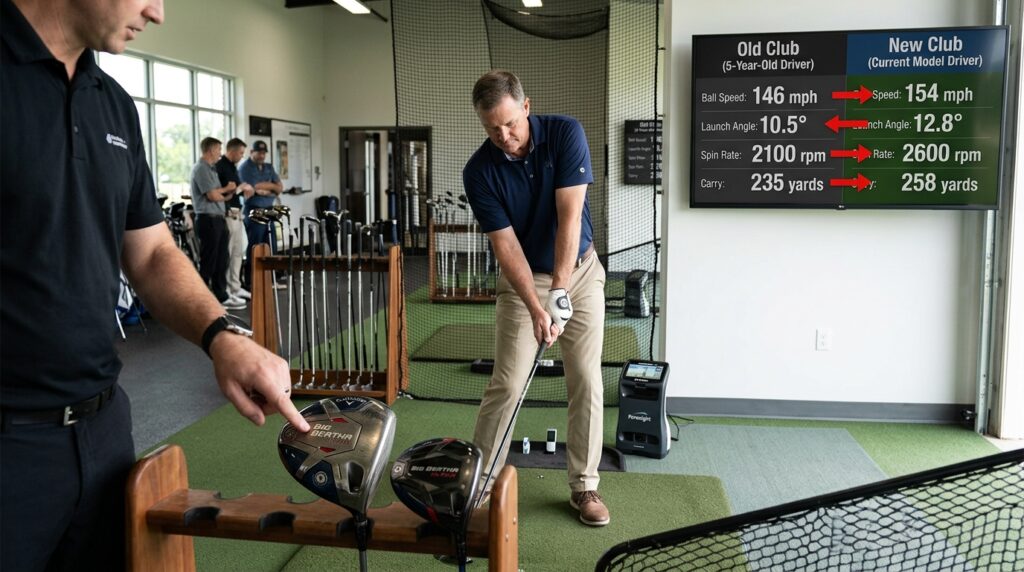
Golf technology has advanced significantly in recent years. Comparing modern clubs to older ones highlights the impact of aging golf clubs performance.
New designs focus on maximizing ball speed and optimizing launch conditions. As a result, they provide more consistent results across the clubface.
Advanced materials improve durability and energy transfer. Consequently, newer clubs maintain performance longer.
Additionally, improved groove designs enhance spin control. This helps maintain accuracy and consistency.
While older clubs can still perform well, they may lack these advantages. Therefore, upgrading can provide noticeable benefits.
Understanding these differences helps you decide whether to stick with your current clubs or explore new options.
Balancing Skill and Equipment
It’s important to remember that equipment is only part of the equation. Skill development remains essential for improving your game.
However, aging golf clubs performance can limit your progress. Even with a good swing, worn clubs reduce effectiveness. Therefore, maintaining quality equipment supports your development.
At the same time, new clubs cannot replace proper technique. Practice and consistency still matter most. Consequently, a balanced approach works best.
By combining skill improvement with reliable equipment, you can achieve better results overall.
Conclusion
Aging golf clubs performance can quietly affect your game by reducing ball speed and altering launch conditions. While these changes happen gradually, they can have a significant impact over time.
By understanding how wear affects your clubs, you can make informed decisions about maintenance and replacement. As a result, you maintain consistency and confidence on the course.
Regular care can extend the life of your equipment. However, recognizing when to upgrade is just as important. When your clubs no longer perform as expected, it may be time to explore new options.
In the end, the goal is to enjoy the game and perform at your best. By addressing aging golf clubs performance, you ensure that your equipment supports your progress every step of the way.
FAQ
- How do I know if my golf clubs are losing performance?
Look for reduced distance, inconsistent shots, and visible wear on the clubface. - Can worn grooves affect ball flight?
Yes, worn grooves reduce spin, which impacts both launch and control. - How often should I replace my golf clubs?
It depends on usage, but frequent players may need replacements every few years. - Does cleaning clubs improve performance?
Cleaning helps maintain grooves and consistency but cannot restore worn clubs fully. - Are newer clubs significantly better than older ones?
Modern designs offer improved technology, which can enhance distance and consistency.