Many golfers focus on swing mechanics when performance drops. However, aging irons performance often plays a bigger role than expected. Over time, even high-quality irons lose their effectiveness, which can lead to inconsistent ball striking and reduced distance.
At first, the changes are subtle. You might notice slightly shorter shots or less control. Still, as wear continues, the impact becomes more obvious. Therefore, understanding how aging irons performance affects your game is essential if you want to maintain consistency.
While skill always matters, equipment condition cannot be ignored. As a result, evaluating your irons regularly helps ensure your performance stays on track.
What Happens to Irons Over Time
Golf irons are built to last, yet they are not immune to wear. Each shot creates small amounts of stress on the clubface. Consequently, grooves begin to wear down, and the face loses its sharpness.
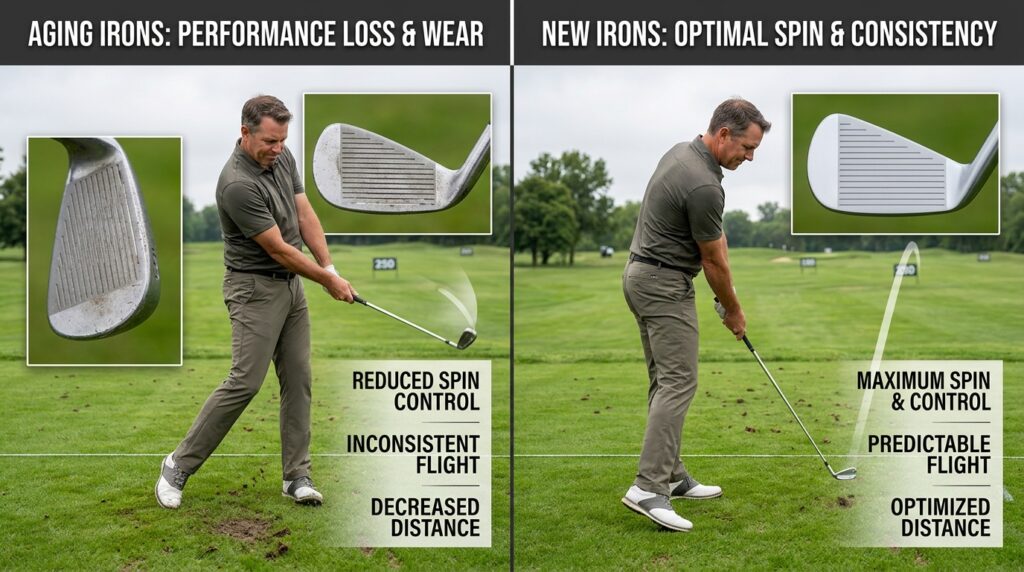
Grooves play a crucial role in controlling spin. When they become worn, the ball reacts differently. As a result, shots may fly higher with less control or roll out more than expected.
Additionally, repeated impacts can slightly alter the structure of the clubface. While these changes may seem minor, they still influence aging irons performance in noticeable ways.
Shafts also experience fatigue over time. Although this process is gradual, it can affect consistency. Therefore, older irons may not respond the same way they once did.
Even cosmetic wear can signal deeper issues. Scratches and dents may not seem important, but they often indicate heavy use. Consequently, performance may already be compromised.
How Ball Striking Changes with Wear
Ball striking depends on clean, consistent contact. However, aging irons performance can interfere with this process. As grooves wear down, the interaction between the clubface and the ball changes.
For example, worn grooves reduce friction. This leads to lower spin rates, which can make shots less predictable. As a result, controlling distance becomes more difficult.
Furthermore, the feel of the club may change. Golfers often rely on feedback to adjust their swings. When that feedback becomes muted, it becomes harder to make precise adjustments.
Another issue involves energy transfer. A well-maintained clubface delivers energy efficiently. However, as the face wears, some of that energy is lost. Consequently, shots may feel weaker, even with a solid swing.
Over time, these small changes add up. That’s why aging irons performance can significantly impact your ability to strike the ball cleanly.
Distance Loss: Gradual but Noticeable
Distance loss is one of the most common signs of worn irons. While it may not happen overnight, the difference becomes clear over time.
As grooves wear, spin rates decrease. This often leads to less optimal ball flight. Consequently, shots may not carry as far as they once did.
In addition, weakened energy transfer reduces overall power. Even if your swing remains consistent, the ball may not travel the same distance. Therefore, you might find yourself using longer clubs more often.
Another factor is launch consistency. Older irons may produce inconsistent launch angles. As a result, distance control becomes less reliable.
Golfers often blame their technique for these issues. However, aging irons performance is frequently the underlying cause. Recognizing this can help you make smarter decisions about your equipment.
Signs Your Irons Are Hurting Your Game
It’s not always obvious when irons need replacing. Still, certain signs indicate declining performance.
One clear sign is inconsistent distance. If similar swings produce different results, your clubs may be the issue. Additionally, reduced spin around the greens suggests worn grooves.
You might also notice a change in feel. If your irons no longer provide clear feedback, it can affect your confidence. Consequently, your overall performance may suffer.
Another indicator is visible wear on the clubface. Deep scratches or smooth grooves often signal that performance has declined.
When these signs appear, it’s worth evaluating whether aging irons performance is holding you back.
When to Replace Your Irons
There is no fixed timeline for replacing irons. However, usage plays a significant role. Golfers who play frequently will experience wear more quickly.
As a general guideline, irons used regularly may need replacement after several years. Still, this depends on how often you practice and play.
If performance issues become noticeable, it may be time to upgrade. Additionally, advancements in technology can provide added benefits. Newer irons often offer improved forgiveness and consistency.
Before replacing your clubs, consider testing newer models. This allows you to compare performance directly. As a result, you can make a more informed decision.
Ultimately, replacing your irons should improve your game. If aging irons performance is limiting your results, upgrading becomes a logical step.
Can Maintenance Extend Their Life?
Proper maintenance can slow down wear. While it cannot prevent aging entirely, it helps preserve performance.
Cleaning your clubs regularly is essential. Dirt and debris can accelerate groove wear. Therefore, keeping your irons clean improves longevity.
Using headcovers can also reduce damage during transport. Although many golfers skip this step, it helps protect the clubface.
Additionally, storing your clubs in a dry environment prevents rust. Moisture can weaken materials over time. As a result, proper storage extends the life of your equipment.
Periodic inspections are also helpful. Checking for wear allows you to address issues early. Consequently, you can maintain better aging irons performance for longer.
While maintenance helps, it cannot fully restore worn clubs. Eventually, replacement becomes necessary.
Modern Technology vs Older Irons
Golf technology has advanced significantly in recent years. New irons offer features that improve both distance and forgiveness.
For example, modern designs use advanced materials to optimize weight distribution. This results in better stability and higher ball speeds. Consequently, players achieve more consistent results.
Additionally, newer groove designs enhance spin control. This allows for better performance around the greens. As a result, golfers gain more confidence in their short game.
While older irons can still perform well, they may lack these advantages. Therefore, comparing your current clubs to newer options can highlight potential improvements.
If aging irons performance is limiting your game, modern technology may provide a noticeable upgrade.
Balancing Skill and Equipment
It’s important to remember that equipment is only part of the equation. Skill development remains essential for long-term improvement.
However, using worn clubs can make progress more difficult. Even with a solid swing, poor equipment limits your results. Therefore, maintaining quality gear supports your development.
At the same time, upgrading clubs will not fix fundamental issues. Practice and proper technique still matter most. Consequently, a balanced approach works best.
By combining skill improvement with reliable equipment, you can achieve better performance overall.
Conclusion
Aging irons performance can quietly impact your game in ways you might not notice at first. From reduced spin to inconsistent distance, worn clubs affect both ball striking and confidence.
While these changes happen gradually, they eventually become significant. Therefore, paying attention to your equipment is just as important as refining your swing.
If your irons show signs of wear or your performance declines, it may be time to consider an upgrade. At the same time, proper maintenance can help extend their lifespan.
In the end, the goal is to enjoy the game and play your best. By addressing aging irons performance, you give yourself the best chance to achieve both.
FAQ
- How can I tell if my irons are worn out?
Look for reduced spin, inconsistent distance, and visible groove wear on the clubface. - Do older irons affect accuracy and control?
Yes, worn grooves can reduce control, making shots less predictable. - How often should golf irons be replaced?
Replacement depends on usage, but frequent players may need new irons every few years. - Can cleaning clubs improve their performance?
Cleaning helps maintain grooves and consistency, but it cannot fully restore worn clubs. - Are newer irons significantly better than older ones?
Modern irons offer improved technology, which can enhance distance, forgiveness, and consistency.