
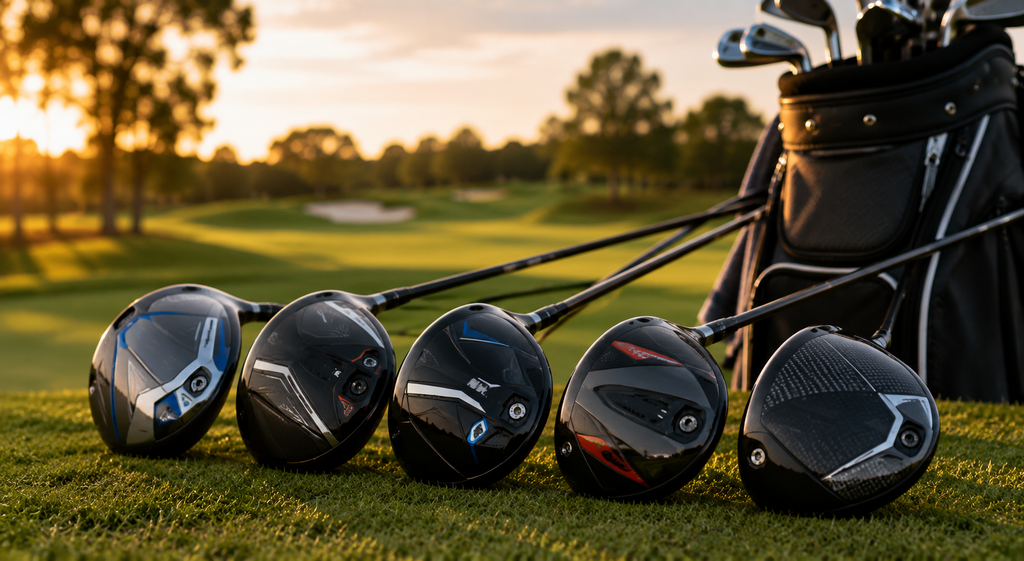
Finding the best golf drivers can help mid-handicap players gain distance without giving up control. Most golfers in this range strike plenty of solid drives. However, occasional misses still cost fairways and distance. Therefore, the ideal driver should offer useful forgiveness while providing enough adjustability for a developing swing. In 2026, golfers can choose from many designs built around stability, speed, launch, and consistency. Instead of chasing the longest club on the shelf, focus on a driver that makes your normal tee shot more reliable.
What Mid-Handicap Golfers Need From a Driver
Mid-handicap golfers sit in an interesting equipment category. They usually have enough skill to generate consistent shots, yet they still need help when impact moves away from the center.
For that reason, forgiveness should remain a priority. A stable clubhead can reduce distance loss on heel and toe strikes. It may also keep those misses closer to the intended line.
Distance matters too. However, golfers should look beyond their longest drive during testing. Average carry distance provides a much more useful picture of performance.
Launch also plays an important role. A golfer who launches the ball too low may lose carry. In contrast, excessive launch or spin can reduce overall efficiency.
The best golf drivers balance these factors rather than maximizing only one. Ideally, a mid-handicap player should see dependable launch, useful ball speed, and manageable dispersion.
Confidence matters as well. Head shape, sound, feel, and alignment can affect how comfortable you feel over the ball. Although those factors are subjective, they can influence your swing.
Forgiveness Should Be a Major Priority
Forgiveness is not only for beginners. Even skilled golfers miss the center of the face, especially when trying to generate extra speed.
Modern drivers often use perimeter weighting and high-stability designs to resist twisting. As a result, mishits can retain more ball speed and stay closer to the target.
For mid-handicap players, this can turn a poor swing into a playable result. That difference matters during a full round.
Look at dispersion when comparing clubs. A driver that produces a tight group of shots may offer more value than one that occasionally creates exceptional distance.
The best golf drivers should protect you on ordinary misses. For example, if you tend to strike toward the heel, test how different heads perform from that location.
Face height can matter too. Golfers who frequently make contact high or low on the face may benefit from a design that maintains speed across a larger area.
However, forgiveness cannot correct every swing flaw. A severe open or closed face will still produce poor shots. Equipment should support reasonable misses rather than replace good technique.
Distance Is More Than Ball Speed
Driver marketing often focuses heavily on speed. While speed matters, it is only one part of useful distance.
Launch angle, spin rate, strike location, and clubhead speed all affect how far a drive carries. Therefore, two golfers with similar ball speeds can achieve different distances.
A properly fitted loft can help optimize launch. Some golfers assume lower loft means more distance. Yet a low-launch player may actually gain yards with additional loft.
Spin requires similar attention. Too much can cause the ball to climb and lose efficiency. On the other hand, too little spin can create unstable flight and reduced carry for certain golfers.
When testing the best golf drivers, compare average carry rather than selecting your single longest shot. Also, watch how consistently each club produces an effective flight.
Total distance can be useful, but course conditions affect roll. Carry distance gives you a more dependable number for comparing equipment indoors or outdoors.
Ultimately, usable distance wins. Ten extra yards offer little benefit when the ball regularly finishes behind trees.
Look for Useful Adjustability
Adjustable drivers allow golfers to change certain characteristics without replacing the club. Depending on the model, you may be able to alter loft, lie, face-angle tendencies, or weight placement.
These features can be valuable for a mid-handicap golfer. Your swing may continue to improve, so a degree of adjustability can help the driver remain useful.
However, more settings do not automatically mean better performance. In fact, too many options can become confusing without reliable testing.
Start with the manufacturer’s neutral setting. Then make one change at a time. This approach makes it easier to understand how each adjustment affects ball flight.
Some of the best golf drivers offer movable or interchangeable weights. Shifting weight may influence launch, spin, stability, or directional bias.
An adjustable hosel is also useful. It can provide options for golfers who need slightly more or less loft.
Still, avoid changing settings after every poor round. Your swing naturally varies. Instead, use adjustments to address consistent tendencies supported by repeated results.
Choose a Driver That Matches Your Common Miss
Understanding your normal miss can simplify driver selection. Many golfers repeatedly lose shots in the same direction or from the same strike location.
For example, a player who often misses right may benefit from a draw-biased design. These drivers typically position weight to make it easier to square the clubface.
Meanwhile, golfers who fight a hook may prefer a more neutral setup. Some adjustable models can also move weight toward a fade-oriented position.
Strike location deserves attention too. Impact tape or face spray can show where you regularly contact the ball.
If your strikes spread widely across the face, prioritize maximum stability. Conversely, golfers with consistent contact can consider models that trade a little forgiveness for lower spin or enhanced workability.
The best golf drivers for your game should make your common miss less damaging. They do not need to eliminate it completely.
This is why online recommendations should serve as a starting point. Your own impact pattern provides more useful information than another golfer’s experience.
Driver Categories Worth Comparing in 2026
Rather than assuming one driver suits every mid-handicap golfer, it helps to compare the main design categories available.
Maximum-forgiveness drivers place stability first. They often feature larger visual profiles and weighting designed to reduce twisting. Therefore, they suit golfers who want tighter dispersion.
Low-spin models target players who create excessive spin or want a more penetrating flight. However, they can sometimes be less forgiving. As a result, they are not automatically the best choice for every faster swinger.
Draw-biased drivers help golfers who consistently leave the face open or lose shots to the right. Yet players with a neutral flight may find that bias unnecessary.
Balanced models sit between these extremes. They offer a mixture of speed, forgiveness, launch, and adjustability.
For many mid-handicap golfers, the best golf drivers come from this balanced category. Nevertheless, your swing data should determine which design deserves a place in your bag.
Do Not Ignore the Driver Shaft
A premium driver head cannot perform at its best with a poorly matched shaft. Therefore, shaft selection deserves serious attention.
Flex is the most familiar specification. Common options include regular, stiff, and extra stiff. However, manufacturers do not use one universal flex standard.
Swing speed offers a starting point, but tempo matters too. A golfer with a smooth transition may prefer a different profile from someone who changes direction aggressively.
Shaft weight also affects feel. A lighter option may help certain golfers create speed. Conversely, a heavier shaft can provide greater awareness and control for others.
Length matters as well. Longer shafts may create additional speed, but they can make center contact harder to achieve. A slightly shorter driver can sometimes improve average distance because strikes become more consistent.
When comparing the best golf drivers, test more than one shaft when possible. A head that initially performs poorly may improve dramatically with a different shaft.
How Much Loft Should a Mid-Handicap Golfer Use?
There is no single ideal driver loft for every mid-handicap player. Swing speed, attack angle, strike position, and spin all influence the answer.
Many recreational golfers benefit from more loft than they expect. Extra loft can help create enough launch to maximize carry.
However, a golfer with a positive attack angle and plenty of speed may perform better with less loft. Therefore, copying another player’s setup can produce disappointing results.
Adjustable hosels make experimentation easier. You can compare several loft settings while watching launch and dispersion.
Keep in mind that changing an adjustable hosel may affect more than the stated loft. Depending on the design, it can also influence face presentation and lie.
The best golf drivers produce a flight that works with your swing and typical course conditions. Ideally, the ball should launch strongly without climbing excessively.
A launch monitor can provide helpful data. Still, outdoor ball flight is valuable because it shows how the shot behaves in real conditions.
Sound and Feel Matter More Than You Might Think
Performance data should guide your purchase, but golf remains a game of confidence. A driver that feels unpleasant can become difficult to trust.
Some golfers prefer a solid, muted impact. Others enjoy a sharper sound. Neither preference is universally correct.
Head shape also affects confidence. A stretched profile may make a club appear more forgiving. Meanwhile, another golfer might prefer a compact appearance behind the ball.
Grip size and overall club weight can influence comfort too. These details may seem small during a short demo session. However, they become more noticeable across 18 holes.
The best golf drivers should provide numbers you trust and feedback you enjoy. If two models perform almost identically, sound and feel can become sensible deciding factors.
Do not let appearance override clearly superior performance. Nevertheless, confidence at address has real value, especially on tight driving holes.
How to Test Drivers Properly Before Buying
Testing should recreate your normal golf as closely as possible. Start by warming up instead of immediately swinging drivers at maximum effort.
Next, hit your current driver. Record its carry, total distance, launch, spin, and dispersion if a launch monitor is available. Your existing club provides a baseline.
Then test potential replacements using the same golf ball whenever possible. Ball changes can influence spin and launch, which makes comparisons less reliable.
Hit enough shots to identify patterns. Do not judge a club after three swings. Likewise, remove obvious mishits only when you would treat them equally across every model.
When comparing the best golf drivers, focus on average performance. Look for repeatable carry, tighter dispersion, and predictable ball flight.
You should also test at your normal swing speed. Swinging unusually hard can make one model appear longer while producing results you cannot repeat on the course.
Finally, revisit your strongest options after testing several clubs. This helps confirm your preference before purchasing.
Should You Get Professionally Fitted?
A professional driver fitting can be particularly valuable for mid-handicap golfers. At this stage, your swing is often consistent enough for a fitter to identify meaningful patterns.
A good fitting compares clubheads, lofts, shafts, and settings. Launch-monitor data can then show how each combination changes performance.
The goal should not simply be maximum ball speed. Instead, a fitter should consider launch, spin, carry, strike pattern, and dispersion.
For example, one combination may travel five yards farther on perfect strikes. Another may produce much tighter results across all shots. The second option could save more strokes.
A fitting also helps narrow the best golf drivers to those that actually match your swing. This can prevent an expensive purchase based only on reviews or marketing.
If a full fitting is unavailable, use a quality demo facility. Compare your existing driver with several alternatives under similar conditions.
How Much Should You Spend on a New Driver?
New drivers can represent a significant investment. Therefore, decide what improvement would justify replacing your current club.
If your existing driver fits reasonably well and performs consistently, a new release may offer only modest gains. In that case, keeping your current club can be sensible.
Previous-generation models are worth considering too. Golf technology develops steadily, but a driver does not suddenly become ineffective when a new version appears.
Used equipment can offer excellent value. However, inspect the crown, face, shaft, hosel, and adjustment system before buying.
The best golf drivers are not necessarily the most expensive models. Value depends on how much the club improves your actual performance.
Spend more when a properly fitted option clearly improves important areas. Otherwise, consider using the savings for lessons, practice, or other parts of your bag.
Common Driver Buying Mistakes to Avoid
One mistake is choosing a driver solely because it produces the longest single shot. Golfers need repeatable distance rather than occasional highlights.
Another mistake is buying too little loft. Many players want a low, powerful flight, yet insufficient launch can reduce carry and make misses harder to control.
Choosing the wrong shaft can also hurt performance. Avoid selecting stiff flex simply because it sounds more advanced.
In addition, do not assume every mid-handicap player needs the same design. Two golfers with identical handicaps can have completely different swings.
Buying without comparing against your current club is another common error. Without a baseline, small improvements can seem larger than they actually are.
Finally, avoid changing equipment simply because your driving has struggled for a few rounds. Technique may be the real issue.
The best golf drivers support a reasonably repeatable swing. They cannot permanently correct poor setup, alignment, or face control.
Making Your Final Driver Choice
Start by identifying your priorities. Do you need more forgiveness, greater carry, lower spin, higher launch, or help with a directional miss?
Next, narrow your search to driver designs that address those needs. Then compare suitable shafts and lofts.
During testing, focus on averages. A driver that keeps ten shots within a useful area is often more valuable than one producing a single enormous drive.
Also, consider how the club performs when you miss the center. Mid-handicap players hit plenty of good shots, but the quality of their misses often determines scores.
The best golf drivers should give you confidence when the fairway becomes narrow. Ideally, your chosen model offers enough forgiveness for imperfect swings while rewarding solid contact.
Do not rush the final decision. A driver can remain in your bag for several seasons, so performance and fit deserve more attention than launch-day excitement.
Conclusion
Mid-handicap golfers need a driver that balances several qualities. Distance is important, but forgiveness, launch, spin, shaft fit, and dispersion can matter just as much.
Start with your normal ball flight and common miss. Then test models designed to improve those areas. Compare average carry and shot pattern instead of chasing the longest result.
Adjustability can add useful flexibility, while a suitable shaft can improve how the entire club performs. A professional fitting can also help you make a more informed choice.
Ultimately, the best golf drivers are the ones that make your normal tee shots more effective. Choose a driver that provides confidence, predictable flight, and useful forgiveness. When your equipment supports your swing, you can spend less time worrying about the club and more time finding fairways.
FAQ
1. What type of driver is best for a mid-handicap golfer?
A balanced or forgiving model is often a strong choice. Look for stable performance, suitable launch, and enough adjustability to match your typical ball flight.
2. Should a mid-handicap player use a low-spin driver?
Only when swing data supports it. Golfers who generate excessive spin may benefit, while players with naturally low spin could lose carry and consistency.
3. Is a 9-degree or 10.5-degree driver better?
Neither loft is automatically better. Swing speed, attack angle, impact location, and spin determine the ideal loft. Testing both is more reliable than choosing by handicap.
4. How often should I replace my golf driver?
Replace it when another model provides a meaningful performance improvement or when your current club no longer suits your swing. You do not need to upgrade every year.
5. Is professional driver fitting worth the cost?
It can be valuable, especially for a consistent mid-handicap golfer. A fitting helps compare heads, shafts, lofts, launch conditions, and dispersion before you invest.