
This page is one way to fix iron lie angle mis-hits: write down the miss, then hand the note to a builder. It is not a measuring guide. It is not a personal test. An earlier draft said a small lie error moves the ball a set number of yards. That sentence is gone. This article will not replace it with another number.
How to fix iron lie angle mis-hits on paper first
Lie angle is the angle between the shaft and the sole when the club sits on the ground. That is a definition, not a diagnosis. A push or a pull can come from face, path, ball position, or lie. This note does not decide which one it is. It only records what you saw so someone with a bending tool can look.
Do not bend a hosel at home. A bend needs a tool and a person who does it for work. A bad bend can ruin the hosel. This article will not give a home method.
Do not use this page as a substitute for a measuring session. If you want someone to compare a static mark with an impact mark, ask for that by name. This log only captures the miss. Measuring is a different job.
Fix iron lie angle mis-hits: the miss log
Use one row per iron that misses the same way. Write the club name. Write whether the ball starts left or right of where you aimed. Write whether the miss shows up on a full swing, a punch, or both. Write whether the divot looks deeper toward the toe, deeper toward the heel, or even. Write whether the ball mark on the face, if you use tape or a dry face, sits toward the toe or the heel.
Leave a blank if you did not look. A blank is better than a guess. Do not write a degree. You did not measure one. Do not write a yardage the miss should cost. You do not have that figure from a source on this page.
If the miss flips from one day to the next, write both days. A lie problem that is real tends to repeat on the same club. A miss that flips may be aim or path. The builder needs that difference. You do not have to solve it before you walk in.
Add the target you used. A start line only means something next to an aim line. If you were not aimed, say so. A builder cannot read a push from a shot that started at a tree.
What to ask, and what not to ask them to promise
Ask whether they will look at the sole at impact or only at the club in a rack. Ask them to say which. Ask them to write the before and after on your log if they bend anything. Ask whether they bent one club or the set.
Do not ask them to promise straighter shots. A bend can change how the sole meets the ground. It does not erase a path. If they promise a score change, treat that as sales talk. These steps to fix iron lie angle mis-hits stop at the log and the bend record.
Static lie, the club at rest, is not the same note as the sole at impact. Ask which one they checked. If they only checked the club in the rack, write that. Do not relabel it as an impact check.
Ask them to mark the sole or show you the tape before they bend. You should see the mark they are using. A verbal “it looks upright” is not a record. If they will not show the mark, you can decline the bend.
What this log is not
It is not a full fitting. Shaft, length, grip, and loft are other notes. If the builder wants to change those, start a separate row. Do not mix a loft bend into the lie cell.
It is not a medical claim. This article does not say a wrong lie causes pain or prevents injury. If something hurts, that is a question for a clinician, not for a club blog.
It is not a rule summary. Conforming clubs are explained on the USGA equipment standards page. Read that page if you need the rules. Do not take a rule from this article.
You can read other equipment notes on Best Golf Clubs. Use them for vocabulary. Use your log for the miss. Use the builder’s sheet for any number.
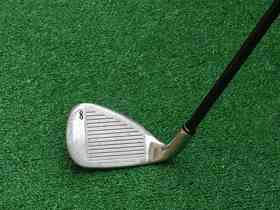
Photo: a golf iron, by Fpedraza, Creative Commons Attribution-ShareAlike license. File: Wikimedia Commons.
A session that does not end in a bend
Sometimes the builder looks and does not bend. That can be the right result. Write “no bend” and the reason they gave, in their words. Reasons that belong on the log sound like what they saw: the sole mark, the face mark, the start line. Reasons that do not belong sound like a ranking of brands.
If they do bend, play the same club on the same miss before you judge the rest of the bag. One changed iron is a check of that row. It is not proof about every club. If the start line did not change, bring the log back. Ask them to look again. Do not add a second bend on the same day just to feel finished.
Keep the log with the clubs. If the miss returns later, you will know what was already bent. You will not have to remember it.
How to tell a face miss from a lie note
A ball that starts at the target and then curves is a different row from a ball that starts offline and stays there. Write the start, then write the curve, as two words. Do not collapse them into “I missed left.” The builder is looking for a start line. Curve can be face or path after the start. This page will not teach you to separate those causes. It only asks you not to hide them in one word.
Heel and toe marks matter for the same reason. A mark in the center with a start that is offline is not the same clue as a mark on the toe with a start that is offline. Write both. If you did not mark the face, leave that cell blank. Do not invent a mark after you have left the range.
Take the log on a day you can see the divot. Mats hide the sole. If you only have a mat, write “mat” on the row. A builder should know the note came from a mat. These steps to fix iron lie angle mis-hits are weaker when the ground never shows a mark.
Bring the log even if you only filled one row. One repeated miss on one iron is enough to start. Do not wait until every club has a story. A builder can look at one sole. They cannot look at a feeling you did not write down.
If they ask you to hit balls, watch the start line, not the score on a screen. Write the start again after the bend, on a new line under the old one. Same aim. Same club. Same ball if you can. That pair of lines is the only before and after this page will ask for. It is still not a measurement of lie. It is a check that the miss you cared about was the miss they worked on.
If the shop wants to sell a full set because of one row, ask them to point at the other rows you did not fill. A blank row is not a vote for a new iron. It is a club you have not logged. You can fix iron lie angle mis-hits one club at a time.
Concrete tip: on one row, write the iron, the start direction, and whether the divot is deeper on the toe or the heel, then hand that row to a builder and let them decide whether to bend.