Before investing in new equipment, understanding the value of golf club fitting can completely change your results. Many golfers focus on brand names or the latest models, yet overlook one of the most important factors in performance. Without the right fit, even the best clubs may not deliver the results you expect.
At first, it might seem easier to buy off-the-shelf clubs. However, every golfer has a unique swing, body type, and playing style. As a result, using standard clubs can lead to inconsistencies and missed opportunities.
That’s where golf club fitting becomes essential. Instead of guessing, you match your equipment to your swing. Consequently, you gain better control, improved distance, and more consistent results.
What Golf Club Fitting Actually Does
Golf club fitting is the process of customizing your clubs to match your physical characteristics and swing mechanics. This includes adjusting factors such as shaft length, flex, lie angle, and grip size.
When these elements are aligned with your swing, performance improves naturally. For example, the correct shaft flex helps optimize energy transfer. As a result, you achieve better distance and accuracy.
Additionally, lie angle affects how the clubhead interacts with the ground. If it’s incorrect, your shots may drift off target. Therefore, golf club fitting ensures your clubs work with your swing rather than against it.
By fine-tuning these details, you create a setup that supports consistency and confidence on the course.
Why Off-the-Shelf Clubs Fall Short
Standard clubs are designed to fit a wide range of players. While this approach works for some, it often leads to compromises. Every golfer has different swing speeds, heights, and preferences.
When you skip golf club fitting, you rely on generic specifications. As a result, your equipment may not match your needs. This can lead to inconsistent shots and reduced performance.
For example, a shaft that is too stiff may limit distance. On the other hand, a shaft that is too flexible can affect accuracy. Consequently, mismatched equipment creates unnecessary challenges.
Even small differences can have a big impact. Therefore, investing in golf club fitting helps eliminate these issues and unlock your full potential.
How Fitting Improves Distance and Accuracy
Distance and accuracy are key goals for every golfer. Golf club fitting directly influences both of these factors.
When your clubs match your swing, energy transfer becomes more efficient. As a result, you generate more ball speed and achieve greater distance. Additionally, proper fitting ensures consistent launch angles and spin rates.
Accuracy also improves with the right setup. Clubs that fit your swing help you square the clubface at impact. Consequently, your shots stay closer to your intended target.
Consistency is another benefit. When your equipment performs reliably, you can focus on execution rather than compensation. Therefore, golf club fitting plays a crucial role in improving overall performance.
The Role of Data in Modern Fitting
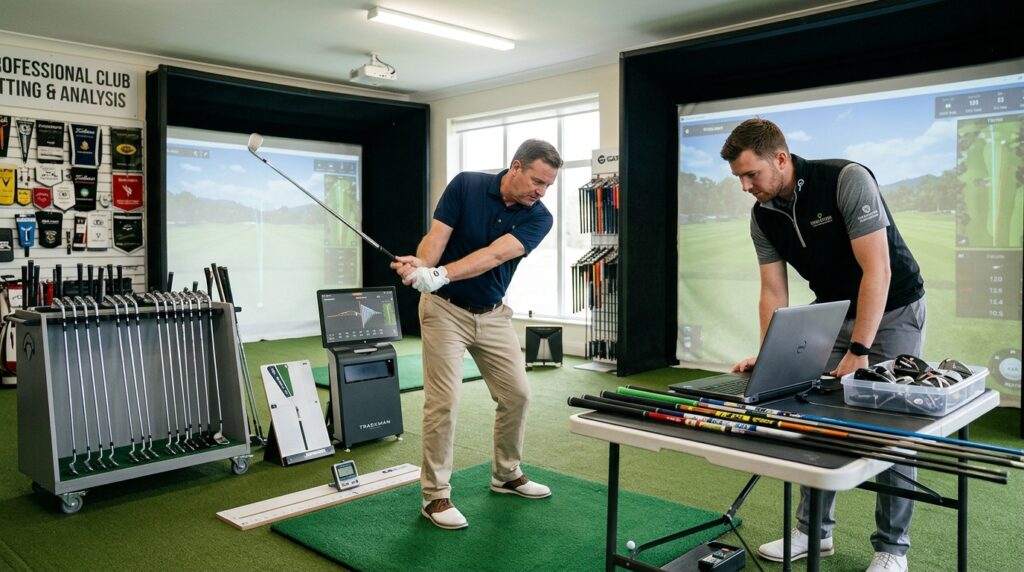
Technology has transformed the golf club fitting process. Modern fittings use advanced tools to analyze your swing in detail.
Launch monitors measure key metrics such as ball speed, launch angle, and spin rate. As a result, fitters can make precise adjustments to your equipment. This data-driven approach removes guesswork from the process.
Additionally, video analysis helps identify swing patterns. This allows for more accurate recommendations. Consequently, you receive clubs that match your unique characteristics.
Many fitting sessions also include comparisons between different club options. This helps you see how changes affect performance. Therefore, golf club fitting becomes a more interactive and informative experience.
Why Every Skill Level Benefits from Fitting
Some golfers believe that fitting is only for advanced players. However, golf club fitting benefits golfers at every level.
Beginners often struggle with consistency. Properly fitted clubs make the game easier and more enjoyable. As a result, they can develop skills more quickly.
Mid-level players benefit from improved control and consistency. Fitting helps refine their performance and reduce mistakes. Consequently, they can take their game to the next level.
Advanced players use fitting to fine-tune their equipment. Even small adjustments can lead to noticeable improvements. Therefore, golf club fitting remains valuable regardless of skill level.
By tailoring equipment to your abilities, fitting supports long-term development.
Common Mistakes When Skipping Fitting
Many golfers make the mistake of buying clubs without fitting. This often leads to frustration and wasted money.
One common issue is choosing clubs based on appearance or brand. While these factors matter, performance should come first. Without golf club fitting, you may end up with equipment that doesn’t suit your game.
Another mistake is relying on recommendations from others. What works for one player may not work for you. Consequently, personal fitting is essential.
Ignoring grip size is another problem. Incorrect grip size can affect control and comfort. Therefore, fitting ensures every detail is optimized.
By avoiding these mistakes, you can make smarter decisions and improve your results.
How to Get the Most from a Fitting Session
To maximize the benefits of golf club fitting, preparation is important. Arriving with a clear understanding of your goals helps guide the process.
Start by identifying areas you want to improve. This could include distance, accuracy, or consistency. As a result, the fitter can focus on your specific needs.
Wear comfortable clothing and bring your current clubs. This allows for accurate comparisons. Additionally, being well-rested ensures consistent swings during testing.
Ask questions throughout the session. Understanding the changes being made helps you learn more about your equipment. Consequently, you become more confident in your choices.
By approaching the session with intention, you can get the most value from golf club fitting.
Cost vs Value of Custom Fitting
Some golfers hesitate due to cost. However, golf club fitting often provides strong long-term value.
While fitting adds to the initial expense, it improves performance significantly. As a result, you get more out of your investment in new clubs.
Additionally, properly fitted clubs reduce the need for future adjustments. This saves money over time. Consequently, the overall value increases.
Consider the cost per round. If fitting helps you play better and enjoy the game more, the investment becomes worthwhile. Therefore, golf club fitting should be viewed as part of the purchase process.
When You Should Get Fitted
Timing is important when considering golf club fitting. Ideally, you should get fitted before buying new clubs.
This ensures that your purchase matches your needs. As a result, you avoid costly mistakes. Additionally, fitting can reveal whether you actually need new equipment.
It’s also beneficial after significant changes in your swing. As your technique evolves, your equipment needs may change. Consequently, fitting helps you stay aligned with your development.
Regular players may benefit from periodic fittings. This ensures that their clubs continue to perform optimally. Therefore, golf club fitting is not just a one-time process.
Conclusion
Golf club fitting is one of the most effective ways to improve your game before buying new equipment. By matching your clubs to your swing, you unlock better distance, accuracy, and consistency.
Rather than relying on guesswork, fitting provides a data-driven approach to selecting equipment. As a result, your investment delivers real value.
Every golfer is unique, and your equipment should reflect that. When your clubs fit properly, you play with greater confidence and control.
In the end, golf is about consistency and enjoyment. Golf club fitting ensures that your equipment supports both. By taking this step, you set yourself up for better performance and a more rewarding experience on the course.
FAQ
- What is involved in a professional fitting session?
A fitting session analyzes your swing, measures key data, and adjusts clubs to match your needs. - Can beginners benefit from custom-fitted clubs?
Yes, properly fitted clubs help beginners improve faster and build confidence. - How long does a fitting session usually take?
Most sessions last between 30 minutes and an hour, depending on the level of detail. - Do I need new clubs after every fitting?
Not always. Sometimes adjustments to your current clubs can improve performance. - Is custom fitting worth the extra cost?
Yes, it enhances performance and ensures your equipment delivers long-term value.