
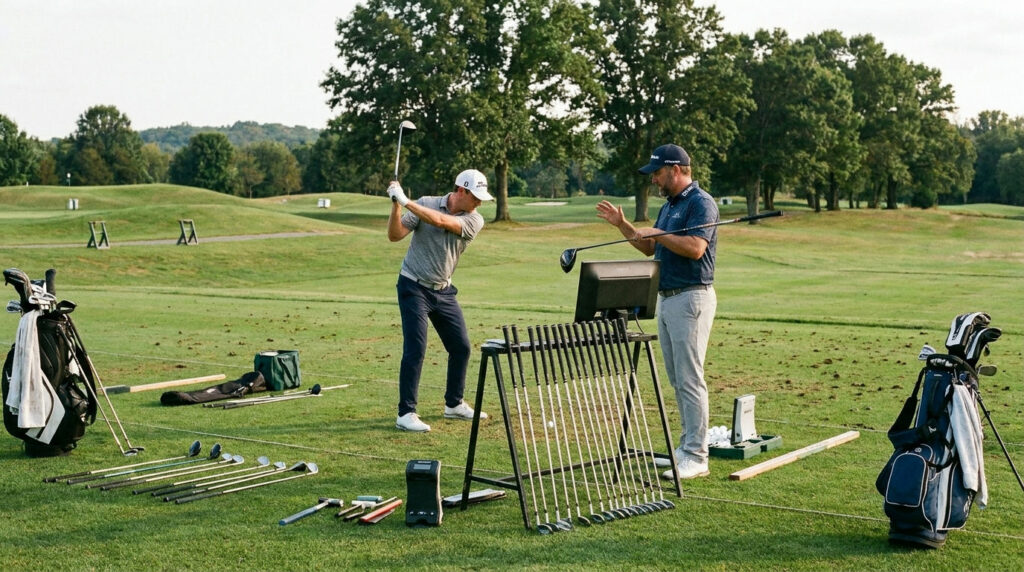
Golf club fitting for beginners can start with an ordinary question: are these clubs suitable for the shots I am learning to play? You do not need to arrive with a favorite shaft or an explanation for every miss. You do need a clear purpose, the clubs you currently use, and a way to understand the recommendation. This guide walks through preparation, the fitting conversation, a comparison session, and the decision afterward. It supplies appointment questions and a record sheet rather than invented test results or a guarantee of improvement. A fitting can produce a useful next step even when that step is further assessment or no purchase.
Choose the appointment question before you book
Write the equipment issue in terms you can observe. For example: I am unsure whether the used irons I own match their listed specifications; I do not have a reliable option for the long shot I keep encountering; or I want to understand the setup of a first set before ordering. Avoid starting with a conclusion such as I need the stiffest shaft or my miss proves the lie is wrong. Those are claims that need assessment. Your question gives the fitter a useful starting point without requiring you to diagnose the equipment yourself.
Ask what the appointment covers, which equipment and brands can be assessed, and how recommendations are recorded. Clarify current charges, any purchase-related conditions, and follow-up terms directly with the provider. Do not assume a fitting is free or that a purchase is required. If you want to inspect existing clubs rather than shop for replacements, say so before booking. Save the response with your appointment notes. That preparation helps avoid arriving at a session whose available service does not match the question you intended to resolve.
Prepare a simple information packet
Bring a list of the clubs you own, models and documented specifications where known, the ball you normally use if relevant, and your fitting question. Mark unknown specifications rather than guessing. Add a brief description of where you practice, which clubs you regularly select, and any equipment concerns already identified. If an instructor is helping you change your swing, ask what information is useful to share. Keep real observations separate from online equipment theories. You do not need a perfect shot history to make the packet informative.
Titleist’s official fitting guidance advises bringing current clubs so the fitter can establish a baseline and communicating relevant swing changes. Follow the actual provider’s preparation instructions and confirm anything unclear before the appointment. Do not substitute a list of product rankings for the equipment you currently use. The packet should help the fitter understand your starting point, not tell them which conclusion the session must reach. Bring a way to save the final recommendation and questions for follow-up.
Ask for plain explanations of the setup
At the start, explain the question and ask which part of the bag will be examined. If a term is unfamiliar, ask the fitter to describe it in relation to the club in your hands. Length, lie, grip, shaft, and head model are configuration details; you do not need to treat them as a vocabulary quiz. Ask which details are measured, which are a starting suggestion, and which will be compared through shots. Keep a note of the actual current setup if it is verified during the session.
PING’s fitting overview describes taking static measurements, establishing initial specifications, and observing shots to refine the recommendation. It also includes feel and consistency in its process. Ask how the provider you visit works rather than assuming every session uses an identical method. An online chart or selector can provide a starting question, but do not turn it into a final prescription without the appropriate assessment. A good explanation connects the process to your actual equipment question and identifies what the session cannot resolve.
Establish a baseline with the club you already use
If your current club can be assessed appropriately, use it for the task agreed with the fitter. Ask what information is being recorded and whether the setup or conditions affect comparison. Describe your usual comfortable swing rather than trying to impress the session with extra effort. Keep inconsistent strikes in the discussion so the recommendation is not based only on the most attractive result. If you do not own a suitable comparison club, ask how that limitation changes the process and record it plainly.
A baseline card can include club and configuration, target task, observed contact, direction, recorded ball-flight information where available, your feedback, and unresolved questions. Use the provider’s actual measurements; do not create a distance estimate because the card has an empty field. Ask the fitter to explain the record in plain language. A beginner can benefit from understanding the comparison without interpreting every launch-monitor number independently. The baseline is a reference for this assessment, not a prediction of every future shot or proof that a single specification caused a miss.
Compare a candidate and discuss the complete pattern
When a candidate is introduced, ask what changed and why it is being tested. Write the actual configuration rather than only the model name. Use a comparable task where practical, and record differences in conditions that cannot be kept the same. Share feedback about the setup and whether the club feels usable for the intended shot. If several details change together, acknowledge that the session may not isolate which one influenced an observation. Do not describe a candidate as proven merely because a good shot occurred while it was in your hands.
Ask how the recommendation accounts for the full pattern, including inconsistent contact and your stated preferences. A useful discussion can explain why one candidate stays in consideration and another does not. Keep further trial or an unresolved decision among the outcomes. Do not force a choice from a product list if the evidence or configuration remains unclear. The appointment should help you understand the actual comparison and its limits. It is not a requirement to buy the newest release or a guarantee that equipment alone will change your golf.
Leave with a written recommendation you can inspect
Request the head model, shaft details, length, lie or other relevant adjustments, grip, and set composition if those items are part of the recommendation. Ask for the reason each important change was suggested and what still needs checking. Keep this record separate from any quote. If buying is an option, obtain the actual current price, included work, delivery conditions, and return or adjustment terms directly. Do not assume the displayed demonstration club and the proposed order use the same setup.
For a used purchase, ask how the offered item can be verified against the recommendation. For a custom order, check that the written specifications and seller’s order agree. If you decide not to purchase, keep the fitting information and the next action. That may be discussing an equipment concern with an instructor, arranging maintenance, testing another category, or reviewing a question the session could not answer. A written record is useful because it makes the decision reviewable; it should not be treated as a universal specification for other beginners.
Plan the follow-up before the details are forgotten
Ask what follow-up is available and which questions should go to the fitter, seller, or instructor. When an order arrives, use the appropriate process to check that the delivered configuration matches the agreed setup. Save the fitting notes, quote, order, and any later clarification together. If you are using a permitted trial, record the intended task and observations without turning every shot into an equipment verdict. Conditions, practice, and instruction can differ from the appointment, so keep those differences visible in the follow-up discussion.
Return with a specific question if needed: the delivered specification is unclear, the recommendation did not address an actual club gap, or an observation needs explanation. Do not adjust clubs yourself based on an ambiguous chart or a single result. Ask a qualified fitter to assess equipment changes and their suitability. Golf club fitting for beginners should leave you with a clearer understanding of your equipment and the next decision, including what remains uncertain. Maintain that record as your game and available information change rather than treating the first appointment as a permanent verdict.
Your next fitting decision
Prepare one equipment question, bring your current setup, ask how the baseline and candidates are compared, and obtain the complete recommendation in writing. Check current buying and follow-up terms directly. Choose the next step from the actual information available, with no need to invent a performance gain or buy before you understand the configuration.