
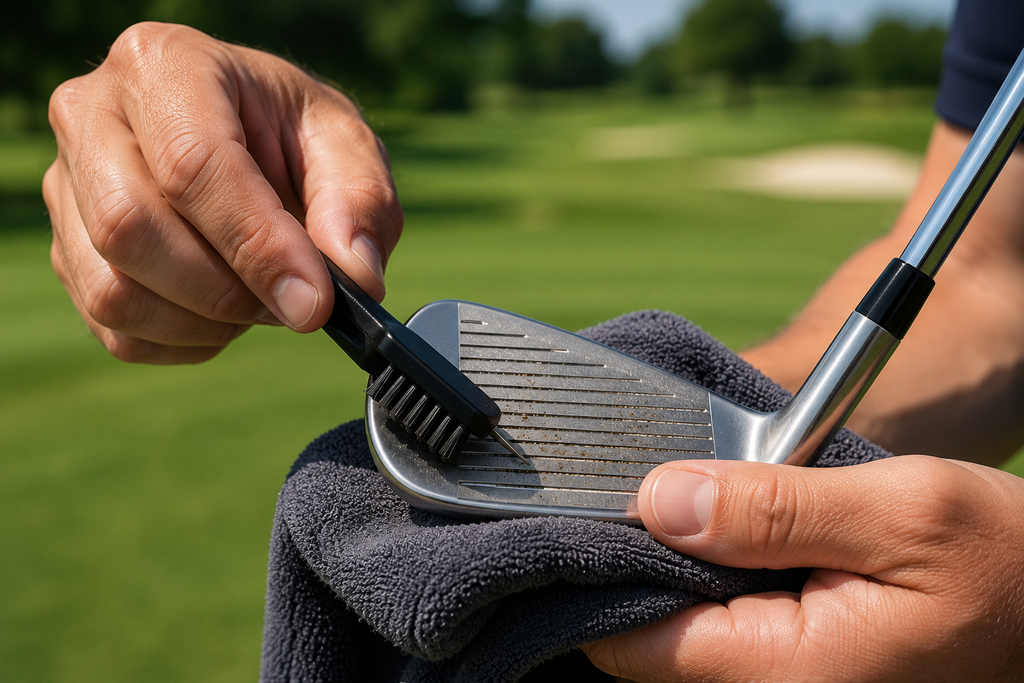
Good golf club groove care is one of the simplest ways to keep your irons and wedges ready for consistent play. Every approach shot, pitch, bunker shot, and practice session can leave grass, soil, sand, and moisture on the clubface. When debris fills the grooves, the interaction between the clubface and golf ball changes. This becomes especially important on wedges, where golfers often depend on predictable launch and spin around the green. Fortunately, maintaining grooves does not require complicated equipment. Regular cleaning, careful drying, appropriate brushes, and occasional inspections can handle most routine maintenance. The key is cleaning often enough to prevent buildup while avoiding aggressive methods that could damage the clubface.
Why Golf Club Grooves Matter
Grooves are engineered into the clubface to help manage the interaction between the ball, face, and material such as grass or moisture that can get between them.
They are particularly important when conditions are less than perfectly clean and dry.
However, grooves cannot function as intended when they are packed with dirt.
Mud, grass, and sand can remain inside them after only a few shots.
That is why golf club groove care should become part of your normal playing routine rather than something you do only once each season.
Clean grooves also make it easier to inspect the clubface for wear or damage.
Clean Your Grooves During the Round
You do not need to wait until you get home.
Carry a golf towel and suitable brush in your bag.
After a dirty shot, remove visible grass, soil, or sand before returning the club to the bag.
This is particularly useful after shots from wet rough, muddy fairways, or bunkers.
Cleaning during the round prevents debris from drying inside the grooves.
As a result, your post-round maintenance becomes easier.
Regular golf club groove care also ensures that the next shot begins with a cleaner clubface.
A few seconds between shots can make a noticeable difference in overall equipment cleanliness.
Use a Damp Towel for Routine Cleaning
A damp towel can handle much of the cleaning required during a normal round.
Use one section to loosen dirt from the face.
Then use a dry section to remove remaining moisture.
For stubborn debris, a suitable brush can help.
Avoid soaking the entire clubhead simply because the grooves are dirty.
Controlled cleaning is usually enough.
This approach makes golf club groove care quick enough to perform regularly.
It also reduces the temptation to use harsh cleaning methods later because dirt has been allowed to harden.
Choose the Right Brush
Not every brush is suitable for every clubface.
A soft nylon brush is a sensible starting point for routine cleaning.
It can loosen grass and soil without requiring aggressive pressure.
Some golf brushes also include metal bristles.
Before using those, check the club manufacturer’s care recommendations.
Certain finishes may scratch or change appearance if cleaned with an inappropriate brush.
Good golf club groove care should preserve the club rather than create unnecessary cosmetic or surface damage.
When in doubt, start with the gentlest tool that effectively removes the debris.
Avoid Excessive Scrubbing
More pressure does not always produce better cleaning.
If dirt does not immediately leave the grooves, slightly dampen the area and allow the moisture to soften the buildup.
Then brush again gently.
Repeated aggressive scrubbing can be unnecessary, particularly on clubs with specialized finishes.
Instead, clean gradually.
Your goal is to remove foreign material, not alter the face.
Effective golf club groove care relies on consistency more than force.
A club cleaned after every few shots rarely needs a severe cleaning session.
Clean the Entire Clubface
Do not focus exclusively on the grooves.
Dirt can also remain between them, near the toe, around the heel, and along the lower portion of the face.
Wipe the entire hitting surface.
This gives you a clear view of the club’s condition and removes material that could transfer back into the grooves.
While cleaning, inspect the face for unusual marks or damage.
Regular golf club groove care becomes more valuable when it doubles as a quick equipment inspection.
You can identify problems earlier instead of discovering them during an important round.
How to Clean Irons After a Round
Start by wiping away loose dirt.
If more cleaning is required, use a damp cloth or a small amount of water with an appropriate soft brush.
Work across the grooves until visible debris has been removed.
Then wipe the face again.
Dry the clubhead completely before returning it to storage.
Repeat the process for each dirty iron.
There is usually no need to leave the clubs soaking in a bucket.
Simple, controlled cleaning provides the foundation for effective golf club groove care without exposing other components to unnecessary moisture.
Give Wedges Extra Attention
Wedges often encounter more sand, soil, and rough than other clubs.
They are also used for shots where golfers care greatly about trajectory and stopping behavior.
Therefore, inspect wedge faces frequently.
After a bunker shot, remove sand before placing the club back into your bag.
After playing from wet rough, clean away grass and moisture.
A quick inspection between shots can keep the face ready for the next situation.
Because wedges may receive extensive practice use, golf club groove care is particularly important for these high-use clubs.
Remove Packed Dirt Carefully
Sometimes soil becomes firmly packed inside individual grooves.
A soft brush may remove it once the face is dampened.
If material remains, use only a cleaning tool that is appropriate for the club and designed for the purpose.
Do not reach for knives, screws, nails, or other sharp household objects.
They can scratch the face or alter groove edges.
The safest golf club groove care methods remove debris without modifying the club.
If you cannot clean the grooves without using excessive force, consult the manufacturer’s recommendations.
Do Not Try to Sharpen the Grooves Yourself
Golfers sometimes assume that sharper grooves automatically mean better performance.
That can lead to the use of aftermarket groove-sharpening tools.
However, altering groove geometry can affect whether a club conforms to the Rules of Golf.
It can also permanently damage the face.
Routine golf club groove care should focus on cleaning and preservation rather than reshaping.
If you believe the grooves have worn significantly, have the club inspected or consider replacing it.
Do not attempt to recreate factory groove specifications by hand.
Understand Normal Groove Wear
Grooves and clubfaces experience wear through repeated impact.
Sand is particularly abrasive.
Golfers who practice bunker shots frequently may notice face wear sooner than players who use their wedges less often.
Range balls, soil conditions, frequency of play, and strike location also influence wear.
There is no single replacement schedule that applies to everyone.
Instead, monitor performance and condition.
Consistent golf club groove care cannot prevent all normal wear, but it helps you distinguish between a dirty face and a genuinely worn one.
Watch for Changes in Performance
A wedge does not suddenly become useless because it has been played for a certain number of rounds.
However, you may eventually notice changes.
Shots may behave differently from clean lies, rough, or partial distances.
Before blaming groove wear, eliminate simpler variables.
Clean the face thoroughly.
Use a golf ball in good condition.
Consider moisture, lie, strike quality, and technique.
If performance still seems different, compare the club with a newer wedge or ask a professional to inspect it.
Good golf club groove care makes this diagnosis easier because debris is no longer an obvious variable.
Keep Grooves Dry After Cleaning
Cleaning is only half of the process.
You also need to dry the club.
Water can remain inside grooves and around small surface details.
Use a clean towel after washing.
Then allow the club to finish air-drying in a suitable location before long-term storage.
Do not place a wet club immediately into a closed bag.
Drying is especially important for carbon steel or other surfaces that may be more susceptible to corrosion.
A complete golf club groove care routine always includes moisture removal.
Be Careful With Raw Wedges
Some wedges use raw or unplated finishes.
These clubs may intentionally develop surface rust as they age.
Therefore, their appearance can change differently from plated wedges.
Before using cleaners, polishes, or rust-removal products, identify the exact finish.
Follow the manufacturer’s recommendations.
Trying to make a raw wedge look permanently polished could work against its intended characteristics.
Your golf club groove care routine should account for the specific materials and finish rather than treating every wedge exactly the same way.
Avoid Harsh Household Cleaners
A strong cleaner may remove dirt, but it may also affect paint, plating, or specialized finishes.
You rarely need aggressive chemicals for normal clubface maintenance.
Water, a suitable cloth, and an appropriate brush can handle most routine cleaning.
If you want to use a cleaning product, check whether the manufacturer approves it for your specific club.
Never mix household chemicals.
Safe golf club groove care should be simple and predictable.
The objective is maintaining equipment, not experimenting with products that could cause discoloration or surface damage.
Clean Clubs After Wet Rounds
Rain creates additional maintenance needs.
During the round, wipe your irons and wedges whenever practical.
Once you return home, remove the clubs from any enclosed travel cover.
Clean visible dirt from the faces and grooves.
Then dry the clubheads and shafts.
Wet towels, gloves, and headcovers should also come out of the bag.
Allow the bag to dry in a ventilated location.
This routine protects more than the grooves.
However, it is an important part of golf club groove care because wet debris can remain packed inside the face if the clubs are stored immediately.
Pay Attention to Morning Dew
Morning golf can expose clubs to considerable moisture even when the weather is clear.
Wet grass may stick to the face after approach shots.
Dew can also mix with soil and create a thin layer of debris.
Keep a towel accessible and wipe the club regularly.
At the end of the round, inspect the grooves before storage.
Golfers often underestimate how wet equipment becomes during early tee times.
Regular golf club groove care prevents that moisture and grass from remaining on the clubface for days.
Sand Requires Special Attention
Bunker sand can be abrasive.
After a bunker shot, brush or wipe the clubface before placing the wedge back in your bag.
Otherwise, sand can remain in the grooves and spread to other equipment.
When cleaning later, avoid grinding sand against the finish with excessive pressure.
Remove loose particles first.
Then use a damp cloth and suitable brush if necessary.
Players who practice bunker shots regularly should inspect their wedges more often because repeated sand contact can accelerate normal face wear.
Do Not Forget Practice Sessions
A long range session can put more wear and dirt on your clubs than a normal round.
You might hit dozens of shots with the same wedge or iron.
After practice, inspect the clubface.
Range surfaces can include sand, soil, artificial mat residue, or other material.
Clean the grooves before putting the clubs away.
This is particularly useful if you practice several times each week.
Building golf club groove care into your practice routine prevents maintenance from becoming a separate chore.
Check Your Practice Balls
Golf ball condition can also influence what you see and feel at impact.
Range balls may be worn, dirty, or covered with material from the practice area.
If you are evaluating wedge performance, use consistent balls whenever possible.
For meaningful launch and spin testing, your normal golf ball provides more relevant information than a random collection of worn range balls.
Clean grooves help, but testing conditions still matter.
Do not conclude that your wedges are worn based on inconsistent practice balls alone.
Inspect the Grooves Under Good Lighting
Visual inspection works best when the face is clean and dry.
Hold the club under good lighting and look across the grooves from several angles.
Check for packed debris, unusual damage, and areas of obvious wear.
Compare the center of the face with sections that receive fewer strikes.
You may notice a clear impact pattern.
This does not automatically mean the club needs replacement.
However, regular inspections help you monitor changes over time.
A quick monthly check can complement your normal cleaning routine.
Know the Difference Between Dirt and Damage
Dark material inside a groove may simply be compacted soil.
Discoloration may also come from normal finish wear.
Before assuming the club is damaged, clean it thoroughly.
If marks remain, inspect them carefully.
Deep scratches, dents, or visibly altered groove edges deserve more attention.
When uncertain, ask a club technician.
Routine cleaning should never involve removing metal in an attempt to make every mark disappear.
Cosmetic imperfections do not always affect performance.
Protect Clubs During Storage
Once the grooves are clean, storage conditions matter.
Keep your clubs in a dry location with reasonable ventilation.
Avoid leaving a wet golf bag closed for long periods.
If the clubs were exposed to rain, make sure everything has dried before storage.
For extended breaks, inspect and clean the set beforehand.
Proper storage complements golf club groove care by preventing clean clubfaces from sitting in damp conditions.
It also protects shafts, grips, bags, and other components.
Avoid Leaving Dirty Clubs in the Car
It can be tempting to finish a round and leave the entire bag in your vehicle until the next game.
However, that means mud and moisture may remain on your irons for days.
Vehicles can also experience substantial temperature changes.
When practical, bring the clubs into a suitable location.
Clean any heavily soiled faces and allow damp equipment to dry.
This habit requires only a few minutes and gives you a chance to identify any damage before the next round.
Create a Weekly Cleaning Routine
Frequent golfers can benefit from a short weekly maintenance session.
You do not need to deep-clean every club.
Instead, inspect the irons and wedges you used most.
Clean any remaining dirt from the grooves.
Wipe the clubheads and shafts.
Check the grips.
Make sure the bag is dry and free from unnecessary debris.
This simple routine makes golf club groove care manageable because maintenance happens in small amounts rather than becoming a large seasonal project.
How Often Should You Deep-Clean the Grooves?
There is no fixed schedule.
A golfer playing several times each week in wet or sandy conditions may need more frequent cleaning than someone playing occasionally on dry courses.
The easiest rule is to clean visible debris immediately.
Then perform a more complete inspection periodically.
If your clubs are already clean after every round, there may be little need for an aggressive “deep clean.”
Consistency is more important than frequency.
Should You Clean Grooves Before Every Shot?
You do not need to scrub the club before every swing.
However, inspect the face when conditions are wet, muddy, or sandy.
If debris is visible, clean it.
This is particularly helpful with wedges and short irons.
Keeping a towel attached to your bag makes the process easy.
During dry conditions, a quick wipe may be enough.
The objective is a clean hitting surface, not an elaborate cleaning ritual.
When Should You Replace a Wedge?
Replacement depends on condition and performance rather than age alone.
A golfer who plays occasionally may keep a wedge for years.
A player who practices extensively could create substantial face wear much sooner.
Consider replacement when a properly cleaned wedge no longer provides the performance you expect, especially if visible face wear is significant.
Before buying, compare it against a newer club under similar conditions.
A fitting professional can also help determine whether the issue comes from wear, technique, or specifications.
Can Professional Inspection Help?
Yes.
A club fitter or repair technician can inspect unusual face damage and help determine whether a club remains suitable for play.
Professional advice is particularly useful if you suspect the grooves have been altered, the face is heavily worn, or corrosion has become significant.
They can also check loft and lie angles while inspecting the club.
Routine golf club groove care can be handled at home, but you do not need to diagnose every equipment issue yourself.
A Simple Five-Minute Groove-Care Routine
Start by checking each iron and wedge for visible debris.
Use a damp towel to loosen soil and grass.
Brush stubborn material gently with an appropriate brush.
Wipe the entire face clean.
Dry the grooves and clubhead thoroughly.
Finally, inspect the face under good lighting.
This process takes only a few minutes when performed regularly.
It is usually enough to keep your clubs ready for your next round without complicated products or tools.
Common Groove-Care Mistakes
The first mistake is allowing dirt to harden for days.
Another is using sharp objects to scrape individual grooves.
Aggressive metal brushes can also be inappropriate for certain finishes.
Some golfers soak clubheads unnecessarily or store them while still wet.
Others attempt to sharpen worn grooves themselves.
Effective golf club groove care avoids these extremes.
Clean frequently, use appropriate tools, dry thoroughly, and let a professional handle significant wear or damage.
Conclusion
Clean grooves are a small detail that deserves regular attention.
Your irons and wedges constantly interact with grass, dirt, sand, and moisture. Therefore, debris can build up quickly during normal play.
The easiest solution is cleaning as you go.
Carry a towel and suitable brush. Remove grass and mud after dirty shots, especially when playing from wet rough or bunkers.
After the round, clean any remaining debris and dry each club thoroughly.
Avoid sharp tools, aggressive abrasives, and unapproved chemicals. They can damage finishes or alter the face.
Remember that groove wear is normal. Cleaning cannot reverse physical wear, but it helps you evaluate the true condition of the club.
If performance changes significantly despite a clean face and consistent testing conditions, professional inspection may be worthwhile.
Ultimately, good golf club groove care is about consistency rather than complicated maintenance. Keep the faces clean, treat the finishes carefully, monitor normal wear, and store your equipment dry. Those habits can help your irons and wedges remain dependable throughout many rounds.
FAQ
1. How often should I clean the grooves on my golf clubs?
Clean them whenever visible dirt, grass, or sand accumulates. Frequent players may also benefit from a more thorough inspection every week or two.
2. What type of brush should I use on irons and wedges?
A soft nylon brush is a good starting point for routine cleaning. Check manufacturer recommendations before using metal bristles on specialized finishes.
3. Can I use a sharp tool to clean packed dirt from grooves?
Avoid knives, nails, screws, or other sharp household objects. They can scratch the face or damage groove edges. Use an appropriate golf cleaning tool instead.
4. Can worn wedge grooves be sharpened at home?
Trying to alter groove geometry can damage the club and potentially affect conformity with golf equipment rules. Consider professional inspection or replacement instead.
5. How can I tell when my wedge grooves are worn out?
Look for significant face wear and changes in performance after the club has been properly cleaned. Comparing it with a newer wedge can also provide useful feedback.