
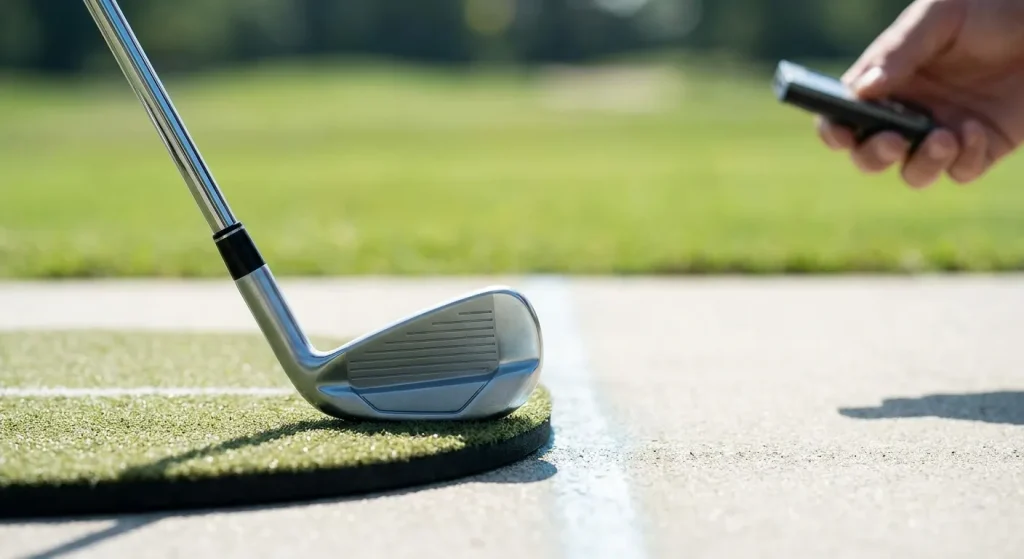
Understanding your golf club lie angle is a crucial step toward consistent ball striking and better accuracy on the golf course. The lie angle refers to the angle between the sole of the club and the shaft when the club is soled on the ground. If this angle isn’t correct for your swing, it can lead to frustrating shots that veer left or right, even when you feel you’ve made a perfect swing. For golfers of all skill levels, from beginners to seasoned players, optimizing your club’s lie can significantly improve performance and make the game more enjoyable. This guide will help you understand what lie angle is, why it matters, and how to tell if yours needs adjustment.
Why Your Golf Club Lie Angle Matters for Accuracy
When your club’s lie is incorrect, the toe or heel of your club will be elevated at impact. If the toe is up, indicating an overly upright club, the club face will point left of the target at impact. This often results in a hook for right-handed golfers. Conversely, if the heel is up, suggesting a club that is too flat, the club face will point right of the target, leading to a slice. Even a small deviation can cause your ball to start several yards off target, compounding errors over longer distances. This subtle yet powerful factor directly influences your ball flight and directional control. Many golfers spend countless hours trying to fix their swing when the issue might simply be an ill-fitted lie angle, making this a key area for performance fixes. For those struggling with a persistent slice, exploring equipment solutions, including proper club fitting, can be incredibly beneficial. You can find more insights on this topic by checking out our guide on Fix Golf Slice Equipment: Your Guide to Straighter Shots.
Getting your club’s lie checked, ideally by a professional club fitter, involves observing your club’s impact on a lie board or through dynamic swing analysis. They can determine if your clubs are too upright or too flat for your natural swing plane and physical stature. Adjustments are typically made by bending the club’s hosel, a process that can dramatically improve your ability to hit straighter, more accurate shots. Investing in this simple adjustment can provide long-term benefits to your game, ensuring your equipment genuinely supports your efforts on the course.
Understanding the Mechanics of Club Lie
The golf club lie angle is not a static measurement; rather, it’s a dynamic interaction between your swing, your body, and the club itself. When you address the ball, the club is designed to sit flush on the ground. However, during the swing, especially at impact, the shaft will flex and the club head will move in an arc. Therefore, the effective lie at impact is what truly matters. For example, if you have a very upright swing plane, meaning your club travels on a more vertical path, you might need a flatter lie angle to prevent the toe from digging in. Conversely, a flatter swing plane might necessitate a more upright club. The goal is to ensure the center of the clubface makes contact with the ball, pointing directly at your target.
Consider how different clubs are designed. Drivers, for instance, have a much flatter lie angle than wedges. This is because drivers are used for sweeping shots off the tee, whereas wedges are designed for steeper, more controlled approaches to the green. The specific lie angle for each club in your bag is crucial for optimal performance. Furthermore, the length of the club also plays a role; taller golfers often require more upright clubs, while shorter golfers might need flatter ones. It’s a complex interplay of factors, but understanding the basics helps you appreciate why a professional fitting is so valuable.
Identifying an Incorrect Lie Angle: Signs and Symptoms
How do you know if your golf club lie angle is off? There are several tell-tale signs on the course. One of the most common indicators is a consistent directional miss that you can’t seem to correct with swing adjustments alone. If your shots consistently hook or slice, despite what feels like a solid strike, your club’s lie might be the culprit. For instance, right-handed golfers experiencing a persistent hook often have clubs that are too upright. Their clubface points left at impact, causing the ball to start left and curve further left. On the other hand, a consistent slice often points to clubs that are too flat, with the clubface pointing right at impact. This causes the ball to start right and curve further right. This can be particularly frustrating when you’re trying to Improve Chipping Accuracy Wedges: Master Your Short Game, as even small deviations can lead to significant misses around the green.
Another sign to look for is wear patterns on the sole of your club. After many rounds, inspect the bottom of your irons. If the wear is concentrated heavily on the toe side, it suggests your club is too upright at impact. If the wear is primarily on the heel side, your club is likely too flat. An ideal wear pattern will be evenly distributed across the sole, indicating that the club is sitting flush at impact. Pay close attention to these details, as they offer valuable clues about your club’s fit. You can read more about maintaining your gear, including inspecting wear, in our guide on Extend Your Gear’s Life: Maintaining Golf Clubs for Longevity.
The Role of a Professional Fitting for Your Club’s Lie
While understanding the signs of an incorrect lie is useful, the most accurate way to assess and adjust your golf club’s lie is through a professional club fitting. During a fitting, a trained expert uses specialized equipment, such as a lie board, to analyze your impact dynamics. A lie board is a hard, plastic board placed on the ground. When you hit a ball off it, a mark is left on the sole of your club, indicating where the club made contact with the ground. This mark reveals whether the toe, heel, or middle of the sole hit first. The fitter will observe multiple shots to get a consistent reading.
Furthermore, modern club fitting often incorporates launch monitors and high-speed cameras to capture detailed data about your swing and ball flight. This dynamic analysis provides a comprehensive picture, allowing the fitter to recommend precise adjustments. They will consider your height, arm length, posture, and natural swing plane. For instance, a taller golfer with a more upright posture might naturally swing the club more vertically, requiring a different club lie than a shorter golfer with a flatter swing. The fitter’s expertise ensures that each club in your bag is optimized for your unique biomechanics, providing a significant advantage on the course. Learn more about how lie angle affects your shot on Golf Distillery.
Adjusting Your Golf Club Lie Angle: What to Expect
Once a professional fitter determines that your golf club lie angle needs adjustment, the process is relatively straightforward for most forged irons. Adjustments are made by carefully bending the hosel of the club. The hosel is the part of the club head where the shaft is inserted. Using a specialized bending machine, the fitter can increase or decrease the angle by a few degrees at a time. This process requires skill and experience, as bending too aggressively can damage the club. Cast irons are generally more difficult to bend and have a narrower range of adjustability compared to forged irons, but many can still be altered within a certain range.
It’s important to note that not all clubs are equally amenable to lie angle adjustments. Drivers and fairway woods, with their typically larger, hollow heads, are rarely adjusted for lie angle. Instead, their adjustability usually comes from hosel sleeves that change loft and face angle. Irons and wedges, however, are specifically designed to allow for these modifications. After the adjustment, your fitter will likely have you hit more shots to confirm the changes have had the desired effect on your ball flight and impact patterns. This iterative process ensures that your clubs are perfectly dialed in for your game. This attention to detail is similar to how senior players might seek out specific equipment to Regain Your Power & Enjoyment, ensuring every piece of gear contributes to better performance.
The Impact of Proper Lie Angle on Different Shots
A correctly fitted club lie angle doesn’t just improve your full iron shots; it positively affects various aspects of your game. For example, when chipping and pitching around the green, having the correct lie ensures that the club sits flush on the turf, preventing mis-hits that can lead to thin or fat shots. This precision is vital for a strong short game. Similarly, for bunker shots, the correct lie angle allows the club to interact with the sand as intended, helping you get the ball out cleanly and close to the pin. Even seemingly minor adjustments can have a profound effect on consistency across all your iron and wedge play.
Consider the psychological impact as well. Knowing that your equipment is perfectly suited to your swing instills confidence. This confidence allows you to focus on your technique and strategy rather than worrying about equipment limitations. Furthermore, proper club fitting can help prevent golfers from developing compensatory swing habits to counteract ill-fitting clubs. Over time, these habits can lead to more serious swing flaws. Therefore, optimizing your club’s lie angle is not just about equipment; it’s about fostering better swing mechanics and greater enjoyment of the game. Read more about how lie angle adjustments impact your game on Golf.com.
Maintaining Your Lie Angle: What You Need to Know
After getting your clubs adjusted, it’s natural to wonder if the lie angle will remain consistent over time. Forged irons, while more pliable for initial adjustments, can occasionally shift slightly with heavy use or accidental impacts. Cast irons, being harder, tend to hold their shape better but are also more prone to cracking if bent too far. Therefore, it’s a good practice to have your lie angles checked periodically, especially if you play frequently or notice a return of directional issues. Many golfers opt for a check-up every year or two, particularly if they’ve made significant changes to their swing or physical condition.
Proper storage and care of your clubs can also help maintain their lie angles. Avoid throwing clubs into your bag or against hard surfaces, as this can bend the hosel. Always use headcovers for woods and hybrids, and consider iron headcovers if you’re particularly concerned about preserving their precise settings. By taking these simple precautions and getting regular professional check-ups, you can ensure your clubs continue to support your best game for years to come. This proactive approach is key to getting the most out of your investment in golf equipment, whether you’re using Budget Golf Clubs for New Players or a premium set.
Conclusion: The Importance of a Correct Golf Club Lie Angle
In conclusion, don’t underestimate the significance of your golf club lie angle. It’s a fundamental aspect of club fitting that directly impacts your ability to hit the ball where you intend. Taking the time to understand and adjust your club’s lie can be one of the most effective ways to improve your iron play and overall consistency, leading to lower scores and more confidence every time you step onto the tee. Whether you are a beginner just starting out or an experienced player looking to shave strokes off your handicap, optimizing your club’s lie is an investment in your golf game that truly pays dividends. By ensuring your equipment is perfectly matched to your swing, you empower yourself to achieve your full potential on the course. A correct golf club lie angle is not just a luxury; it’s a necessity for serious golfers.
FAQ
What does an incorrect club lie angle do to your shots?
An incorrect club’s lie can cause your shots to consistently veer left or right. If the club is too upright, the toe is up at impact, pointing the face left and often causing a hook. If it’s too flat, the heel is up, pointing the face right and typically resulting in a slice for right-handed golfers.
Can I adjust my golf club’s lie angle myself?
It is not recommended to adjust your club’s lie angle yourself. This process requires specialized bending machines and expertise to avoid damaging the club. A professional club fitter has the tools and knowledge to make precise adjustments safely and effectively.
How often should I have my club’s lie checked?
Most golfers should consider having their club’s lie checked every one to two years, especially if they play frequently or notice a change in their ball flight. If you’ve had a significant swing change or physical alteration, an immediate check is advisable.
Are all golf clubs adjustable for lie angle?
Most forged and many cast irons and wedges can be adjusted for lie angle within a certain range. However, drivers and fairway woods typically have fixed lie angles or adjustable hosels that primarily affect loft and face angle rather than the lie.
What is the difference between an upright and a flat club lie?
An upright club lie means the angle between the shaft and the ground is larger than standard, causing the toe of the club to be elevated at impact. A flat club lie means this angle is smaller than standard, causing the heel of the club to be elevated at impact.