
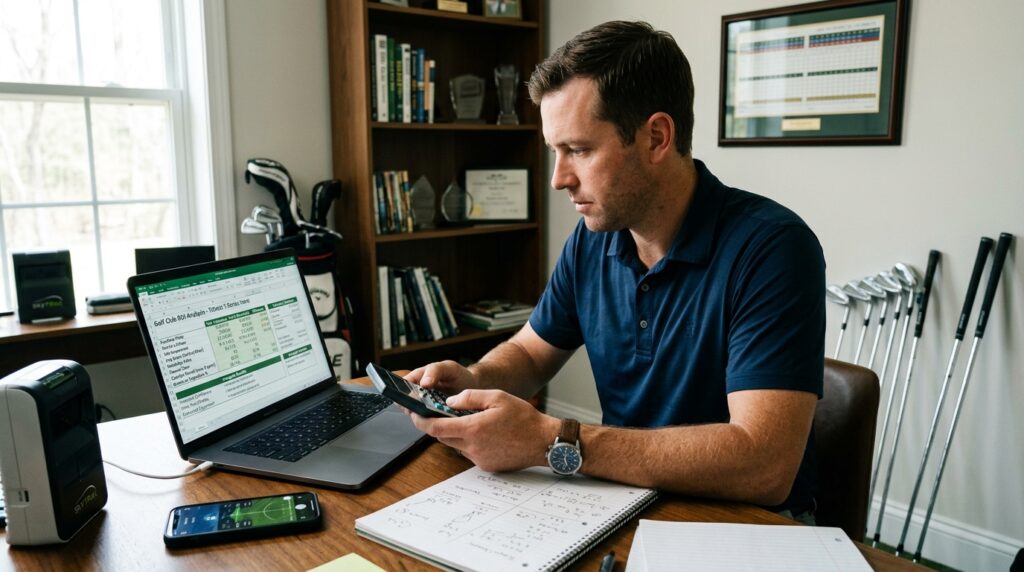
Buying new equipment is always exciting, yet many golfers rarely stop to think about golf clubs ROI. While performance promises often drive purchases, the real question is whether those clubs truly deliver value over time. In other words, are you actually getting a return on your investment?
At first, it’s easy to focus on price alone. However, cost is only one part of the equation. Performance gains, consistency, durability, and enjoyment all contribute to the overall value. Therefore, understanding how to calculate golf clubs ROI gives you a clearer picture before making a purchase.
Rather than guessing or relying on marketing claims, you can break this down into simple, practical factors. As a result, your decisions become more informed and aligned with your goals.
What Does ROI Mean in Golf Equipment?
ROI, or return on investment, usually applies to finance. However, in golf, it takes on a slightly different meaning. Golf clubs ROI is about how much improvement and satisfaction you gain compared to what you spend.
For example, if new clubs help you hit straighter shots, that has value. Additionally, if they improve your confidence, that benefit matters as well. Consequently, ROI in golf combines both measurable and intangible results.
Performance is often the most obvious factor. Still, consistency and reliability are just as important. When your clubs deliver predictable results, your game becomes easier to manage.
Another aspect is longevity. Clubs that perform well for several years offer better golf clubs ROI than those that lose effectiveness quickly. Therefore, durability plays a key role in your calculation.
Breaking Down the Cost Side
To understand golf clubs ROI, you must first evaluate the cost. This includes more than just the purchase price.
Initial cost is the most visible expense. However, additional costs such as custom fitting, maintenance, and upgrades should also be considered. As a result, the total investment may be higher than expected.
For example, getting properly fitted can improve performance. Yet, it also adds to the overall expense. Therefore, it should be included when calculating golf clubs ROI.
Another factor is resale value. Some brands retain value better than others. Consequently, selling your clubs later can offset part of the cost.
Finally, frequency of use matters. If you play often, the cost per round decreases. As a result, frequent golfers often achieve better golf clubs ROI compared to occasional players.
Measuring Performance Gains
Performance improvements are a major part of golf clubs ROI. However, these gains should be evaluated realistically.
Distance is one of the most noticeable changes. New clubs may help you hit the ball farther. Still, distance alone does not define value. Accuracy and consistency are equally important.
Tracking your stats can help measure improvement. For example, monitor fairways hit, greens in regulation, and scoring trends. As a result, you can see whether your new clubs make a difference.
Consistency often provides the greatest return. When your shots become more predictable, your confidence increases. Consequently, your overall performance improves.
It’s also important to compare results over time. Short-term improvements may not reflect long-term value. Therefore, tracking your game for several rounds gives a clearer picture of golf clubs ROI.
The Role of Consistency and Confidence
While performance metrics matter, confidence plays a significant role in golf clubs ROI. When you trust your equipment, you swing more freely.
Confidence affects decision-making. For example, you may feel more comfortable attacking pins or taking strategic risks. As a result, your game becomes more dynamic.
Consistency is closely linked to confidence. When your clubs deliver reliable results, you can focus on execution rather than doubt. Consequently, your performance stabilizes.
These psychological benefits are harder to measure. However, they contribute significantly to golf clubs ROI. In many cases, confidence alone can justify the investment.
How Longevity Impacts Value
Durability is often overlooked when calculating golf clubs ROI. Yet, it plays a major role in long-term value.
High-quality clubs tend to last longer. As a result, you spread the cost over more rounds. This improves your overall return on investment.
Additionally, well-maintained clubs retain performance. Regular cleaning and proper storage help preserve their condition. Consequently, they continue to deliver consistent results.
On the other hand, cheaper clubs may wear out quickly. This leads to additional replacement costs. Therefore, initial savings may not translate into better golf clubs ROI.
Considering longevity ensures that your investment provides lasting benefits.
Comparing New vs Current Equipment
To calculate golf clubs ROI accurately, you must compare new clubs with your current setup. This helps determine whether the upgrade is worthwhile.
Start by identifying what your current clubs lack. For example, you may struggle with distance or control. Then, evaluate whether new clubs address those issues.
Testing is essential in this process. Trying different models allows you to experience potential improvements. As a result, you can make a more informed decision.
It’s also helpful to consider opportunity cost. Money spent on clubs could be used for lessons or practice. Therefore, weigh all options carefully.
By comparing alternatives, you gain a clearer understanding of golf clubs ROI.
The Impact of Skill Level on ROI
Your skill level influences how much value you gain from new clubs. Beginners, for example, may see immediate improvements in forgiveness.
Mid-level players often benefit from better control and consistency. As a result, their golf clubs ROI may be higher due to noticeable gains.
Advanced players, however, may experience smaller improvements. Since their skills are already refined, equipment changes produce subtle effects.
Therefore, expectations should align with your level. Understanding this helps you evaluate golf clubs ROI more accurately.
Additionally, skill development plays a role. As your game improves, your equipment needs may change. Consequently, timing your purchase becomes important.
Hidden Benefits Beyond Performance
Not all benefits of new clubs are measurable. Enjoyment, motivation, and excitement also contribute to golf clubs ROI.
New equipment can reignite your passion for the game. As a result, you may practice more and play more often. This increased engagement enhances your overall experience.
Comfort is another factor. Well-designed clubs feel better in your hands. Consequently, your rounds become more enjoyable.
Social aspects also matter. Playing with new gear can boost confidence among peers. While subtle, these benefits still add value.
Although these factors are harder to quantify, they should not be ignored when calculating golf clubs ROI.
Common Mistakes When Evaluating ROI
Many golfers misjudge golf clubs ROI due to unrealistic expectations. Avoiding these mistakes helps you make better decisions.
One common error is focusing only on distance. While important, distance alone does not define value. Accuracy and consistency matter just as much.
Another mistake is upgrading too frequently. Constantly buying new clubs reduces long-term ROI. Instead, focus on meaningful improvements.
Ignoring fitting is another issue. Poorly fitted clubs limit performance. As a result, your investment does not deliver full value.
Finally, relying on marketing claims can lead to disappointment. Testing and personal experience provide more reliable insights.
By avoiding these pitfalls, you can evaluate golf clubs ROI more effectively.
Conclusion
Understanding golf clubs ROI allows you to make smarter decisions about your equipment. Instead of focusing solely on price, you consider performance, consistency, and long-term value.
When your clubs improve your game and enhance your enjoyment, the investment becomes worthwhile. However, not every upgrade delivers the same return. Therefore, evaluating your needs and expectations is essential.
By breaking down costs, measuring performance, and considering intangible benefits, you gain a complete picture. As a result, your decisions become more strategic and rewarding.
In the end, the true value of new clubs lies in how they support your growth as a golfer. When you calculate golf clubs ROI carefully, you ensure that every purchase moves your game forward.
FAQ
- How can I measure improvement after buying new clubs?
Track stats like distance, accuracy, and scoring over multiple rounds to see real changes. - Do expensive golf clubs always provide better value?
Not always. Value depends on performance, fit, and how well the clubs suit your game. - Is custom fitting necessary for better results?
Yes, proper fitting improves consistency and helps maximize the benefits of your equipment. - How long should golf clubs last before replacing them?
Quality clubs can last several years, especially with proper maintenance and regular care. - Should I invest in lessons instead of new equipment?
Lessons often provide strong value, but combining skill improvement with good equipment works best.