
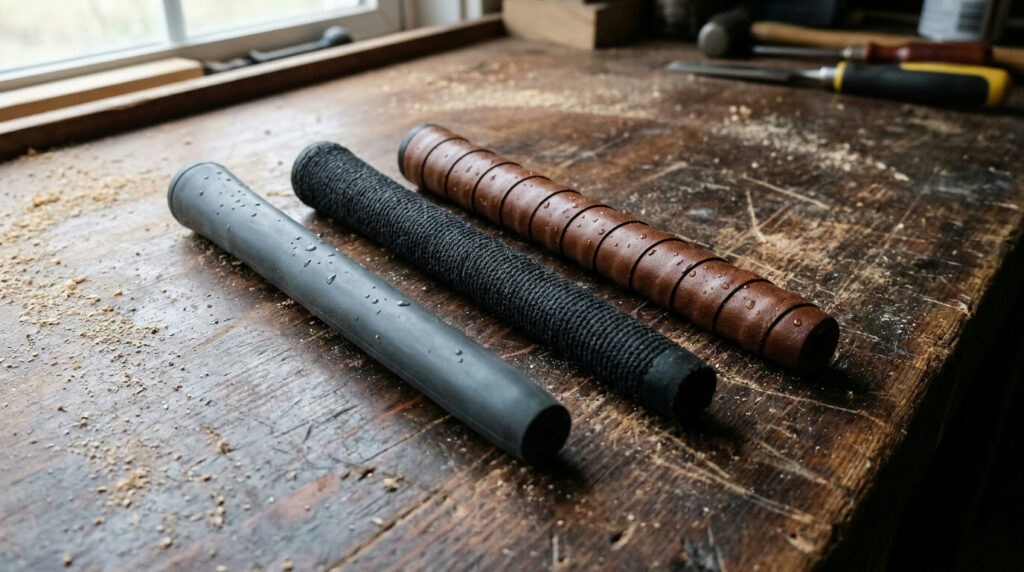
Your grip is the only part of the club you actually touch, yet it is easy to overlook. The material under your hands affects feel, traction in wet weather and how long the grip lasts. In this guide, we have golf grip materials compared side by side, covering rubber, cord, wrap-style and hybrid designs, so you can choose the right surface for your hands, your climate and how often you play.
Disclosure: Best Golf Clubs may earn a commission from qualifying purchases made through links on this site, including as an Amazon Associate, at no extra cost to you.
Why Grip Material Matters
A grip that suits you lets you hold the club with light, relaxed pressure. As a result, you can make a freer swing without worrying about the club twisting. In contrast, a slick or uncomfortable grip often causes golfers to squeeze harder, which can create tension in the hands, arms and shoulders.
Material also determines how a grip behaves in rain, heat and humidity. On top of that, it affects how quickly the surface wears down and needs replacing. Because grips wear gradually, many golfers do not notice the change until they hold a fresh one and feel the difference.
Rubber Grips
Rubber, or rubber-blend compounds, is the most common grip material. Many stock grips on new clubs fall into this category.
What Rubber Grips Feel Like
Rubber grips are generally soft and slightly tacky. They tend to dampen vibration, so mishits often feel less harsh. Many golfers find them comfortable right away, which is why they suit a wide range of players.
Strengths
- Comfortable, cushioned feel
- Good traction in dry conditions
- Widely available in many sizes and firmness levels
- A sensible choice for players with sensitive hands or joint discomfort
Tradeoffs
- Can feel slippery when wet or sweaty unless the surface pattern is aggressive
- Softer compounds may wear faster with frequent play
- Tackiness fades as oils and dirt build up, so cleaning matters
Cord Grips
Cord grips have fabric threads woven into the rubber, usually across part or all of the surface. The cord creates a rougher texture that bites into your hands or glove.
What Cord Grips Feel Like
Cord grips feel firmer and more textured than standard rubber. Some golfers describe them as harsh at first, especially without a glove. However, players who swing fast or sweat heavily often prefer the secure, locked-in feel.
Strengths
- Excellent traction in wet, humid or hot conditions
- Firm feel that many stronger players like for control
- Textured surface tends to stay grippy as it ages
Tradeoffs
- Rougher on bare hands and can wear gloves faster
- Less vibration damping, so mishits may feel sharper
- Not ideal for golfers with arthritis or very sensitive skin
Wrap-Style Grips
Wrap-style grips mimic the look of traditional leather wraps. Today, most are made from rubber or synthetic compounds molded with a spiral pattern, although some specialty grips use genuine leather or synthetic leather strips.
What Wrap Grips Feel Like
Wrap grips usually feel soft and tacky, with a subtle ridge from the spiral pattern. That ridge gives your fingers a bit of extra purchase. They often appeal to golfers who like a classic look combined with a comfortable feel.
Strengths
- Soft, comfortable and tacky in dry weather
- Spiral texture adds a little extra hold
- Traditional appearance that many players enjoy
Tradeoffs
- Soft surfaces may lose tackiness and wear faster with heavy use
- Genuine leather wraps need more care and do not love wet weather
Hybrid and Multi-Compound Grips
Many modern grips combine materials. For example, a grip might use cord in the upper section, where the lead hand sits, and softer rubber in the lower section for the trail hand. This approach aims to provide traction where you need it and comfort where you want it.
Hybrid designs are popular with golfers who play in mixed weather or who want more control without the full harshness of a cord grip.
Surface Patterns and Firmness Matter Too
Material is only half the story. The pattern molded into the surface also changes how a grip performs. Deeper channels and fine textures help move water away from your hands, which is why some all-rubber grips still hold reasonably well in damp conditions. By contrast, a smooth surface may feel pleasant in the dry but lose hold quickly once moisture appears.
Firmness is another variable. Even within one material, compounds range from soft and cushioned to firm and responsive. Softer grips tend to feel comfortable and can reduce the sting of mishits. Firmer grips, on the other hand, often give more feedback and a greater sense of control, especially for players with quick tempos.
When you compare grips, therefore, look at three things together:
- Material: rubber, cord, wrap-style or a blend.
- Pattern: how aggressive the texture is and how well it sheds water.
- Firmness: how much the grip gives under pressure.
Thinking about all three helps explain why two grips made from similar materials can feel so different in your hands. It also makes it easier to describe what you want when you talk to a fitter or repair shop.
Golf Grip Materials Compared at a Glance
| Material | Feel | Wet-weather traction | Durability tendency | Often suits |
|---|---|---|---|---|
| Rubber | Soft, cushioned | Moderate | Moderate | Most golfers, comfort seekers |
| Cord | Firm, textured | High | Good | Faster swingers, humid climates |
| Wrap-style | Soft, tacky | Moderate | Moderate | Players wanting a classic feel |
| Hybrid | Mixed | Moderate to high | Good | Mixed conditions, all-round players |
Keep in mind that durability varies by compound, how often you play and how well you clean your grips. Treat the table as a starting point rather than a rule.
How to Choose Between Grip Materials
- Consider your climate. If you often play in rain, heat or humidity, cord or hybrid grips usually provide more security.
- Think about your hands. Golfers with joint pain or sensitive skin often prefer softer rubber or wrap-style grips.
- Factor in glove use. If you play without a glove, very aggressive cord may feel rough.
- Match grip size too. Material is only part of the story. A grip that is too thin or too thick can affect your release and comfort.
- Try before you commit. Hold several grips in a shop or fitting bay. Better still, take a few practice swings with each.
Equipment coverage from GOLF.com’s gear section and Golf Digest’s equipment hub regularly reminds golfers that fresh grips are a simple way to refresh how a set feels.
Caring for Your Grips
Whatever material you choose, simple maintenance helps it last. Wipe grips with a damp cloth and mild soap, rinse, then dry with a towel. Avoid leaving clubs in a hot car trunk for long periods, because heat can speed up wear.
Eventually, every grip loses its traction. Signs include a shiny or hard surface, visible cracks and worn spots where your thumbs sit. When you reach that point, our practical guide to replacing golf grips walks you through the process step by step.
Frequently Asked Questions
Can I mix grip materials in one set?
You can, but most golfers prefer a consistent feel through the irons and woods. Many keep the putter grip separate, since putting grips serve a different purpose.
Are cord grips only for professionals?
No. Any golfer who wants more traction can use them. They simply suit players who value firmness and grip security over cushioning.
How often should grips be replaced?
It depends on how often you play, the climate and the material. Instead of following a fixed schedule, watch for wear and loss of tackiness.
Do grips change how heavy a club feels?
They can. Grips come in different weights, and a noticeably heavier or lighter grip can change the club’s balance. If you switch styles, ask a club fitter or repair shop to check that the feel stays consistent across your set.
Final Thoughts
With golf grip materials compared, the choice comes down to feel, conditions and durability. Rubber offers comfort, cord offers traction, wrap-style offers a classic soft feel, and hybrids split the difference. Above all, choose the grip that lets you hold the club with relaxed, confident pressure.
This guide is general information. For the best results, consider a professional club fitting or a lesson with a qualified golf professional.