
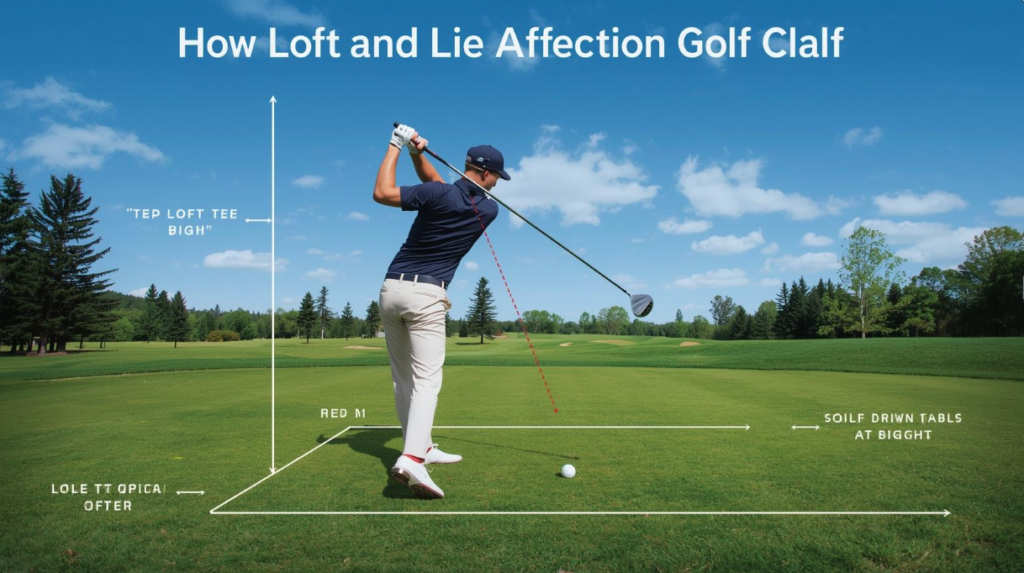
Every golf club tells a story at impact. That story is written by loft and lie. Although these angles seem technical, they influence almost every result you see on the course. Distance, direction, trajectory, and even feel are shaped by them. Yet many golfers play for years without understanding how loft lie golf clubs truly affect performance.
If shots consistently miss left or right, or distances feel unpredictable, loft and lie may be the hidden cause. Fortunately, once you understand these angles, improvement becomes far less mysterious. You don’t need a swing overhaul. Instead, you need alignment between your clubs and your swing.
Let’s break down how loft and lie work together, why they matter, and how adjusting them can transform your game.
What Loft Means in Golf Club Performance
Loft refers to the angle of the clubface relative to vertical. This angle determines how high and how far the ball travels. Higher loft launches the ball higher with more spin. Lower loft launches it lower with less spin.
Drivers have low loft to maximize distance. Wedges have high loft to create height and stopping power. Irons sit between those extremes. Each loft serves a specific purpose.
However, loft isn’t just about height. It also affects distance gapping. If lofts are inconsistent, distances overlap or leave gaps. As a result, club selection becomes guesswork.
Understanding loft is the first step in mastering loft lie golf clubs.
How Loft Influences Distance Control
Distance depends on carry, not roll. Loft largely controls carry distance.
Too little loft causes shots to launch too low. Those shots lose carry and exaggerate mishits. Too much loft sends shots too high, reducing distance consistency.
Proper loft optimizes launch angle for your swing speed. When launch improves, distance stabilizes. That stability builds confidence.
Therefore, loft isn’t about hitting it higher or lower. It’s about hitting it predictably.
Dynamic Loft vs Static Loft
Static loft is what the club is built with. Dynamic loft is what you deliver at impact.
Swing mechanics influence dynamic loft. Shaft lean, angle of attack, and hand position all matter. However, equipment must still support your delivery.
If static loft doesn’t match your swing, compensation happens. That compensation hurts consistency.
Matching static loft to dynamic delivery is key for optimal loft lie golf clubs performance.
What Lie Angle Means for Golf Clubs
Lie angle refers to the angle between the shaft and the sole when the club rests on the ground. It determines how the clubface points at impact.
If the lie angle is too upright, shots tend to go left. If it’s too flat, shots leak right. These tendencies occur even with perfect swings.
Lie angle directly influences direction. While loft affects trajectory and distance, lie affects accuracy.
Together, they shape ball flight.
Why Lie Angle Affects Direction So Strongly
At impact, the clubface orientation dictates direction. Lie angle influences that orientation.
An upright lie points the face left. A flat lie points it right. Even small deviations matter.
Because irons strike the ball before turf, lie angle impact is magnified. Direction errors grow with distance.
If you fight a consistent miss, lie angle deserves attention.
Dynamic Lie and Turf Interaction
Dynamic lie differs from static lie. It reflects how the club behaves during the swing.
Swing plane, shaft droop, and impact position affect dynamic lie. That’s why fitting matters.
Turf interaction reveals lie issues clearly. Toe digging suggests upright lie. Heel digging suggests flat lie.
Proper lie promotes centered contact and consistent direction.
How Loft and Lie Work Together
Loft and lie don’t operate independently. They interact.
Adjusting lie can subtly change effective loft. Adjusting loft can influence lie slightly. Therefore, changes should be considered together.
For example, strengthening loft often lowers launch. However, if lie isn’t adjusted accordingly, direction issues appear.
Balanced loft lie golf clubs deliver predictable flight and direction.
Why Off-the-Rack Clubs Rarely Fit Perfectly
Standard clubs assume average builds and swings. Golfers are anything but average.
Height, arm length, posture, and swing dynamics vary widely. As a result, standard loft and lie rarely match perfectly.
Playing mismatched clubs forces compensation. Compensation hurts consistency.
Fitting corrects these mismatches efficiently.
Loft Gapping and Set Consistency
Proper loft progression ensures even distance gaps between clubs.
If loft gaps are uneven, distances overlap. Decision-making becomes stressful. Confidence fades.
Modern iron sets sometimes feature stronger lofts. While distance increases, gapping may suffer.
Evaluating loft gapping ensures each club has a purpose.
Lie Angle Progression Through the Set
Lie angles change throughout the set. Short irons are more upright. Long irons are flatter.
This progression matches swing plane changes. However, individual swings may require customization.
Uniform adjustments across the set often improve consistency.
Lie progression matters as much as loft progression.
How Swing Speed Affects Loft Needs
Faster swing speeds compress the ball more. Lower loft may work. Slower speeds need more loft to launch properly.
Playing too little loft at slower speeds causes low, weak shots. Playing too much loft at high speeds causes ballooning.
Matching loft to speed optimizes carry.
Therefore, loft fitting should consider speed, not ego.
Angle of Attack and Loft Interaction
Steep swings deliver more dynamic loft. Shallow swings deliver less.
Equipment must complement this delivery. Otherwise, trajectory suffers.
Golfers with steep swings may need slightly less static loft. Shallow swingers may need more.
Understanding this interaction improves loft lie golf clubs performance significantly.
Lie Angle and Shot Shape Bias
Lie angle subtly influences shot shape.
Upright lies promote draws. Flat lies promote fades. While not a fix for swing path, lie angle can exaggerate tendencies.
Adjusting lie helps neutralize bias. Neutral flight improves scoring.
Lie adjustments fine-tune direction rather than mask flaws.
Loft Adjustments in Modern Clubs
Many modern clubs feature adjustable loft. Drivers and woods allow easy changes.
Adjusting loft affects launch and spin. However, it also influences face angle.
Understanding these trade-offs prevents confusion. Small changes produce noticeable effects.
Adjustable loft adds flexibility but requires knowledge.
Iron Loft Adjustments and Distance
Bending iron lofts adjusts distance. Strengthening loft adds distance. Weakening loft adds height.
However, extreme changes affect bounce and turf interaction.
Small, thoughtful adjustments maintain playability.
Professional fitting ensures balance.
Why Wedges Require Special Loft Attention
Wedges rely on loft for control and spin. Gapping matters greatly.
Too many similar lofts cause confusion. Too few leave scoring gaps.
Proper wedge loft selection complements iron sets.
Wedges also depend on bounce, which interacts with loft changes.
Lie Angle Importance in Short Irons
Short irons emphasize precision. Lie angle errors show up clearly.
Misaligned lies cause missed greens. That hurts scoring quickly.
Ensuring proper lie in short irons delivers immediate benefits.
Precision begins with alignment.
Testing Loft and Lie on the Course
Range testing helps. On-course testing confirms.
Watch ball flight. Notice divots. Track misses.
Patterns reveal equipment issues clearly.
Testing under real conditions validates adjustments.
The Role of Custom Fitting
Custom fitting identifies ideal loft and lie.
Launch monitors measure trajectory and distance. Impact tape reveals strike. Lie boards show turf interaction.
Fitting replaces guessing with evidence.
Small adjustments produce big improvements.
How Often Loft and Lie Should Be Checked
Clubs change over time. Impacts bend lies. Wear alters lofts.
Annual checks maintain consistency.
If performance shifts unexpectedly, recheck sooner.
Maintenance preserves performance.
Myths About Loft and Lie
Many golfers believe lie doesn’t matter. Others fear adjustments ruin clubs.
In reality, proper adjustments improve performance safely.
Modern clubs handle bending well.
Knowledge dispels fear.
Loft Lie Golf Clubs and Scoring Improvement
Better loft and lie reduce misses. Greens hit increase. Stress decreases.
When equipment fits, swings relax.
Relaxation improves consistency.
Scoring improves naturally.
Why Many Golfers Overlook These Angles
Loft and lie lack glamour. Distance marketing overshadows them.
However, fundamentals matter more than hype.
Quiet improvements deliver lasting results.
Understanding loft lie golf clubs pays dividends.
Signs Your Loft or Lie Is Wrong
Consistent directional misses. Poor distance control. Uneven divots.
These signals point to equipment mismatch.
Addressing them saves time and frustration.
Balancing Technique and Equipment
Technique matters. Equipment supports it.
Perfect swings with poor fit struggle. Average swings with proper fit thrive.
Balance creates progress.
Confidence Comes From Predictability
Predictable flight builds trust.
Trust builds confidence.
Confidence lowers scores.
Loft and lie deliver predictability.
Conclusion
Understanding how loft lie golf clubs affect performance empowers smarter decisions. Loft controls trajectory and distance. Lie controls direction and accuracy. Together, they shape every iron shot you hit. When these angles match your swing, golf feels simpler and more predictable. Instead of fighting equipment, you work with it. Adjusting loft and lie isn’t about chasing perfection. It’s about creating consistency that lasts.
FAQ
1. What happens if my lie angle is wrong?
Shots will consistently miss left or right, even with good swings.
2. Does loft affect accuracy or just distance?
Loft affects both by influencing launch, spin, and carry consistency.
3. Can loft and lie be adjusted on all clubs?
Most irons and wedges can be adjusted, while woods often use adjustable hosels.
4. How often should loft and lie be checked?
At least once per year or after noticeable performance changes.
5. Is custom fitting necessary for loft and lie?
Yes. Fitting ensures adjustments match your swing and body mechanics.