Learning how to make golf grips last longer can save money while keeping your clubs comfortable and secure in your hands. Golf grips collect sweat, sunscreen, dirt, skin oils, and other residue every time you play. Over time, that buildup can make the surface feel smooth or slippery. Heat, sunlight, moisture, and poor storage can also speed up deterioration. Fortunately, maintaining grips does not require complicated equipment. Regular cleaning, careful drying, smart storage, and routine inspections can help preserve their texture. You also need to recognize when maintenance is no longer enough. This guide explains practical ways to care for golf grips and maintain dependable traction throughout their useful life.
Why Golf Grips Wear Out
Your grips experience constant pressure and friction.
Every swing places your hands against the grip material. In addition, sweat, natural skin oils, sunscreen, dirt, and environmental conditions gradually affect the surface.
Frequent players naturally create more wear because they make more swings.
Practice sessions count too. A golfer who visits the range several times each week may wear grips faster than someone who only plays occasional rounds.
Environmental exposure also matters.
Heat and direct sunlight can accelerate deterioration in some grip materials. Meanwhile, storing damp equipment can create additional problems.
If you want to make golf grips last longer, begin by understanding that normal use cannot be eliminated. Your goal is to slow unnecessary deterioration while maintaining useful traction and comfort.
Know What Tackiness Actually Means
Golfers often describe a good grip as tacky.
This does not necessarily mean the surface should feel sticky. Instead, tackiness generally refers to the secure traction you feel when holding the club.
A clean grip can feel more secure because dirt and oils are no longer covering its surface texture.
Different materials also produce different sensations.
Some grips feel soft and slightly tacky. Others rely more heavily on texture, patterns, or cord to create traction.
Therefore, do not judge every grip by the same standard.
To make golf grips last longer, learn how your particular grips feel when they are clean and in good condition. That gives you a useful baseline for identifying deterioration later.
Clean Your Golf Grips Regularly
Cleaning is one of the simplest maintenance habits.
Grips can look clean while still carrying a layer of sweat, oil, sunscreen, and dirt.
That residue may reduce traction.
How often you need to clean them depends on how frequently you play, how much you sweat, and the conditions you encounter.
Golfers who practice several times each week may need more frequent care.
A recreational player may clean them less often.
However, waiting until the grips become visibly dirty is not ideal.
Regular maintenance can make golf grips last longer by preventing heavy buildup from remaining on the material.
A quick inspection after several rounds can tell you whether cleaning is necessary.
Use a Gentle Cleaning Method
Before cleaning, check the grip manufacturer’s care recommendations whenever available.
Different materials can require slightly different treatment.
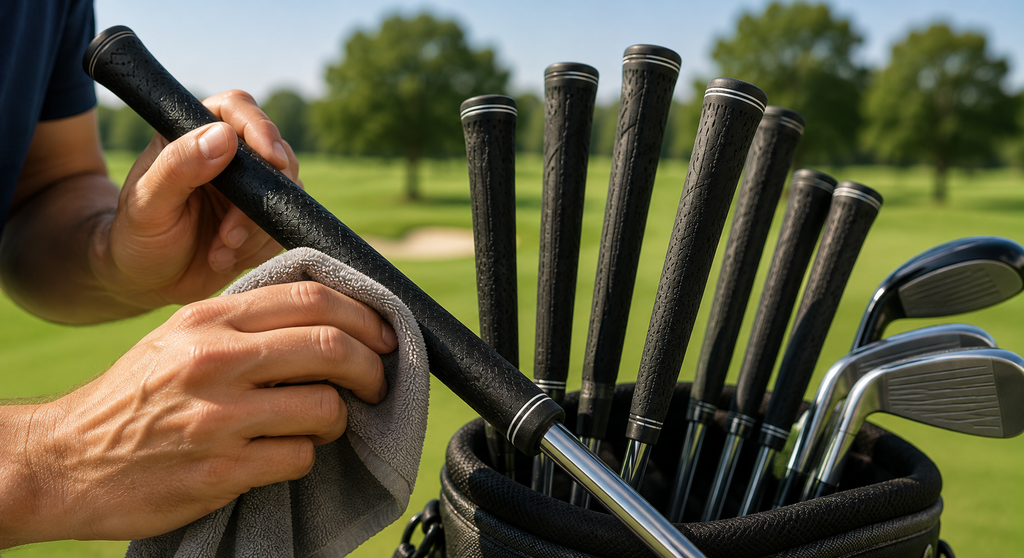
For many conventional rubber-style grips, a mild soap solution and a soft cloth or suitable soft brush can remove surface residue.
Avoid harsh chemicals unless the manufacturer specifically approves them.
Aggressive cleaners may affect the material rather than restore it.
Work gently along the grip surface.
You do not need to scrub aggressively.
The goal is to remove contaminants while preserving the grip.
A careful cleaning routine can help make golf grips last longer without creating additional wear.
Pay attention to textured areas where dirt may collect.
Rinse Away Soap Residue
Cleaning does not end when the visible dirt disappears.
Any soap left behind can affect how the surface feels.
After cleaning, remove the residue according to the grip manufacturer’s recommendations.
Use only the amount of water necessary.
There is no benefit in soaking the entire club.
Keep unnecessary moisture away from areas where it does not belong.
Once the grip is clean, wipe it thoroughly.
Proper rinsing and drying can help make golf grips last longer while restoring a more natural feel.
Test the grip only after it has dried completely.
A wet grip will obviously feel different from one that is ready for play.
Dry Grips Completely
Drying is essential after cleaning or playing in wet weather.
Use a clean towel to remove surface moisture.
Then allow the clubs to air-dry in a suitable indoor environment.
Avoid immediately placing wet clubs inside a closed travel case, trunk, or storage area.
You should also remove damp towels and gloves from your golf bag.
Those items can keep the surrounding environment humid.
If you are trying to make golf grips last longer, treat moisture control as part of routine equipment care.
After a rainy round, take a few extra minutes to unpack your equipment.
Allow grips, headcovers, towels, gloves, and the bag itself to dry properly.
Clean Your Hands Before Playing
Grip maintenance starts with your hands.
Sunscreen, lotions, food residue, dirt, and natural oils can transfer directly onto the grip surface.
Sunscreen is particularly relevant because golfers often apply it repeatedly during a round.
You should protect your skin from the sun, so skipping sunscreen is not the solution.
Instead, clean or wipe your palms after application before handling your clubs whenever practical.
This simple habit may reduce residue buildup.
Golfers who want to make golf grips last longer should also avoid handling grips with excessively dirty hands after working on equipment, eating, or touching other substances.
Small habits can reduce how quickly grime accumulates.
Use a Clean Golf Glove
Your glove constantly contacts the grip.
If the glove becomes dirty, soaked with sweat, or covered in residue, some of that contamination can transfer.
Rotate gloves if necessary, especially in hot and humid conditions.
Allow damp gloves to dry properly rather than leaving them crumpled inside a closed bag pocket.
A clean glove can also provide more dependable contact with the club.
Therefore, glove maintenance and grip maintenance work together.
If your goal is to make golf grips last longer, inspect your gloves as well as your clubs.
Replace gloves when they become excessively worn or lose the secure feel you need.
Avoid Excessive Grip Pressure
How tightly you hold the club affects both your swing and the physical stress placed on the grip.
You need enough pressure to control the club securely.
However, squeezing far harder than necessary can create tension in your hands and forearms.
It may also concentrate wear in the areas where your hands repeatedly press against the material.
The correct pressure varies with the golfer and shot.
Therefore, do not hold the club loosely simply to preserve equipment.
Instead, aim for secure, comfortable pressure.
Reducing unnecessary tension may help make golf grips last longer, while also supporting a more relaxed swing.
Look at your grips for concentrated wear patterns where your thumbs and hands normally sit.
Rotate Clubs During Practice
Range sessions can place far more wear on certain grips than a normal round.
For example, you might hit dozens of shots with one 7-iron during a practice session.
That single grip receives much more use than the others.
You should practice with the clubs required for your goals, so there is no need to create an artificial rotation purely for grip preservation.
However, a balanced practice session can distribute normal use while also developing more areas of your game.
This can indirectly make golf grips last longer across the set.
It also helps reveal which clubs are wearing faster because of frequent use.
Keep Clubs Out of Extreme Heat
Leaving clubs inside a vehicle for extended periods may be convenient, but it is not ideal for long-term equipment care.
Parked cars can become extremely hot.
Repeated exposure to high temperatures may accelerate aging of various golf equipment components, including some grip materials.
Garages and sheds can also experience major temperature changes depending on climate and construction.
If possible, store clubs in a reasonably stable indoor environment.
This is one of the easiest ways to make golf grips last longer without adding another maintenance task.
You simply choose a better place to keep the bag.
A clean, dry indoor storage location is generally preferable to a hot trunk.
Limit Unnecessary Direct Sun Exposure
Golf clubs naturally spend time outdoors.
There is no reason to worry about ordinary sunlight during a round.
However, unnecessary prolonged exposure is different.
Do not leave your clubs sitting in direct sunlight for hours or days when they could be stored properly.
Ultraviolet exposure and heat can contribute to material aging over time.
After playing, move your equipment to an appropriate storage area.
Golfers trying to make golf grips last longer should focus on reducing avoidable exposure rather than becoming overly protective during normal use.
Golf equipment is meant to be played.
The goal is sensible care between rounds.
Do Not Leave Wet Clubs in a Closed Bag
A rainy round creates several maintenance challenges.
The grips may be wet, while the towel, glove, bag, and headcovers can also hold moisture.
Once you arrive home, open the bag and remove damp items.
Dry the grips with a towel and allow them to air-dry.
Do not place wet equipment in a sealed travel case for days.
Moisture does not help grip condition, and it can also create problems elsewhere on your clubs.
Good drying habits can make golf grips last longer while protecting shafts, clubheads, and your golf bag.
One post-round routine can therefore benefit your entire set.
Store Clubs in a Clean, Dry Environment
Storage has a major influence on long-term equipment condition.
Choose an area that remains reasonably dry and avoids extreme temperatures.
An indoor closet, equipment room, or another protected space can work well.
Keep the clubs away from chemicals, solvents, oils, or other substances that could accidentally contact the grips.
Also avoid stacking heavy objects against the clubs.
When you make golf grips last longer, you also help preserve a consistent feel from club to club.
That consistency becomes particularly useful when the equipment sits unused for several weeks or months.
Before long-term storage, clean and completely dry the grips.
Inspect Grips for Smooth or Shiny Areas
Cleaning can restore traction when dirt causes the problem.
However, cleaning cannot reverse physical wear.
Inspect the areas where your hands normally sit.
If those sections appear noticeably smooth, shiny, hardened, or worn compared with the rest of the grip, the material may be reaching the end of its useful life.
Cracks are another warning sign.
When you attempt to make golf grips last longer, do not confuse preservation with keeping worn equipment indefinitely.
A grip should provide dependable traction.
If you must squeeze harder because the surface has become slick, replacement may be the smarter choice.
Know When Tackiness Cannot Be Restored
A dirty grip and a worn grip are different problems.
Cleaning removes contaminants from the surface.
It does not rebuild material that has worn away or deteriorated.
If a thorough, manufacturer-appropriate cleaning does not restore acceptable traction, the grip may need replacement.
Avoid aggressive home remedies designed to make an old grip feel artificially sticky.
Harsh chemicals, abrasives, or unapproved treatments could damage the material.
The safest way to make golf grips last longer is preventive care.
Once physical deterioration becomes significant, replacing the grip provides a more dependable solution.
Your connection to the club is too important to rely on a badly worn surface.
Do Not Sand Grips Without Manufacturer Guidance
Some golfers try to roughen old grips using abrasive materials.
While this may temporarily change surface texture, it can also remove material and potentially shorten the remaining life of the grip.
Different grip constructions respond differently to abrasion.
Therefore, follow the manufacturer’s recommendations.
If the surface has deteriorated significantly, replacement is usually more sensible than aggressive restoration attempts.
You want to make golf grips last longer, not damage them in pursuit of a few additional rounds.
Routine cleaning and proper storage are safer long-term strategies.
Check the Grip End and Edges
Wear does not always occur only where your hands sit.
Inspect the end cap and both ends of the grip.
Look for splitting, tearing, separation, or other unusual changes.
Also make sure the grip remains secure on the shaft.
If a grip moves, twists, or appears improperly installed, stop using the club until the problem is corrected.
Proper installation helps make golf grips last longer because the grip remains supported and positioned as intended.
If you are uncertain about installation, a qualified club technician can inspect or replace it.
Pay Attention to Corded Grips
Corded grips use embedded material to create additional texture and traction.
They are popular with golfers who play in wet conditions or prefer a firmer, textured feel.
Cleaning remains important because oils and dirt can still collect on the surface.
However, care methods can differ depending on construction.
Follow manufacturer guidance rather than assuming every corded grip should be scrubbed aggressively.
To make golf grips last longer, preserve the intended texture instead of trying to make the grip feel like a different material.
If the cord becomes excessively worn or the grip loses the traction you rely on, consider replacement.
Different Grip Materials Need Different Care
Golf grips come in rubber-based compounds, synthetic materials, cord combinations, and other constructions.
Because materials differ, one cleaning method may not be appropriate for every product.
Whenever possible, check the manufacturer’s instructions.
This is especially important before using cleaning agents beyond mild soap and water.
Avoid solvents and harsh household chemicals unless specifically approved.
A simple care routine is often enough to make golf grips last longer.
Complicated treatments can introduce unnecessary risk.
If you are unsure, use the gentlest recommended method or contact the manufacturer.
How Often Should You Clean Golf Grips?
There is no perfect schedule for every golfer.
Someone who plays several times per week in hot weather may need to clean grips frequently.
Another golfer who plays twice a month in mild conditions may need far less maintenance.
Instead of following a rigid calendar, inspect the surface.
If the grip feels noticeably slick because of sweat or residue, clean it.
You can also establish a simple routine after a certain number of rounds.
Regular attention can make golf grips last longer because heavy buildup never gets a chance to remain for months.
The process only takes a short time when grips are maintained consistently.
How Often Should Golf Grips Be Replaced?
Replacement schedules depend on use, grip material, climate, storage, and personal preference.
A golfer who practices almost every day can wear grips much faster than an occasional player.
Therefore, replacement should be based on condition as well as time.
Check for loss of traction, hardened surfaces, cracks, visible wear, and areas that have become smooth.
You may also notice that you need extra hand pressure to feel secure.
Although good maintenance can make golf grips last longer, no grip lasts forever.
Replace equipment when its condition begins to interfere with comfort or control.
Replace Individual Grips or the Whole Set?
Not every grip necessarily wears at the same rate.
Your driver, wedges, and favorite practice iron may receive far more use than other clubs.
If one grip becomes damaged or severely worn early, replacing only that grip can make sense.
However, having different grip models, sizes, or wear levels throughout your irons may create inconsistent feel.
If most of the set is approaching the same condition, replacing them together may provide greater consistency.
The goal to make golf grips last longer should not prevent necessary maintenance.
Inspect each club individually, then consider whether uniformity matters for that part of your bag.
Grip Size Also Affects Comfort
When replacement time arrives, do not automatically buy the same grip without considering fit.
Golf grips come in different sizes, and additional tape can also affect final dimensions.
Grip size can influence comfort and how the club feels in your hands.
A professional club fitter or technician can help if you are uncertain.
However, do not change size simply because you believe it will automatically fix a slice or hook.
Your swing involves many factors.
Good grip care and suitable sizing work together.
Once you find a comfortable configuration, maintaining it properly can make golf grips last longer and preserve a familiar feel across your clubs.
Create a Simple Monthly Inspection Routine
You do not need an elaborate maintenance schedule.
Once a month during your active golf season, take a few minutes to inspect your clubs.
Look at each grip under good lighting.
Feel the surface and compare heavily used clubs with less-used ones.
Check for smooth spots, cracks, hardening, and dirt.
Clean grips that need attention.
Then inspect the shafts and clubheads while you already have the clubs out.
This simple routine can make golf grips last longer while helping you catch other equipment problems early.
Regular small maintenance tasks are easier than dealing with several neglected issues at once.
Common Grip-Care Mistakes
One mistake is waiting until grips become extremely dirty before cleaning them.
Another is using harsh chemicals without checking whether they are suitable for the material.
Golfers also leave wet clubs inside closed bags or hot vehicles for long periods.
Aggressive scrubbing and unapproved abrasive treatments can create unnecessary wear.
Meanwhile, some players keep badly worn grips because they assume cleaning will eventually restore them.
If you want to make golf grips last longer, focus on gentle preventive maintenance.
Clean them before buildup becomes severe, dry them properly, store them sensibly, and replace them once physical wear becomes significant.
A Simple Golf Grip Care Routine
Start by inspecting your grips after several rounds or demanding practice sessions.
If they feel dirty or slick from residue, clean them using a method appropriate for their material.
Remove cleaning residue and dry each grip completely.
Keep gloves clean and allow damp ones to dry outside the bag.
After rainy rounds, unpack wet equipment as soon as practical.
Store the clubs indoors when possible and avoid extended exposure to extreme heat.
These basic steps can make golf grips last longer without adding much work to your routine.
Most importantly, monitor traction.
Your grips should help you hold the club securely without excessive hand pressure.
Conclusion
Golf grips are easy to overlook because they do not attract as much attention as clubheads and shafts. However, they form your only direct connection to every club.
Sweat, oils, sunscreen, dirt, heat, moisture, and repeated use gradually affect grip condition.
Fortunately, basic care can slow unnecessary deterioration.
Clean your grips regularly with a method appropriate for their material. Remove residue, dry them completely, keep your gloves reasonably clean, and avoid storing clubs in extreme heat or damp environments.
Inspect high-use clubs more frequently because their grips may wear faster than the rest of the set.
Most importantly, recognize the difference between dirt and permanent wear. Cleaning can restore a contaminated surface, but it cannot rebuild worn material.
Learning to make golf grips last longer is about preserving useful traction, not keeping old grips forever. Maintain them consistently, store your clubs carefully, and replace grips when they no longer provide the secure, comfortable connection your swing needs.
FAQ
1. How often should golf grips be cleaned?
It depends on how often you play, weather conditions, and how quickly residue builds up. Inspect them regularly and clean them whenever traction begins to decline from dirt, sweat, or oils.
2. Can soap restore tackiness to old grips?
Cleaning may restore the natural feel of a dirty grip by removing residue. However, it cannot reverse worn, hardened, cracked, or deteriorated material.
3. Is it bad to leave golf clubs in a hot car?
Extended exposure to high temperatures is not ideal for golf equipment. A dry indoor area with more stable conditions is generally better for long-term storage.
4. Why do some grips wear faster than others in the same set?
Certain clubs receive much more use. Drivers, wedges, and frequently used practice irons may accumulate far more swings than other clubs.
5. How do I know when a golf grip needs replacing?
Look for smooth or shiny areas, cracks, hardening, damaged edges, loss of traction, or a need to squeeze harder than normal to hold the club securely.