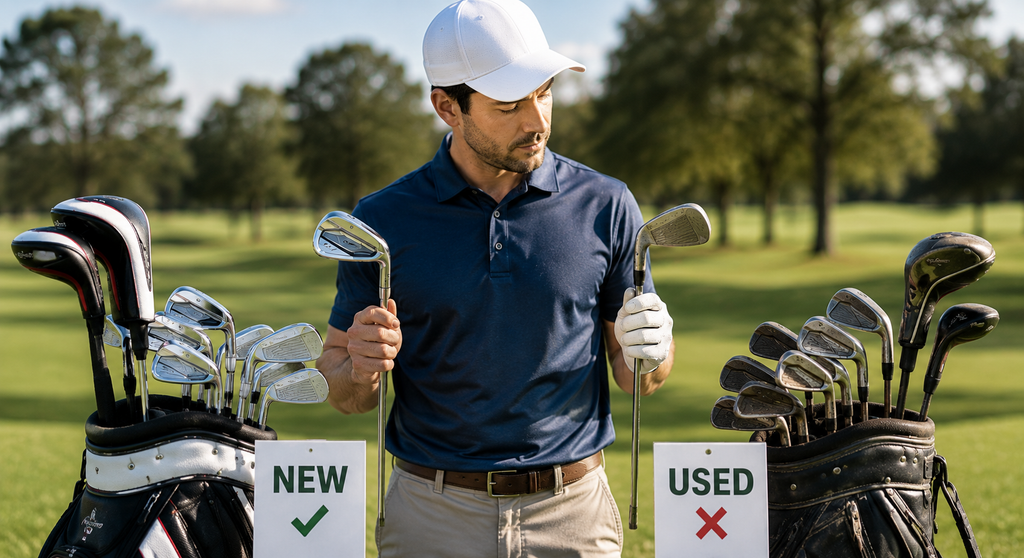
Comparing new vs used golf clubs can save you money and help you build a better set. New equipment offers current technology, more fitting options, and unused components. However, pre-owned clubs can provide excellent performance for much less money. The better choice depends on your budget, skill level, buying experience, and the condition of the equipment. Instead of assuming newer always means better, focus on how well each club suits your swing. A carefully chosen older model may outperform a brand-new club that does not fit your game.
Why Buying New Golf Clubs Makes Sense
New clubs offer several clear advantages. First, you receive equipment that has not experienced previous wear, damage, or modifications.
That means the grooves, grips, shafts, and clubheads begin in fresh condition. You also know exactly how the equipment has been treated.
Current models usually provide the latest design developments from each manufacturer. Depending on the club, these improvements may focus on forgiveness, weight distribution, launch, adjustability, or ball speed.
However, technology does not make every new release dramatically better than the previous generation. Improvements can be incremental.
Buying new also provides more fitting flexibility. Retailers and fitting centers may offer several shaft weights, flexes, lengths, lofts, and lie options.
When comparing new vs used golf clubs, this customization can be important for golfers with specific equipment needs.
Manufacturer or retailer warranty coverage may provide additional peace of mind. Coverage varies, so check the exact terms before purchasing.
Why Used Golf Clubs Can Offer Excellent Value
Pre-owned equipment can reduce the cost of building a golf bag significantly. This makes it especially attractive for beginners and budget-conscious players.
Golf clubs do not suddenly stop working when manufacturers release new models. A forgiving iron from several years ago may still perform extremely well.
Used equipment can also give you access to higher-quality models that were previously outside your budget. Instead of buying an entry-level new club, you may find a premium older model for a similar price.
Depreciation is another advantage. The first owner has already absorbed much of the initial drop in value.
As a result, new vs used golf clubs becomes more than a question of age. It is really a comparison of performance, condition, fit, and price.
However, used clubs require more careful inspection. You need to know what you are buying because condition varies considerably.
A reputable seller with clear photos and accurate descriptions can make the process safer.
How Much Can You Save by Buying Used?
There is no fixed discount because prices depend on brand, model, age, condition, demand, and seller.
Recent premium clubs may retain a large portion of their original value. Older models can fall much further, particularly after several newer generations arrive.
Iron sets often represent a significant opportunity for savings because quality irons can remain useful for many years.
Drivers may depreciate more noticeably as manufacturers introduce updated models regularly. Therefore, golfers who do not need the newest release can sometimes find strong value in previous generations.
Wedges require more caution because groove condition matters. A heavily used wedge may be cheap, but reduced face condition could make the savings less attractive.
When evaluating new vs used golf clubs, calculate the total cost rather than the purchase price alone.
A used set may need new grips. In addition, you might need shaft work or loft and lie adjustments. Include these expenses before deciding which option offers better value.
Condition Matters More Than Cosmetic Appearance
Used clubs often have scratches, sole marks, and bag chatter. Fortunately, many cosmetic imperfections have little effect on performance.
Focus your inspection on functional areas.
Start with the clubface. Look for unusual damage, deep marks, or excessive wear around the typical impact area.
On irons and wedges, inspect the grooves carefully. Wedges deserve extra attention because they frequently contact sand and turf.
Next, examine the shaft. Steel shafts should not have serious corrosion, dents, or bends. Graphite shafts should be free from cracks, deep scratches, and splintering.
Check the grip as well. A worn grip is usually replaceable, but the cost should influence your offer.
In the new vs used golf clubs decision, a scratched but structurally sound club may provide much better value than a cleaner-looking club with shaft or face damage.
Do not let appearance distract you from the parts that actually affect safety and performance.
Are Used Drivers Worth Buying?
A used driver can be a smart purchase, particularly when it comes from a relatively recent generation.
Driver technology changes over time, but older models can still produce excellent results when they fit your swing.
Check the face carefully for cracks or unusual deformation. Also, inspect the crown and sole for structural damage rather than ordinary cosmetic marks.
Adjustable drivers require additional attention. Make sure weights and hosel components are present and functioning properly.
Listen for rattling inside the head. A loose internal component deserves investigation before purchase.
The shaft should match your needs too. A bargain driver becomes less attractive if you immediately need an expensive replacement shaft.
Comparing new vs used golf clubs is particularly useful with drivers because fitting can matter more than model year.
A properly fitted older driver can easily be more useful than an unsuitable new one. Whenever possible, test the club against your current driver before purchasing.
Should You Buy Used Irons?
Irons are among the safest categories to consider buying used when their condition is good.
Quality iron heads can last many years. Therefore, a set that is a few generations old may still provide dependable performance.
Check face wear, especially on the short and mid-irons. These clubs often receive more use than the longest irons in a set.
Also, confirm that every shaft matches. Occasionally, a previous owner replaces one damaged shaft with a different model.
Check the specifications when possible. Used irons may have been adjusted for length, loft, or lie.
This matters when considering new vs used golf clubs because a set built for someone else’s unusual specifications may not suit you.
Grip condition is less concerning because grips can be replaced. However, replacing an entire set adds to your final cost.
Used game-improvement irons can be especially attractive for beginners because forgiving designs often remain relevant for many seasons.
Be More Careful When Buying Used Wedges
Wedges experience substantial wear because golfers use them from fairways, rough, sand, and practice areas.
Grooves and face texture contribute to predictable performance. Therefore, inspect them carefully.
A wedge may look acceptable from a distance while showing a heavily worn impact area up close.
Check whether groove edges appear significantly rounded. Also, look for concentrated wear in the center of the face.
Raw wedges may develop rust naturally, so rust alone does not necessarily indicate poor condition. However, understand the intended finish before buying.
For this category, the new vs used golf clubs comparison often favors new equipment when the used wedge has seen heavy play.
Lightly used wedges can still offer good value. Nevertheless, the price should reflect their remaining condition.
If you cannot inspect a wedge personally, buy from a seller that provides detailed face photographs and a clear condition rating.
Putters Can Be Excellent Used Purchases
Putters experience relatively little impact stress compared with full-swing clubs. Consequently, they can remain functional for decades.
A used putter can offer excellent value when its face, shaft, and alignment features remain in good condition.
Check putters with face inserts carefully. Make sure the insert is secure and does not show serious damage.
Inspect the shaft for rust or bending. Also, confirm the length because previous owners sometimes modify putters.
Grip condition matters less because replacement is straightforward. In fact, you may want a different grip size regardless of the original condition.
When weighing new vs used golf clubs, putters are one category where age may matter very little.
Feel and alignment are far more important. An older design that suits your stroke can outperform a new putter that looks impressive but feels difficult to aim.
Whenever possible, roll several putts before purchasing.
How Club Fitting Changes the Decision
A major advantage of new equipment is access to fitting options. However, you can still use fitting information when shopping for used clubs.
Suppose a fitting shows that you perform well with a particular shaft weight, flex, club length, and head style. You can then search the pre-owned market for equipment with similar specifications.
This approach combines professional guidance with used-club savings.
However, finding an exact combination may require patience. Popular specifications are easier to locate than unusual ones.
Custom modifications can also reduce the savings. If a used iron set needs reshafting, regripping, and lie adjustments, buying new may become more practical.
Therefore, your new vs used golf clubs decision should include the cost of making used equipment fit properly.
Do not buy a bargain club that forces you to change your natural swing. Equipment should work for you, not the other way around.
Which Option Is Better for Beginners?
Beginners often benefit from used equipment because their swings and preferences can change quickly.
A reasonably priced game-improvement set lets a new golfer learn without making a huge initial investment.
However, beginners should avoid buying very old or demanding equipment simply because it is inexpensive.
Forgiveness matters. Look for cavity-back or game-improvement irons, a driver with useful loft, and hybrids that replace difficult long irons.
A new package set can also make sense. It provides a complete selection of clubs without requiring extensive equipment knowledge.
When beginners compare new vs used golf clubs, simplicity should influence the decision alongside price.
A complete new starter set may be easier to buy. Meanwhile, carefully selected used equipment can offer higher component quality for similar money.
Either route works when the clubs suit the golfer’s size, strength, and developing swing.
What About Intermediate and Advanced Golfers?
More experienced golfers often understand their equipment needs better. Therefore, they can navigate the used market with greater confidence.
An intermediate golfer may already know preferred shaft weights, iron styles, and driver characteristics. This makes identifying suitable previous-generation equipment easier.
Advanced golfers can also find excellent used clubs. However, specific fitting requirements may narrow the available choices.
For example, a player may need particular lie angles, shaft profiles, swing weights, or wedge grinds. Finding those specifications secondhand can take time.
In such cases, new equipment offers convenience and customization.
The new vs used golf clubs choice should therefore reflect how specific your requirements are.
Golfers with standard needs can find many suitable pre-owned options. Players requiring extensive customization may save time and sometimes money by ordering the correct specifications from the beginning.
Where You Buy Used Clubs Matters
A trustworthy seller reduces many of the risks associated with pre-owned equipment.
Established golf retailers often inspect used clubs and assign condition ratings. Some may also provide return periods or limited guarantees.
Private marketplaces can offer lower prices. However, buyers generally need to perform more of their own inspection.
Ask for clear photographs of the face, crown, sole, shaft, grip, and serial markings where applicable.
Request details about modifications. A seller should disclose changes to length, shaft, loft, lie, or other important specifications.
Counterfeit equipment is another concern, particularly with popular premium models.
When considering new vs used golf clubs, an unusually low price should encourage additional caution rather than immediate excitement.
Research the seller, compare market prices, and avoid purchases when important details remain unclear.
Do Not Forget About Grips and Other Hidden Costs
A used club’s sticker price may not represent its true cost.
Start with the grips. Replacing one grip is inexpensive compared with buying a club, but regripping an entire iron set adds up.
Next, consider shafts. A poorly matched or damaged shaft can require a more expensive repair.
Adjustments may create additional costs. Used irons could need loft or lie changes, while a driver may be missing its adjustment tool or interchangeable weight.
Shipping charges also matter when buying online. In addition, return shipping can become expensive if the club does not meet expectations.
The new vs used golf clubs comparison becomes more accurate when you calculate these costs before paying.
A slightly more expensive used set in excellent condition may provide better overall value than a cheaper set requiring immediate work.
Likewise, a discounted new previous-generation model can sometimes cost little more than a heavily used current model.
Previous-Generation New Clubs Offer a Third Option
Your decision does not have to be limited to current-model new equipment or used equipment.
Unsold previous-generation clubs can offer an attractive middle ground.
These clubs are still new, yet retailers may discount them after a replacement model launches. Therefore, you can receive unused equipment at a lower price.
The technology may be only one generation behind. For many recreational golfers, the performance difference can be modest.
You may also receive warranty coverage depending on the retailer and manufacturer.
Availability is the main limitation. Once popular specifications sell out, finding your preferred loft, flex, or set makeup can become difficult.
For golfers comparing new vs used golf clubs, discounted older inventory deserves serious consideration.
It can combine some of the price advantage of used equipment with the condition and confidence of buying new.
A Simple Checklist Before You Buy
Start by defining what you actually need. Do not replace a club simply because you found an attractive deal.
Next, establish your budget and include potential repair or adjustment costs.
If buying used, inspect the clubface, grooves, shaft, grip, hosel, and clubhead carefully. Confirm the exact model and specifications.
For adjustable clubs, check that important components function correctly.
Then compare the club against your existing equipment whenever possible. A new purchase should solve a problem or provide meaningful value.
Think about resale too. Popular models in good condition may retain value better if you decide to change later.
Finally, compare new vs used golf clubs based on total value rather than age alone.
The winning option should provide suitable performance, acceptable condition, proper specifications, and a price that makes sense for your budget.
Conclusion
Both new and used equipment can be excellent choices. The key is understanding what you receive for your money.
New clubs provide unused condition, current fitting options, and access to recent designs. Depending on where you buy, warranty protection may also add value.
Used clubs can dramatically lower costs while still providing strong performance. Irons and putters are often particularly attractive secondhand purchases. Drivers can also offer excellent value when their condition and specifications are suitable.
Be more cautious with heavily used wedges, damaged shafts, and clubs with unclear modification histories.
Ultimately, choosing between new vs used golf clubs comes down to fit, condition, performance, and total cost. Do not pay extra simply to own the newest model. Likewise, do not accept unsuitable equipment just because it is cheap. Buy the option that supports your swing, meets your needs, and gives you the strongest long-term value.
FAQ
1. Are secondhand golf clubs good for beginners?
Yes. Forgiving pre-owned clubs can provide excellent value for beginners. Focus on suitable specifications and condition rather than buying the cheapest set available.
2. How old is too old for a used golf club?
There is no universal age limit. Condition, fit, technology, and performance matter more. Some older clubs remain highly playable, while heavily worn newer clubs may be poor purchases.
3. What golf clubs are safest to buy pre-owned?
Irons and putters can be strong choices because quality examples often remain useful for many years. Every club should still receive a proper condition inspection.
4. Should I buy wedges secondhand?
You can, but inspect the face and grooves carefully. Wedges often experience substantial wear, so a heavily used example may offer less value than its low price suggests.
5. Is last year’s new golf equipment worth buying?
Often, yes. Previous-generation new clubs can provide excellent value when discounted. They may offer many of the benefits of unused equipment without the latest-model price.