
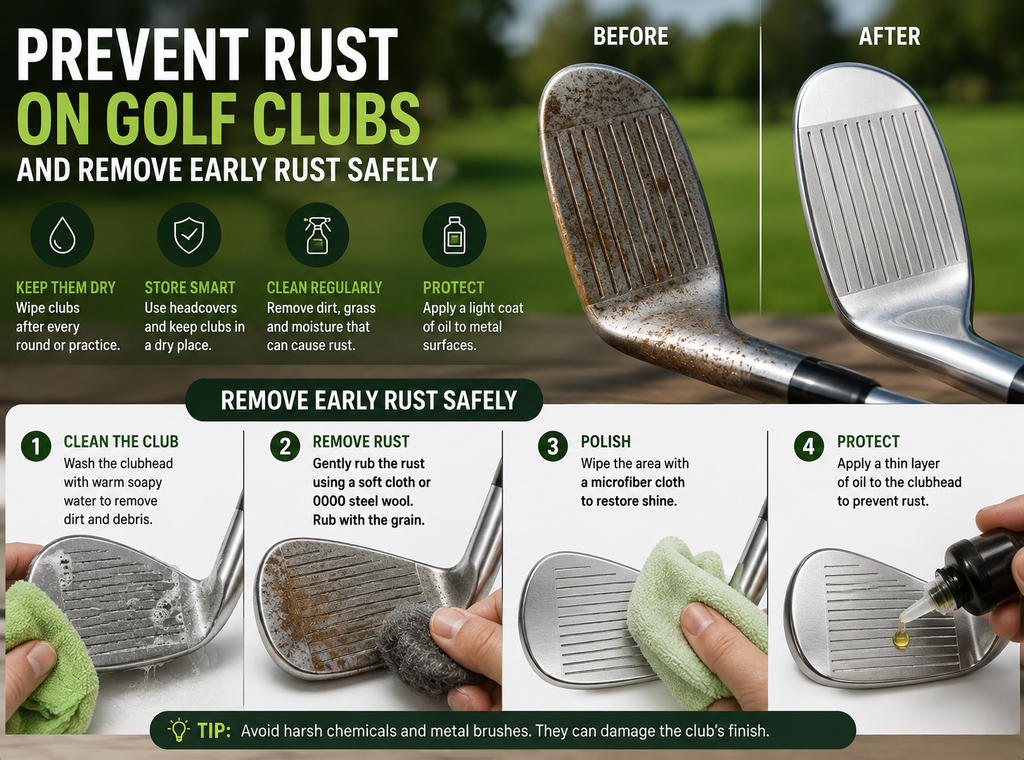
Learning how to prevent rust on golf clubs is an important part of protecting equipment you may use for many seasons. Golf clubs regularly encounter moisture from wet grass, rain, morning dew, mud, sweat, and humid storage conditions. When moisture remains on vulnerable metal surfaces, corrosion can begin. Fortunately, basic maintenance can greatly reduce unnecessary exposure. Drying clubs after play, cleaning them correctly, inspecting them regularly, and choosing a suitable storage location are simple habits that help. If small rust spots have already appeared, careful early treatment may also prevent the problem from becoming more serious. However, not every club or finish should receive the same treatment, so gentle methods and manufacturer guidance matter.
Why Golf Clubs Can Develop Rust
Rust forms when iron-containing metals react with oxygen and moisture.
Golf clubs contain different materials, coatings, finishes, and components. Therefore, their susceptibility to corrosion varies.
Some clubheads have protective finishes that provide additional resistance. However, scratches or worn areas can expose vulnerable metal underneath.
Raw-finish wedges are different because some are specifically designed to develop surface rust over time.
Shafts can also require attention, particularly steel shafts that have experienced damage to their protective finish.
If you want to prevent rust on golf clubs, the first priority is controlling unnecessary moisture.
You cannot avoid every wet condition on a golf course. However, you can control how long your equipment remains wet afterward.
Dry Clubs After Every Wet Round
Rainy golf demands more than simply putting the bag away when you arrive home.
Start by removing the clubs from any enclosed travel cover.
Wipe the clubheads and shafts with a clean, dry towel. Then allow the clubs and bag to dry in a ventilated location.
Remove wet towels, gloves, and headcovers as well.
These accessories can hold moisture inside the bag.
You should also open damp pockets so trapped moisture can escape.
This routine can prevent rust on golf clubs because it reduces the time vulnerable surfaces remain exposed to water.
Even if you feel tired after a wet round, spending a few minutes drying your equipment can save more work later.
Do Not Ignore Morning Dew
A course does not need to be rainy for your clubs to become wet.
Early morning rounds often expose clubheads to dew on the grass.
After several shots, moisture and grass can accumulate inside the grooves and along the sole.
Wipe your irons and wedges during the round when necessary.
Then inspect them before storing the bag.
This is especially important if you plan to leave the clubs unused for several days.
A small amount of moisture can easily go unnoticed.
Golfers who consistently prevent rust on golf clubs treat dew, wet rough, and damp bunkers as real moisture exposure rather than waiting for heavy rain before drying equipment.
Clean Dirt and Mud From Clubheads
Mud can hold moisture against the clubhead.
Therefore, leaving dirty clubs in the bag for days is not ideal.
After a round, remove visible dirt from the face, grooves, and sole.
A soft brush and damp cloth can handle many routine cleaning jobs.
If you use water, avoid unnecessarily soaking the entire club.
Clean one club at a time and dry it immediately afterward.
Pay particular attention to grooves where debris can become packed tightly.
A regular cleaning routine helps prevent rust on golf clubs while also keeping the hitting surfaces ready for your next round.
Avoid Soaking Clubheads for Long Periods
Placing irons in a bucket of water may seem like a convenient cleaning method.
However, extended soaking is unnecessary.
Water can reach areas you did not intend to expose, particularly around ferrules or other components.
Instead, use a controlled amount of water.
Apply it where cleaning is required, then wipe and dry the club.
If dirt is difficult to remove, allow a damp cloth or appropriate soft brush to loosen it gradually.
You do not need to submerge the club for an extended period.
To prevent rust on golf clubs, keep cleaning controlled and make thorough drying part of the process.
Use the Right Brush
A golf brush can make routine cleaning easier, but aggressive scrubbing is not always appropriate.
Different clubhead finishes can respond differently to abrasive materials.
A soft nylon brush is a sensible starting point for many routine cleaning tasks.
Before using a metal brush or abrasive product, check the club manufacturer’s care recommendations.
You do not want to scratch or alter a protective finish while trying to remove dirt.
Gentle maintenance is usually the better way to prevent rust on golf clubs.
Use only enough pressure to remove debris.
If a stain or rust spot does not respond, investigate the correct treatment rather than immediately scrubbing harder.
Dry the Grooves Carefully
The grooves deserve attention after cleaning.
Water can remain in small recessed areas even when the rest of the clubhead appears dry.
Use a clean towel to wipe across the face and grooves.
Then allow the club to air-dry before returning it to long-term storage.
You can inspect the face under good lighting to confirm that dirt and moisture are gone.
This process takes very little time.
However, it helps prevent rust on golf clubs by removing moisture from areas that golfers often overlook.
It also leaves the face clean for your next practice session or round.
Inspect Steel Shafts
Clubheads receive most of the attention, but steel shafts should also be checked.
Inspect each shaft under good lighting.
Look for discoloration, scratches, pitting, unusual roughness, or other visible changes.
Pay particular attention to areas where clubs repeatedly rub against the golf bag or other equipment.
If you notice serious corrosion or structural damage, stop treating it as a cosmetic issue.
A compromised shaft can become a safety concern.
Professional inspection is appropriate when you are uncertain.
Routine shaft checks help prevent rust on golf clubs from progressing unnoticed while also helping you identify other forms of wear.
Be Careful With Graphite Shafts
Graphite shafts do not rust like steel, but they still require proper care.
Inspect them for scratches, chips, splintering, cracks, or other signs of damage.
Do not use rust-removal techniques intended for steel on graphite components.
Similarly, avoid aggressive abrasives.
Cleaning should follow the shaft or club manufacturer’s recommendations.
Although graphite itself changes the corrosion concern, the clubhead may still contain materials that need protection from moisture.
Therefore, your overall routine to prevent rust on golf clubs should include the entire club rather than focusing on one component.
Store Clubs in a Dry Environment
Storage conditions can make a major difference.
A damp garage, outdoor shed, or humid enclosed area may expose equipment to moisture for long periods.
Whenever practical, choose a dry indoor location with reasonable ventilation and relatively stable conditions.
Do not place wet clubs directly into long-term storage.
Make sure the bag is dry too.
Moisture trapped in a bag can remain near clubheads and shafts even after their surfaces have been wiped.
Good storage helps prevent rust on golf clubs during the days or weeks between rounds.
Avoid Leaving Clubs in the Car
A vehicle is convenient, especially when you play frequently.
However, it is not an ideal permanent storage location.
Cars can experience significant heat and temperature changes.
Moisture may also remain trapped inside the bag after a round.
Instead, bring your clubs into a suitable storage area when practical.
This gives you an opportunity to inspect and dry them.
It also protects other components, including grips and adhesives, from unnecessary environmental stress.
A consistent storage routine can prevent rust on golf clubs while supporting better overall equipment care.
Remove Wet Headcovers
Headcovers protect woods, hybrids, and putters from impacts and cosmetic damage.
However, a wet headcover can hold moisture against the club.
After playing in rain, remove damp covers.
Allow both the covers and clubs to dry separately.
Do not put a wet cover back onto a club and leave it there for several days.
The same principle applies if a headcover becomes soaked from wet grass or a spill.
Dry accessories are an important part of your effort to prevent rust on golf clubs, particularly when metal surfaces remain enclosed.
Check Clubs Before Long-Term Storage
If you will not play for several weeks or months, inspect the entire set before storing it.
Clean the clubheads and remove dirt from the grooves.
Dry every component completely.
Check steel shafts for early discoloration or corrosion.
Make sure the golf bag is also clean and dry.
Remove wet or dirty towels, food, and other unnecessary items from the pockets.
Store everything in a suitable indoor environment.
Preparing equipment properly can prevent rust on golf clubs during an off-season or extended break.
It also means your set will require less work when you return.
Understand Raw-Finish Wedges
Not all visible rust indicates neglect.
Some wedges use raw or unplated finishes that are intentionally designed to change appearance and develop rust.
Therefore, before attempting rust removal, identify the exact model and finish.
Check the manufacturer’s guidance.
Aggressively removing oxidation from a raw wedge could alter the appearance the club was designed to develop.
The general goal to prevent rust on golf clubs should not override the intended characteristics of a specific product.
If you own raw wedges, follow their particular care instructions rather than treating them exactly like chrome-plated or other finished clubs.
Identify Early Surface Rust
Early rust may appear as small orange or brown spots on vulnerable metal.
Inspect suspicious areas under bright light after cleaning away ordinary dirt.
Determine whether the discoloration sits on the surface or appears associated with deeper pitting.
Minor surface oxidation may sometimes be manageable.
Deep corrosion deserves more caution, especially on a shaft or structurally important area.
Before treating anything, identify the club material and finish.
A method that works on one type of steel club could damage another finish.
The safest approach is always to begin gently.
Early detection helps prevent rust on golf clubs from becoming a larger problem that is harder to address.
Start With the Gentlest Removal Method
If you discover a small rust spot, do not immediately reach for aggressive chemicals or coarse abrasives.
First, clean and dry the area.
Check the manufacturer’s recommendations for that particular club.
If the finish allows treatment, use the gentlest approved method and work on a small area.
Apply minimal pressure.
Then inspect your progress before continuing.
This approach reduces the chance of damaging plating, paint, markings, or the surrounding finish.
Your effort to prevent rust on golf clubs should never create more damage than the original rust spot.
When in doubt, consult a club technician rather than experimenting with harsh household products.
Avoid Aggressive Abrasives
Sandpaper, coarse steel wool, powered polishing tools, and abrasive compounds can remove more than rust.
They may scratch the surface or remove protective finishes.
That can expose additional metal and create a larger future corrosion problem.
Therefore, aggressive abrasion should not be your default response.
If a club requires substantial restoration, professional help may be safer.
This is particularly important for valuable equipment or clubs with specialized finishes.
The objective is to prevent rust on golf clubs while preserving their construction and appearance.
Removing a small rust spot is not a success if the process damages the surrounding protective layer.
Be Cautious With Household Chemicals
The internet contains many home remedies for rust.
Some involve acids, strong cleaners, metal polishes, or other household substances.
However, golf club finishes vary significantly.
A chemical that appears harmless on one piece of metal may discolor or damage another club.
Therefore, do not assume a popular home remedy is appropriate for your equipment.
Check manufacturer instructions first.
If a product is approved, follow its directions carefully and avoid mixing chemicals.
Good maintenance should prevent rust on golf clubs without exposing you or the equipment to unnecessary risk.
Know When Rust Is More Than Cosmetic
A small surface spot on a clubhead is different from significant pitting on a steel shaft.
Structural components deserve extra caution.
If a shaft shows extensive corrosion, deep pitting, cracking, or other damage, stop using the club until it has been inspected.
A weakened shaft can fail during a swing.
Likewise, severe clubhead corrosion may require professional evaluation.
Do not keep sanding away material in an attempt to make damaged equipment look new.
Safe equipment matters more than appearance.
Do Not Forget the Golf Bag
A dirty or wet golf bag can undermine good club maintenance.
After a rainy round, open pockets and remove wet accessories.
Allow the bag to dry thoroughly.
Check the bottom section because water can collect there.
If your bag regularly becomes soaked, consider using an appropriate rain cover during wet rounds.
However, remember that a rain cover does not replace drying afterward.
A dry bag helps prevent rust on golf clubs because it reduces the amount of moisture surrounding your equipment during storage.
Use a Towel During the Round
Carrying a suitable golf towel makes maintenance easier.
After a shot from wet grass or a muddy lie, wipe the club before returning it to the bag.
This prevents large amounts of dirt and moisture from accumulating throughout the round.
You can keep part of the towel available for drying and another section for cleaning when practical.
During heavy rain, additional towels may be useful.
A few seconds of care after each wet shot can reduce the cleaning required later.
It also keeps grooves clearer during play.
Create a Post-Round Routine
Consistency is more valuable than occasional deep cleaning.
After every round, quickly inspect your clubs.
Remove obvious dirt and grass.
If the conditions were wet, dry the clubheads and shafts carefully.
Take damp headcovers, towels, and gloves out of the bag.
Allow everything to dry before closing the bag for storage.
Every few rounds, perform a more detailed inspection.
Look at grooves, soles, shafts, ferrules, and grips.
This routine can prevent rust on golf clubs while helping you identify loose components, grip wear, and other maintenance needs before they become larger problems.
Inspect Clubs Monthly
A monthly inspection takes only a few minutes during your active season.
Place the clubs somewhere with good lighting.
Examine each clubhead for discoloration, scratches, and unusual wear.
Check steel shafts for early corrosion.
Inspect grips and make sure the clubs are clean.
If you live or play in a humid environment, more frequent checks may be worthwhile.
Regular inspections allow you to address small problems before they spread.
They also help you understand how your equipment ages under your normal playing and storage conditions.
Common Rust-Prevention Mistakes
One common mistake is putting wet clubs directly into storage.
Another is leaving damp headcovers on clubs for days.
Golfers may also forget that mud and grass can retain moisture against metal surfaces.
Overcleaning creates problems too.
Harsh chemicals, aggressive brushes, and abrasive materials may damage finishes that were helping protect the club.
Some players also store equipment permanently in vehicles or damp garages.
The best maintenance routine is simple: clean when needed, dry thoroughly, inspect regularly, and store sensibly.
When Should You Ask a Professional?
Professional assistance makes sense when corrosion appears extensive or you cannot identify the club’s finish.
A club technician can also inspect steel shafts for structural concerns.
Seek help when you see deep pitting, significant material loss, cracks, or damage around important components.
If the club is valuable, unusual, or has a specialized finish, professional advice can reduce the risk of an unsuccessful DIY restoration.
Minor maintenance is easy to handle at home, but significant corrosion should not be treated casually.
Conclusion
Rust prevention does not require complicated equipment or hours of maintenance.
Most problems begin with moisture that remains on vulnerable surfaces longer than necessary. Therefore, drying your clubs is one of the most useful habits you can develop.
Clean mud and grass from clubheads, wipe the grooves, inspect steel shafts, and remove wet accessories from your bag. After rainy rounds, allow the entire set and bag to dry before storage.
Choose a dry indoor location whenever practical, especially for extended storage.
If you discover early surface rust, identify the material and finish before attempting removal. Start with the gentlest manufacturer-approved method. Avoid aggressive abrasives or harsh chemicals that could damage protective coatings.
Remember that raw-finish wedges may intentionally develop rust, so always understand the equipment you own.
Ultimately, learning to prevent rust on golf clubs comes down to consistent care. Keep your equipment clean, limit unnecessary moisture, inspect it regularly, and address early problems before they become serious. Those habits can help preserve your clubs and keep them ready for many rounds ahead.
FAQ
1. Why are my golf clubs starting to rust?
Moisture, humidity, damaged protective finishes, and inadequate drying can contribute to corrosion on vulnerable metal surfaces. The exact cause also depends on the club’s materials and finish.
2. Can small rust spots be removed from golf clubs?
Minor surface oxidation may be treatable, depending on the club material and finish. Begin with manufacturer guidance and the gentlest appropriate method.
3. Should I soak rusty irons in a cleaning solution?
Avoid extended soaking unless the manufacturer specifically recommends it. Different finishes and components can react differently to water, chemicals, and cleaning products.
4. Is rust on a raw wedge normal?
It can be. Some raw-finish wedges are intentionally designed to develop surface rust and change appearance. Check the manufacturer’s information for your specific model.
5. Should I replace a golf shaft that has rust?
Minor surface discoloration and serious structural corrosion are very different. If a steel shaft has deep pitting, extensive corrosion, cracking, or questionable integrity, have it professionally inspected before further use.