Choosing the right golf clubs can make a major difference in how confidently you play. However, buying clubs is not simply about choosing the newest model. Your experience, swing speed, common misses, budget, and goals should guide your decision. Beginners often need forgiveness and easy launch. Meanwhile, experienced golfers may value control, feel, and shot shaping. Therefore, understanding what fits your game can help you avoid expensive mistakes. This guide explains how to choose clubs for your current ability while building a set that can support your progress.
Why Your Skill Level Matters When Choosing Golf Clubs
Golf equipment comes in many shapes, sizes, and designs. Manufacturers create clubs for different types of players. As a result, a club that works beautifully for one golfer may feel difficult for another.
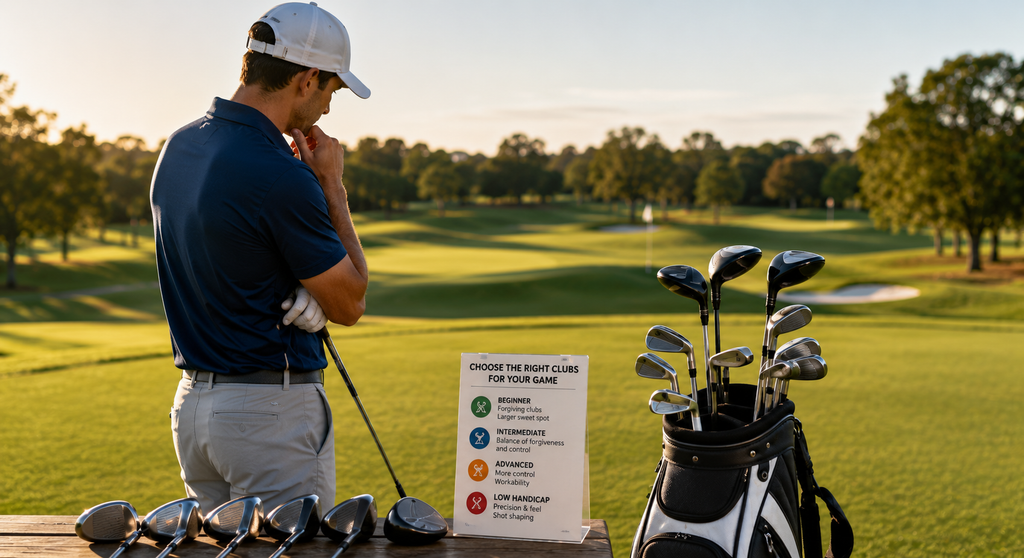
Beginners usually benefit from larger clubheads, wider soles, and more forgiving designs. These features can reduce the damage caused by off-center contact. In addition, lightweight shafts may help newer golfers create more speed without swinging harder.
Intermediate players often need a balance between forgiveness and control. They may strike the ball well enough to use more compact clubs. However, they can still benefit from technology that protects distance on imperfect shots.
Advanced golfers may prefer clubs that offer precise feedback and greater control. Smaller heads and specialized designs can help skilled players shape shots. Still, even experienced golfers should not choose difficult equipment simply because it looks professional.
The right golf clubs should match the player you are today. At the same time, they should give you enough room to improve. Choosing equipment far beyond your current ability can make golf unnecessarily frustrating.
Your handicap can provide a useful starting point. Yet handicap alone does not tell the whole story. Two golfers with similar scores can have very different swing speeds, ball flights, and weaknesses. Therefore, consider your entire game before buying.
Choosing Clubs for Beginners, Intermediate, and Advanced Golfers
Beginners should usually prioritize forgiveness above almost everything else. A forgiving club helps preserve useful distance and direction when contact misses the center of the face. Because beginners naturally make inconsistent swings, that extra help matters.
Look for cavity-back or game-improvement irons with larger sweet spots. Hybrids can also replace difficult long irons. Likewise, a driver with a larger head and suitable loft may make tee shots easier to launch.
A beginner does not always need 14 clubs. Instead, a simpler set can make club selection less confusing. A driver, fairway wood or hybrid, several irons, wedges, and a putter can cover most situations.
Intermediate golfers have different needs. Their contact has usually improved, so they can begin thinking about distance gaps and specific performance goals. For example, one player may need better wedge spacing. Another might need a hybrid that fills the gap between a fairway wood and longest iron.
For these golfers, the right golf clubs often combine game-improvement technology with better feel. Players can gradually move toward more specialized equipment without giving up useful forgiveness.
Advanced golfers can focus more closely on trajectory, spin, workability, and feel. However, they should still use performance data rather than assumptions. A compact iron may look appealing, but a slightly more forgiving model could produce better scoring results.
Ultimately, skill level should guide the starting point rather than create a strict rule. Test different designs whenever possible.
Understand the Main Types of Golf Clubs
Before building a set, understand what each club should accomplish. Every section of the bag has a different purpose.
The driver usually produces the greatest distance from the tee. Loft, shaft characteristics, head design, and adjustability can influence launch and ball flight. Therefore, choosing a driver based only on appearance is rarely a good strategy.
Fairway woods provide distance from the fairway and tee. However, some golfers find them difficult to hit from the ground. Hybrids offer an alternative because their shape can make launching the ball easier.
Irons handle many approach shots. Game-improvement irons typically feature larger heads and more forgiveness. Players irons often offer more control but demand more consistent contact.
Wedges cover shorter approaches, pitches, chips, and bunker shots. Proper loft spacing matters because large gaps can leave awkward distances.
Finally, the putter handles more strokes than many golfers realize. Its shape, length, alignment features, and feel should suit your setup and stroke.
Building the right golf clubs into your bag means giving each club a clear job. If two clubs repeatedly travel the same distance, one may be unnecessary. Instead, use that space to cover a meaningful distance gap.
Consider Forgiveness, Loft, and Clubhead Design
Forgiveness describes how well a club performs when you miss the ideal impact point. It is especially valuable for beginners and higher-handicap players. However, golfers at every level can benefit from some forgiveness.
Larger clubheads can inspire confidence at address. In addition, perimeter weighting may help maintain stability on off-center strikes. Wider soles can also help the club move through the turf more easily.
Loft deserves equal attention. Golfers sometimes assume lower loft automatically creates more distance. Yet insufficient loft can make launching the ball difficult. In many cases, extra launch produces better carry distance.
For example, a golfer with moderate driver speed may perform better with additional loft. Meanwhile, another player with higher speed may require a different setup to control trajectory and spin.
Iron lofts also vary between models. Therefore, do not compare clubs based only on the number stamped on the sole. One brand’s 7-iron may have a very different loft from another.
When selecting the right golf clubs, focus on actual ball flight and useful distance. Numbers on a specification sheet matter, but real performance matters more.
Match the Shaft to Your Swing
The shaft connects your hands to the clubhead, so its characteristics can influence feel and performance. Flex is one important factor, but it is not the only one.
Common flex categories include ladies, senior, regular, stiff, and extra stiff. However, flex standards can vary between manufacturers. Therefore, a regular shaft from one company may not feel exactly like another.
Swing speed can help narrow your options. Still, tempo and transition also matter. A smooth swinger and an aggressive swinger may prefer different shafts even when their speeds are similar.
Weight is another important consideration. Lighter shafts can help some golfers generate speed. In contrast, heavier shafts may give others better control and awareness of the club during the swing.
Graphite shafts are common in drivers, fairway woods, and hybrids. They are also increasingly popular in irons. Steel remains common in iron sets because many players enjoy its stability and feel.
The right golf clubs should have shafts that allow you to swing naturally. You should not feel forced to slow down or swing harder just to make the equipment work.
Whenever possible, compare several shaft options with a launch monitor or qualified fitter. Pay attention to consistency, not simply your longest shot.
Build a Set Around Your Actual Distance Gaps
A good golf set is not just a collection of impressive clubs. Instead, each club should cover a useful distance.
Start by estimating how far you carry each club. Carry distance matters because conditions can change how far the ball rolls. Once you know those numbers, look for large gaps or unnecessary overlap.
Suppose your longest iron carries 160 yards while your next fairway wood carries 200. That 40-yard gap may create difficult approach shots. A hybrid could potentially fill the space.
Wedge gaps also deserve attention. Many golfers buy irons and then add wedges without checking their lofts. Consequently, they may create a large gap between their pitching wedge and first specialty wedge.
The right golf clubs should create predictable distance progression throughout the bag. You do not need perfect spacing down to the yard. However, you should understand which club covers each common distance.
Also, remember that more clubs do not automatically produce lower scores. A simpler set with clear purposes can be easier to manage than a crowded bag full of overlapping options.
Do You Need a Professional Golf Club Fitting?
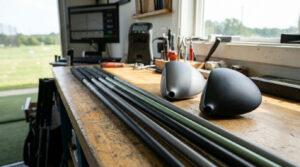
A professional fitting can provide valuable information, especially when you plan to spend significant money on equipment. During a fitting, you may test different heads, shafts, lofts, lengths, and lie angles.
Launch monitors can measure factors such as ball speed, launch angle, spin, carry distance, and dispersion. These numbers help compare equipment more objectively.
However, beginners should not assume fitting is only for elite players. A basic fitting can help a newer golfer avoid equipment that is too long, too heavy, or poorly suited to their swing.
Height alone does not determine club length. Arm length, posture, setup, and swing characteristics also matter. Similarly, shaft flex should not come from age or gender alone.
A fitting can help identify the right golf clubs based on measurable results. Still, the process should focus on consistency rather than chasing one unusually long shot.
If a professional fitting is outside your budget, test clubs at a golf store or driving range. Bring your current clubs for comparison. This gives you a useful baseline and makes improvements easier to judge.
Set a Realistic Budget Before Shopping
Golf clubs range from affordable starter sets to premium equipment costing thousands of dollars. Fortunately, you do not need the most expensive option to play well.
Set your budget before shopping. Then decide which parts of your bag need the most attention. If your irons still perform well, for example, replacing them just because a new model launched may offer little value.
Previous-generation equipment can provide excellent performance at a lower price. Used clubs can also be worthwhile. However, inspect the faces, grooves, shafts, and grips carefully before buying.
Beginners may benefit from package sets because they provide several essential clubs at one price. As your game develops, you can replace individual clubs based on specific needs.
The right golf clubs fit both your game and your finances. Overspending can create unrealistic expectations, while buying solely on price may leave you with poorly matched equipment.
Instead, prioritize fit, forgiveness, useful distance, and condition. A well-chosen older model can easily be more valuable to your game than an unsuitable premium club.
Test Golf Clubs Before You Buy
Whenever possible, hit a club before purchasing it. Reviews and specifications can narrow your choices, but they cannot reproduce your swing.
Start with comfort at address. Does the club look easy to aim? Does its size inspire confidence? Next, consider how it feels during the swing and through impact.
Then look at results. Pay attention to launch, carry distance, direction, and dispersion. A club that produces one spectacular shot but several poor ones may not be your best option.
Consistency should carry more weight than maximum distance. For example, gaining three yards means little if your misses become much wider.
Testing the right golf clubs side by side can reveal differences that are difficult to see online. Whenever possible, use the same golf ball during testing because ball characteristics can affect launch and spin.
Also, test clubs when you are reasonably fresh. Fatigue can change your swing and make comparisons less reliable.
Common Mistakes to Avoid When Buying Golf Clubs
One common mistake is buying clubs because a professional golfer uses them. Tour players have exceptional speed and strike quality. Therefore, their equipment may not suit an average recreational golfer.
Another mistake involves choosing clubs based only on distance. Longer is useful, but accuracy and consistency influence scoring too.
Some golfers also buy equipment they hope to grow into. While a little room for development is reasonable, clubs that are far too demanding can slow progress and reduce confidence.
Ignoring the shaft is another problem. The clubhead receives most of the attention, yet shaft weight and feel can dramatically change your experience.
Brand loyalty can also limit your options. Several manufacturers produce excellent equipment, so compare performance rather than choosing a logo first.
Finally, do not replace an entire set when only one area causes problems. The right golf clubs can come from different product lines or manufacturers. Your bag does not need to match.
How to Make Your Final Decision
Begin with an honest assessment of your ability. Consider your handicap, typical ball flight, swing speed, strengths, and common misses. Next, identify the weakest areas of your current setup.
Prioritize forgiveness if your contact varies significantly. Meanwhile, golfers with consistent contact can explore clubs that offer greater control and specialized performance.
Check distance gaps throughout the bag. Then compare suitable head and shaft combinations. Whenever possible, test your leading choices rather than relying only on marketing claims.
The right golf clubs should make common shots easier, not demand perfect swings. They should also feel comfortable enough that you can play without constantly thinking about your equipment.
Remember that golf clubs cannot replace sound technique. However, properly matched equipment can remove unnecessary obstacles. That allows you to focus more energy on practice, course management, and enjoying the game.
Conclusion
Choosing golf equipment becomes much easier when you start with your own game. Skill level, swing characteristics, forgiveness, shaft choice, distance gaps, and budget all deserve attention.
Beginners should generally seek easy launch and forgiveness. Intermediate golfers can balance help with control. Meanwhile, advanced players can fine-tune equipment around trajectory, feel, and specific shot requirements.
Most importantly, avoid buying clubs based only on popularity, price, or appearance. Test different options and judge them by consistent results.
Finding the right golf clubs is about building a set that supports your swing rather than fighting against it. When every club has a clear purpose, decision-making becomes easier. As a result, you can approach each shot with greater confidence and focus on playing better golf.
FAQ
1. How should a beginner choose a first set of golf clubs?
Beginners should prioritize forgiveness, easy launch, and simple club selection. A basic set with a driver, hybrid, forgiving irons, wedges, and putter can provide everything needed to learn.
2. Are expensive golf clubs better for beginners?
Not necessarily. Price does not guarantee a better fit. Affordable game-improvement clubs may perform better for a beginner than expensive equipment designed for highly skilled players.
3. Should high-handicap golfers use graphite or steel shafts?
Either can work. Graphite is often lighter and may help generate speed, while steel can provide a stable feel. Swing speed, tempo, strength, and personal comfort should guide the choice.
4. How often should golfers replace their clubs?
There is no fixed schedule. Replace equipment when wear affects performance, your swing changes significantly, or another club clearly improves results. Well-maintained clubs can remain useful for many years.
5. Is a golf club fitting worth it for an average golfer?
Yes, it can be. A fitting can identify suitable lengths, lie angles, shafts, lofts, and clubhead designs. More importantly, it can help prevent costly purchases that do not match your swing.