
If you’ve ever struggled with inconsistent shots, shaft flex distance might be the missing piece. Many golfers focus on clubheads or swing mechanics, yet the shaft plays an equally important role. In fact, the wrong shaft flex can limit your distance and reduce accuracy, even if your swing is solid.
At first, shaft flex may seem like a minor detail. However, it directly affects how the club interacts with your swing. As a result, choosing the right flex helps you maximize both power and control.
Understanding shaft flex distance allows you to fine-tune your equipment. Instead of guessing, you can match your clubs to your swing. Consequently, your performance becomes more consistent and predictable.
What Shaft Flex Really Means
Shaft flex refers to how much the shaft bends during your swing. Different flex levels include extra stiff, stiff, regular, senior, and ladies. Each type responds differently to swing speed and tempo.
When you swing the club, the shaft loads and unloads energy. This movement influences how the clubhead meets the ball. Therefore, shaft flex distance is closely tied to timing and energy transfer.
If the shaft is too stiff, it won’t bend enough. As a result, you may lose distance and struggle to square the clubface. On the other hand, if the shaft is too flexible, it may bend too much. Consequently, this can lead to inconsistent shots.
Finding the right balance ensures that your swing and equipment work together. That’s why shaft flex distance is such a critical factor in performance.
How Shaft Flex Affects Distance
Distance is often the first thing golfers notice when changing shafts. The relationship between shaft flex distance and power is significant.
A properly matched shaft allows you to generate more clubhead speed. This increases ball speed and overall distance. As a result, your shots travel farther with less effort.
However, mismatched flex can reduce efficiency. For example, a shaft that is too stiff may feel difficult to load. Consequently, you may struggle to generate power.
Conversely, a shaft that is too flexible can cause timing issues. This leads to inconsistent contact and reduced distance. Therefore, the right shaft flex distance depends on your swing speed and tempo.
When your shaft matches your swing, energy transfer improves. This results in more consistent and longer shots.
Consistency and Accuracy Benefits
While distance is important, consistency often matters more. Shaft flex distance also plays a key role in accuracy and shot control.
A well-matched shaft helps you square the clubface at impact. As a result, your shots stay on target more often. Additionally, consistent flex improves your ability to repeat your swing.
When the shaft flex is incorrect, timing becomes unpredictable. This can lead to hooks, slices, or inconsistent ball flight. Consequently, your confidence may suffer.
Consistency comes from repeatable results. Therefore, choosing the right shaft flex distance helps stabilize your performance.
By improving both accuracy and control, the correct shaft enhances your overall game.
Matching Shaft Flex to Swing Speed
Swing speed is one of the most important factors in determining shaft flex. Different speeds require different levels of flexibility.
Slower swing speeds typically benefit from more flexible shafts. These help generate additional distance by increasing launch and ball speed. As a result, players can achieve better performance without extra effort.
Faster swing speeds, on the other hand, require stiffer shafts. These provide more control and prevent excessive bending. Consequently, shots become more accurate.
However, swing speed alone is not enough. Tempo and transition also influence shaft behavior. Therefore, a smooth swing may require a different flex than an aggressive one.
Understanding your swing characteristics helps you choose the right shaft flex distance for your game.
The Role of Tempo and Timing
Tempo is often overlooked, yet it significantly affects shaft performance. Two golfers with the same swing speed may need different flex options.
A smooth tempo allows the shaft to load gradually. As a result, a slightly softer flex may work well. Conversely, an aggressive tempo requires more stability. Therefore, a stiffer shaft may be more suitable.
Timing is also critical. The shaft must release energy at the right moment. If it releases too early or too late, performance suffers. Consequently, shaft flex distance directly impacts shot consistency.
By considering both tempo and timing, you can find a shaft that complements your swing.
Common Mistakes When Choosing Shaft Flex
Many golfers make mistakes when selecting shaft flex. These errors can negatively affect shaft flex distance and overall performance.
One common mistake is choosing a shaft based on preference rather than data. While feel matters, performance should come first. Therefore, testing different options is essential.
Another issue is copying other players. What works for someone else may not suit your swing. Consequently, relying on personal fit is more effective.
Ignoring professional fitting is also a mistake. A proper fitting session provides valuable insights. As a result, you can make more informed decisions.
Avoiding these mistakes helps you maximize shaft flex distance and improve your game.
How Technology Improves Shaft Performance
Modern shafts are more advanced than ever. Technology now allows for precise tuning of flex and performance characteristics.
Manufacturers use advanced materials to create lighter and stronger shafts. This improves both speed and control. As a result, shaft flex distance becomes more efficient.
Additionally, variable flex profiles provide better performance throughout the swing. These designs optimize energy transfer and stability.
In 2026, customization options continue to expand. Golfers can choose shafts tailored to their specific needs. Consequently, achieving the right fit is easier than ever.
Technology ensures that shaft performance continues to evolve, benefiting players at all levels.
Why Proper Fitting Makes a Difference
Professional fitting is one of the best ways to optimize shaft flex distance. It takes the guesswork out of selecting the right equipment.
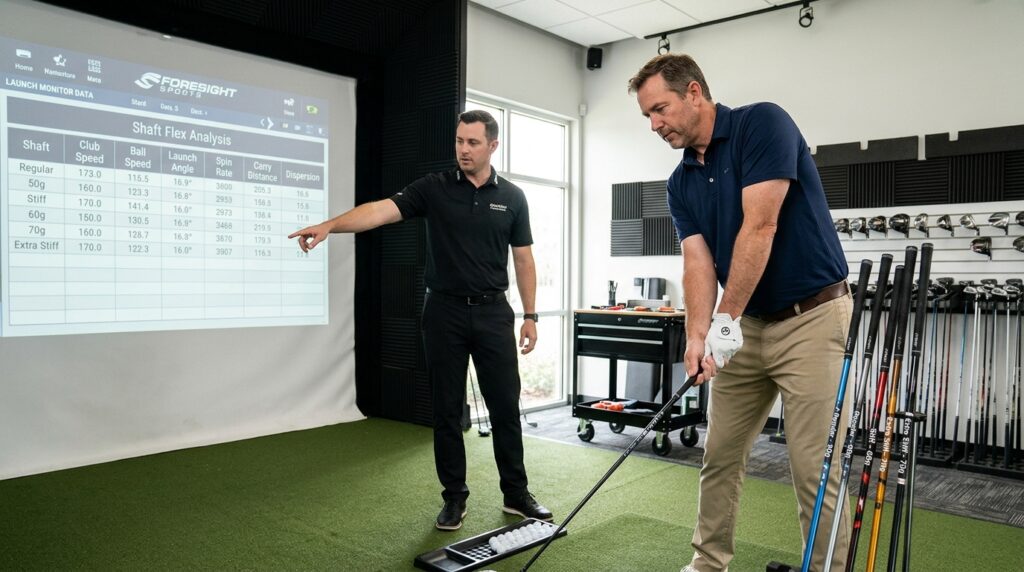
During a fitting, experts analyze your swing speed, tempo, and ball flight. As a result, they recommend shafts that match your characteristics.
Fitting also helps identify issues you may not notice. For example, inconsistent spin or launch angles can indicate incorrect flex. Consequently, adjustments can improve performance.
While fitting may require an investment, it often leads to better results. Therefore, it enhances the overall value of your equipment.
By choosing the right shaft through fitting, you can maximize both distance and consistency.
Conclusion
Understanding shaft flex distance is essential for improving your golf game. While it may seem like a small detail, it has a significant impact on performance.
The right shaft flex enhances distance, accuracy, and consistency. As a result, your shots become more reliable and effective. Conversely, the wrong flex can limit your potential.
By considering factors such as swing speed, tempo, and timing, you can find the best fit. Additionally, professional fitting provides valuable insights.
Ultimately, golf is about consistency and confidence. When your equipment matches your swing, improvement becomes more natural. With the right shaft flex distance, you can unlock better performance and enjoy the game even more.
FAQ
- What happens if my shaft flex is too stiff?
A stiff shaft can reduce distance and make it harder to square the clubface. - Can a flexible shaft improve distance?
Yes, a more flexible shaft can help slower swing speeds generate more power. - How do I know which flex is right for me?
Swing speed, tempo, and ball flight are key factors in determining the right flex. - Is professional fitting necessary for shafts?
Fitting helps match your equipment to your swing, improving consistency and accuracy. - Does shaft flex affect accuracy as well as distance?
Yes, the right flex improves both accuracy and overall shot consistency.