
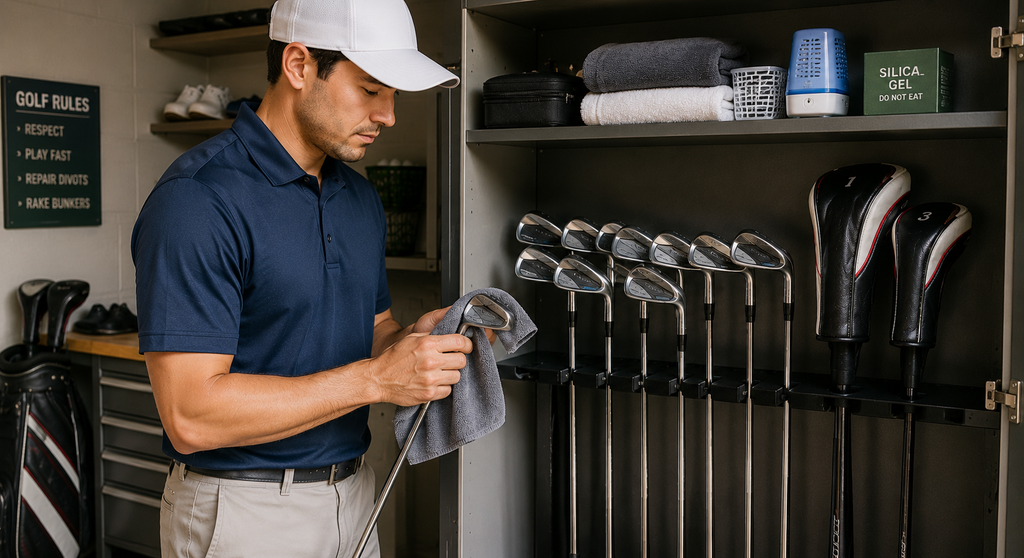
Knowing how to store golf clubs properly is an important part of protecting your equipment. Clubs face moisture, dirt, heat, impact, and temperature changes throughout the season. Unfortunately, putting them away without basic care can allow small problems to become expensive ones. Rust may develop on steel components, grips can deteriorate, and clubheads can suffer unnecessary scratches. Fortunately, good storage does not require a special golf room or expensive equipment. A dry location, clean clubs, proper headcovers, and regular inspections can help your set stay in excellent condition between rounds and during longer breaks from the game.
Why Proper Golf Club Storage Matters
Golf clubs are designed to handle repeated swings and impact. However, that does not make them immune to environmental damage.
Moisture is one of the biggest concerns. Water left on steel shafts or clubheads can encourage corrosion. Meanwhile, damp towels and gloves stored inside your golf bag can increase humidity around the equipment.
Extreme heat can also cause problems. Grips, adhesives, and other components may experience unnecessary stress when equipment remains in very hot spaces for extended periods.
Cold conditions are another consideration. While occasional exposure may not immediately destroy a club, repeated temperature changes and condensation are not ideal for long-term storage.
Physical damage matters too. Clubs that constantly strike one another can develop scratches and marks.
When you store golf clubs carefully, you reduce these avoidable risks. More importantly, you can inspect the equipment before small issues become more serious.
Clean Your Clubs Before Putting Them Away
Never make long-term storage the first time you notice the mud left from your previous round.
Before putting clubs away, remove soil, grass, sand, and other debris from the heads. Warm water, mild soap, and a suitable soft brush are enough for most routine cleaning.
Pay special attention to iron and wedge grooves. Dirt can harden when it remains there for weeks or months.
Drivers, fairway woods, hybrids, and putters generally need gentler cleaning. A damp microfiber cloth can remove most surface dirt without exposing painted finishes to unnecessary abrasion.
Grips deserve attention as well. Sweat, sunscreen, and natural oils can collect on them during play.
After cleaning, dry every club thoroughly.
This step is essential before you store golf clubs because putting wet equipment into a closed bag creates a poor storage environment.
Allow the clubs to air-dry if necessary. Do not rush them back into headcovers while moisture remains on the surfaces.
Choose a Dry and Temperature-Stable Location
Your storage location can be just as important as the way you clean the clubs.
An indoor closet, spare room, or other dry space with relatively stable temperatures is usually a sensible choice. You do not need a climate-controlled golf locker.
Instead, avoid places with obvious moisture or extreme temperatures.
A damp basement may expose equipment to high humidity. Likewise, an outdoor shed can experience major temperature swings.
Garages vary considerably. A dry, insulated garage may be acceptable, while a humid or extremely hot one may be less suitable.
The goal is stability.
When deciding where to store golf clubs, choose an area away from standing water, leaking pipes, direct sunlight, and other sources of moisture.
Do not place the bag directly against a damp wall. If the floor occasionally becomes wet, keep the bag raised on a shelf or suitable stand.
A little planning can prevent months of unnecessary exposure.
Why Your Car Trunk Is Not Ideal for Long-Term Storage
Leaving golf clubs in the car is convenient. You are always ready for an unexpected round, and you do not need to carry a heavy bag back into the house.
However, a vehicle is not the best permanent storage location.
Interior temperatures can rise dramatically in warm weather. The trunk can also experience repeated heating and cooling throughout the day.
Those conditions may place unnecessary stress on grips, adhesives, and other club components over time.
The clubs can also move around while driving. Without proper protection, heads may knock against each other or other items in the trunk.
Security is another concern. Visible or easily accessible golf equipment can attract theft.
Therefore, if you need to store golf clubs for more than a short period, bring them indoors whenever practical.
Using the trunk for transportation is normal. Treating it as a permanent equipment locker is less advisable.
Make Sure Everything Is Completely Dry
Drying is one of the most important steps in preventing rust.
After a rainy round, do not simply close the bag and forget about it. Remove rain gear, towels, gloves, headcovers, and other damp items.
Then inspect the clubs individually.
Wipe moisture from the heads and shafts with a clean towel. Pay attention to areas near the hosel and ferrule, where water may remain unnoticed.
Wet headcovers need to dry separately. Placing them immediately back over clubheads can trap moisture.
Your golf bag may also need drying. Open pockets and allow airflow through damp sections.
Before you store golf clubs, check the entire setup rather than focusing only on visible water.
Even if the clubs look dry, a soaked towel inside a pocket can create a humid environment.
After especially wet rounds, give your equipment time to air-dry indoors before returning everything to its normal storage location.
Protect Steel Shafts From Rust
Steel shafts are durable, but they still deserve basic care.
Wipe them down after wet or humid rounds. Dirt and moisture can remain on the shaft even when the clubhead looks clean.
Inspect areas where the shaft frequently rubs against the golf bag. Small finish damage can sometimes make corrosion easier to notice later.
If you see light surface rust, address it early using a method appropriate for the shaft finish. Avoid aggressive abrasives unless you know they are safe for that specific material.
Deep corrosion deserves more attention. Rust that significantly affects the shaft may become more than a cosmetic issue.
When you store golf clubs, position them so the shafts are not constantly pressed against wet materials.
Regular inspections are particularly useful if your storage area experiences high humidity.
Do not assume that a club is safe simply because the head looks perfect. The shaft is a critical structural component and should receive equal attention.
Handle Graphite Shafts Carefully
Graphite does not rust like steel, but it can suffer different types of damage.
Deep scratches, chips, and splintering deserve attention. Therefore, avoid storing graphite shafts where sharp objects can rub against them.
Check the points where shafts contact dividers inside the golf bag. Normal contact is expected, but excessive abrasion should not be ignored.
When cleaning graphite, use a soft damp cloth rather than abrasive materials.
You should also avoid stacking heavy objects on top of clubs during storage. Unnecessary pressure can damage shafts or clubheads.
If you store golf clubs horizontally, make sure the clubs are properly supported and nothing heavy rests on them.
Inspect graphite shafts periodically under good lighting. If you notice cracking or splintering, stop using the club until a qualified professional can examine it.
Careful handling is simple, yet it can help protect an expensive shaft from avoidable damage.
Use Headcovers the Right Way
Headcovers protect drivers, fairway woods, hybrids, and putters from impact damage.
Modern wood heads often have painted or finished crowns that can scratch when they repeatedly contact other clubs. Therefore, headcovers provide useful protection inside the bag.
Putters can benefit as well, particularly models with delicate finishes or face inserts.
However, headcovers should only go onto dry clubheads.
A wet cover can hold moisture against the club for an extended period. This defeats part of the purpose of careful storage.
After playing in rain, remove the covers and allow both the covers and clubs to dry.
When you store golf clubs, make sure each cover is clean enough that trapped sand or dirt will not rub against the finish.
Iron covers are optional. Some golfers like them for cosmetic protection, while others prefer leaving irons uncovered. If you use them, the same rule applies: never trap moisture underneath.
Take Care of Golf Grips During Storage
Grips gradually wear from use, oils, dirt, sunlight, and environmental exposure.
Before long-term storage, clean them according to the manufacturer’s care recommendations. Mild soap and water work for many common rubber-style grips.
Dry them thoroughly afterward.
Keep the bag away from direct sunlight because prolonged exposure can affect some grip materials. Extreme heat is also worth avoiding.
During storage, inspect grips occasionally. Look for cracking, hardening, smooth areas, or loss of tackiness.
Cleaning may restore traction when dirt causes the problem. However, it cannot repair material that has physically worn out.
Properly maintaining grips when you store golf clubs helps ensure the set is ready when you return to the course.
There is little value in carefully protecting clubheads while ignoring the only part of the club you hold during every swing.
Organize the Golf Bag to Reduce Damage
Good bag organization does more than make clubs easier to find.
Dividers help prevent shafts from becoming tangled and reduce unnecessary contact between clubs. Use the bag’s layout to distribute equipment sensibly.
Woods and putters with headcovers can usually occupy sections where their larger heads remain protected.
Irons and wedges can be grouped by length or type. The exact arrangement matters less than keeping the bag organized.
Do not overload club compartments with unrelated equipment.
Likewise, avoid placing heavy objects into pockets where they can press against shafts.
Before you store golf clubs, empty unnecessary rubbish, food wrappers, wet towels, and other items from the bag.
This is also a good opportunity to check pockets for leaking drinks or forgotten snacks.
A clean, organized bag creates a much better environment for long-term equipment care.
Preparing Golf Clubs for Seasonal Storage
Golfers in areas with long off-seasons may leave equipment unused for several months.
Before that break begins, perform a complete cleaning rather than a quick wipe.
Clean every clubhead, grip, and shaft. Then allow all components to dry completely.
Empty the golf bag and clean it according to its care instructions. Remove damp towels, gloves, food, and other unnecessary items.
Inspect every club for damage. Check grooves, ferrules, shafts, grips, adjustable components, and headcovers.
If a grip already needs replacement, you can decide whether to change it before storage or closer to the new season.
Choose a dry indoor location to store golf clubs during the break.
Keep the bag upright or securely supported so it cannot fall. Also, avoid stacking boxes or heavy equipment against it.
A careful end-of-season routine makes returning to golf much easier.
Should Golf Clubs Be Stored Upright or Horizontally?
Either position can work when the equipment is properly supported.
An upright golf bag is usually the simplest solution. A stable bag or stand keeps the clubs organized and prevents them from being scattered around the storage area.
Make sure the bag cannot easily tip over. A falling bag can damage clubheads, shafts, nearby objects, or flooring.
Horizontal storage may also work, particularly when space is limited. However, support the clubs properly and never place heavy objects on top of them.
Avoid bending or stressing shafts against shelves or walls.
If you store golf clubs outside the bag, use a rack or other secure system that keeps them separated from tools and heavy household equipment.
The exact orientation is less important than maintaining a dry, protected, and stable environment.
Check Adjustable Clubs Before Long Storage
Modern drivers, fairway woods, and some hybrids use adjustable hosels or removable weights.
Before extended storage, inspect these components for dirt, moisture, or obvious looseness.
You do not need to repeatedly tighten components that are already secure. Instead, follow the manufacturer’s instructions and use the correct tool when adjustments are necessary.
Avoid overtightening screws because excessive force can cause damage.
If you remove a clubhead for travel or another reason, keep all components together so small parts are not lost.
Do not apply random lubricants or chemicals to adjustment mechanisms unless the manufacturer specifically recommends them.
As you store golf clubs, keep adjustment tools in a designated bag pocket or equipment box.
This makes them easy to locate when the season begins again and reduces the temptation to use an unsuitable tool.
Inspect Your Clubs During Long Storage
Long-term storage should not mean forgetting about your clubs completely.
Every month or two, take a quick look at the bag if environmental conditions are uncertain.
Check for signs of moisture, rust, mold, pests, or unexpected temperature problems.
Inspect steel shafts and exposed metal components. Also, make sure headcovers and towels remain dry.
If the bag sits near an exterior wall, confirm that condensation or leaks have not developed nearby.
These inspections only take a few minutes.
Golfers who store golf clubs in a consistently dry indoor closet may need fewer checks than those using a garage or basement.
The goal is not constant maintenance. Instead, occasional inspection gives you a chance to address a changing storage environment before it damages expensive equipment.
Common Golf Club Storage Mistakes
Leaving wet equipment in a closed bag is one of the biggest mistakes. Moisture should always be removed before storage.
Another common problem is keeping clubs permanently in a hot vehicle. Convenience may not justify prolonged exposure to extreme temperatures.
Golfers sometimes place wet headcovers onto dry clubs as well. Always dry both parts separately after rainy rounds.
A cluttered storage area creates another risk. Heavy boxes, tools, bicycles, and household equipment can fall onto clubs or damage shafts.
Do not lean loose clubs in unstable positions where they can slide and hit the floor.
Failing to clean clubs before a long break can also leave dirt and moisture against metal surfaces for months.
Finally, when you store golf clubs, do not ignore the bag itself. A damp or dirty bag can undermine all the work you put into cleaning the equipment.
Create a Simple Post-Round Storage Routine
A good storage routine should take only a few minutes after a normal round.
First, check the clubheads for dirt. Wipe them clean before dried soil becomes harder to remove.
Next, inspect the shafts and grips. Remove visible moisture and dirt.
If conditions were dry, you may only need a quick cleaning. After rain, however, give the equipment more attention.
Remove damp headcovers, gloves, and towels. Open wet bag pockets and allow everything to air-dry.
Once the equipment is dry, return the clubs to an organized bag.
Then move the bag to its normal storage location.
Building this habit makes it easy to store golf clubs safely without turning maintenance into a major project.
Consistency matters more than complicated products. Small actions after each round can prevent problems that become difficult or expensive to fix later.
Conclusion
Proper storage can help golf equipment remain reliable and presentable for many seasons. Start by cleaning dirt from the heads, grooves, shafts, and grips. More importantly, make sure everything is completely dry.
Choose an indoor location with stable temperatures and low moisture whenever possible. Avoid using a hot car trunk as permanent storage, and be cautious with damp garages, sheds, and basements.
Headcovers can protect woods and putters, but only use them once both the cover and club are dry. Keep the golf bag clean and organized as well.
Before seasonal storage, perform a deeper inspection and remove anything wet from the bag.
Learning how to store golf clubs correctly does not require much time or money. A clean, dry, stable environment combined with occasional inspections can reduce rust, unnecessary wear, and accidental damage. Those simple habits help protect your investment and ensure your clubs are ready when it is time to play again.
FAQ
1. Is it safe to keep golf equipment in a garage?
It depends on the garage. A dry, relatively temperature-stable garage may be suitable. However, high humidity, leaks, and extreme heat or cold make indoor storage preferable.
2. Can I leave my clubs in the car between rounds?
Short-term transportation is normal, but a car is not ideal for permanent storage. Vehicles can experience extreme temperatures and may expose equipment to theft or impact damage.
3. What is the best way to prevent rust on golf clubs?
Keep metal components clean and dry. After wet rounds, wipe the heads and steel shafts thoroughly, dry the bag and accessories, and use a low-humidity storage area.
4. Should I put headcovers on clubs during long-term storage?
Yes, headcovers can protect suitable clubs from scratches and impacts. However, both the clubhead and cover should be completely dry before storage.
5. Do I need to remove clubs from the golf bag for winter storage?
Usually not. Clubs can remain in a clean, dry, organized bag if the storage environment is suitable. Inspect everything first and remove wet or unnecessary items.