
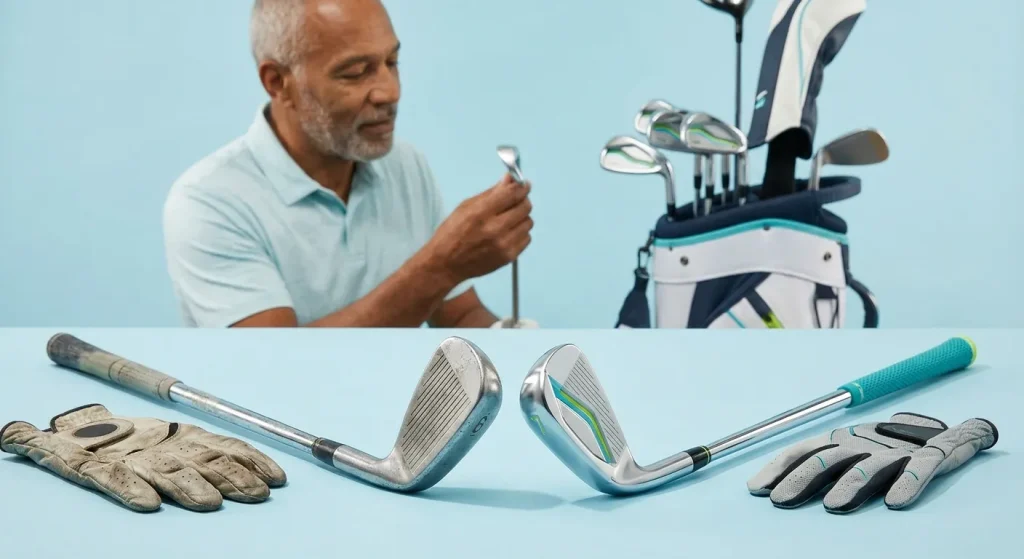
Golf is a journey of continuous improvement, and your equipment should support that evolution. While it’s tempting to chase the latest models every season, smart gear investments are about long-term value and performance that grows with your skill. Understanding when to upgrade golf clubs and what to look for can save you money and genuinely enhance your game. This article will guide you through the strategic considerations for updating your bag, ensuring every new club is a step forward.
Beyond the Hype: True Reasons to Upgrade Your Golf Equipment
Before rushing to buy, consider these genuine reasons why an equipment upgrade might be beneficial. Often, a thoughtful upgrade can significantly impact your play. Therefore, it is important to assess your needs carefully.
- Significant Skill Improvement: If you’ve dramatically improved your swing speed, consistency, or handicap, your current clubs might be holding you back. A more advanced player often benefits from clubs with different shaft flexes, lower lofts, or less offset that cater to better ball striking. Consequently, your equipment should match your evolving skill set.
- Physical Changes: As we age, swing speeds might decrease, or physical limitations could emerge. Switching to lighter clubs, more flexible shafts, or more forgiving clubheads (as discussed for The Best Senior Golf Clubs are Ready and Waiting) can help maintain performance and enjoyment. Furthermore, adapting your gear to your physical state is crucial for continued enjoyment.
- Damaged or Worn Equipment: A bent shaft, a cracked clubface, or deeply grooved irons that have lost their bite are clear indicators it’s time for a replacement. Worn grooves, for instance, significantly reduce spin and control around the greens. Clearly, damaged equipment needs to be replaced to avoid hindering your game.
- Technological Advancements (Specific Categories): While incremental changes happen yearly, every few years, certain categories see substantial leaps. For example, driver technology often improves significantly in terms of forgiveness and ball speed every 3-5 years. Putter technology, with new alignment aids or insert materials, can also offer noticeable benefits. However, not all technological updates are equally impactful across all club types.
- Poor Fit: Perhaps your initial set wasn’t properly fitted, or your swing has changed since. An ill-fitting club (wrong shaft length, flex, lie angle, or grip size) can actively hinder your progress and introduce bad habits. In fact, a proper fitting is essential for optimizing performance.
When NOT to Upgrade: The Pitfalls to Avoid
Resist the urge to upgrade if these situations apply to you. Sometimes, holding onto your current clubs is the smarter play. Remember, equipment is only one part of the game.
- You’re Chasing a Quick Fix: New clubs won’t magically fix a swing flaw. Lessons and practice are far more effective. Therefore, focus on fundamental improvements first.
- It’s Just “The Latest Thing”: Unless there’s a demonstrable performance gain for your specific game, the newest model might offer minimal improvement over a well-performing older club. Moreover, marketing hype often overshadows actual performance gains.
- Your Current Clubs Still Perform Well: If you’re consistently hitting good shots and feel confident with your current set, stick with them. “If it ain’t broke, don’t fix it.” Ultimately, confidence in your existing gear is invaluable.
Strategic Investment: What to Consider for Long-Term Value
When you do decide it’s time to purchase new equipment, think about these aspects for smart, lasting investments. This approach will ensure every dollar spent genuinely improves your game.
1. Prioritize a Professional Fitting
This is the single most important step when deciding to update your golf clubs. A good club fitting considers your swing speed, launch angle, spin rate, attack angle, and physical characteristics. It assesses how your body interacts with the club. Furthermore, a fitter can recommend specific shaft materials, flexes, lofts, lie angles, and grip sizes tailored precisely to your swing. This personalized approach ensures every club in your bag is optimized for your unique mechanics, leading to greater consistency and distance. Without a fitting, you’re essentially guessing, which can lead to wasted money and frustration. Many golfers, from A Guide to the Best Golf Clubs for Beginners to seasoned veterans, benefit immensely from this process. A proper fitting can reveal insights you wouldn’t discover on your own. Consequently, it is a worthwhile investment for any serious golfer.
2. Focus on Specific Club Categories for Upgrades
You don’t need to replace your entire set at once. Instead, consider upgrading clubs where technology or fit can make the most significant difference. Drivers, for example, often see the most noticeable technological advancements in terms of forgiveness and ball speed. Wedges, on the other hand, wear out faster due to groove degradation, impacting spin and control. Irons might last longer, but if your game has evolved significantly, a new set with appropriate lofts and offsets can be beneficial. Many players also find value in replacing their long irons with hybrids, which offer easier launch and more forgiveness. For more on this, check out our guide on Replace Your Irons with Hybrids, for Easier Shots. Therefore, prioritize which clubs will give you the most return on your investment.
3. Understand Club Technology and Its Impact
Golf club technology is constantly evolving, but not all innovations are equally impactful for every player. For instance, perimeter weighting in irons offers greater forgiveness on off-center hits, which is excellent for higher handicappers. Adjustable drivers allow you to fine-tune loft and face angle, catering to specific shot shapes. Understanding these technologies helps you make informed decisions about what features genuinely benefit your game. Don’t just buy the latest model; understand what makes it