
As golfers age, their bodies naturally undergo changes that can impact swing speed, flexibility, and strength. However, this doesn’t mean your golfing days are numbered. In fact, by strategically choosing the golf clubs for seniors, you can not only maintain your enjoyment of the game but often improve your performance. The industry’s growing emphasis on personalization, driven by a market projected to reach USD 8.9 billion in 2026, ensures there are more tailored options than ever for older players. This guide will help you understand how to select senior golfer equipment that truly fits your evolving game.
Understanding the Senior Golfer’s Needs
The primary goal for senior golfers is often to maximize clubhead speed with less effort, achieve higher launch, and increase forgiveness to counter inconsistent strikes. These needs translate into specific equipment characteristics. Therefore, understanding these factors is crucial for making informed choices.
- Lighter Overall Weight: Less weight means less effort to swing, which can translate to increased clubhead speed and less fatigue over a round. Consequently, players can maintain consistency longer.
- More Flexible Shafts: Senior flex shafts (often designated ‘A’ or ‘M’ for ‘Amateur’ or ‘Mature’) are designed to help generate more clubhead speed and a higher launch angle, even with slower swing tempos. Graphite shafts are particularly popular here due to their lightweight properties. For more details, consider our guide on How to Choose Your Golf Club Shaft Flex.
- Higher Lofts: Especially in drivers and fairway woods, a higher loft can help get the ball airborne more easily, maximizing carry distance for slower swing speeds. This is a key factor for maintaining distance.
- Increased Forgiveness: Clubs with a larger sweet spot and perimeter weighting are crucial for maintaining ball speed and direction on off-center hits, a common challenge as swing consistency may vary. Moreover, this helps to Fix Golf Slice Equipment.
Key Equipment Choices for Older Players
When building a set of the best golf sets for older players, consider these specific club types and their features. Each component plays a vital role in optimizing your performance on the course.
Drivers and Fairway Woods for Senior Golfers
Look for drivers with larger clubheads (460cc) and a high Moment of Inertia (MOI) for maximum forgiveness. Drivers with 10.5 to 12 degrees of loft are often ideal for senior players. Many modern drivers, such as the upcoming TaylorMade Qi4D or PING G440 K, focus on enhanced forgiveness and consistency, making them excellent choices. Fairway woods with a shallow face profile are easier to hit off the turf, and higher lofts (e.g., 5-wood, 7-wood) can replace harder-to-hit long irons. In fact, these clubs help compensate for decreased swing speed. For further insights, you might compare these options with our 2026 Driver Comparison.
Irons for Senior Golfers
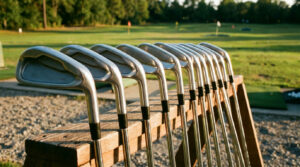
Cavity-back irons with wide soles and a low center of gravity (CG) are your best friends. These designs move weight to the perimeter of the club, making them incredibly forgiving. Consider game-improvement irons or even hybrid-iron sets. Hybrid-iron sets replace traditional long irons (3, 4, 5) with easier-to-hit hybrids, providing a seamless transition and consistent gapping. Lightweight golf clubs for seniors will benefit from graphite shafts in their irons, as they reduce vibration and allow for easier swings. Furthermore, this choice promotes a smoother feel through impact.
Hybrids: Bridging the Gap
Hybrids are often considered the most important innovation for senior golfers in recent decades. They combine the best attributes of irons and fairway woods, offering the ease of launch and distance of a wood with the accuracy and control of an iron. Many senior players replace their 3-iron, 4-iron, and even 5-iron with hybrids. Consequently, this simplifies their long game. Look for hybrids with a wide sole and a low, deep center of gravity to promote higher launch and maximum forgiveness. Models from Callaway, Titleist, and Cobra consistently offer excellent options for older players. Their versatility makes them indispensable for various lies on the course.
Wedges for the Short Game
While the focus is often on distance, a strong short game is vital at any age. Wedges designed for seniors don’t differ drastically from standard models, but attention to loft and bounce is important. Consider wedges with higher lofts (56-60 degrees) and moderate bounce for versatility around the greens. A lighter overall weight in your wedges can also help maintain feel and control. Practicing with these can significantly Improve Chipping Accuracy Wedges. Moreover, a consistent short game can shave strokes off your score.
Putters: The Equalizer
Putting is less dependent on strength and speed, making it an equalizer for senior golfers. However, choosing the right putter can still enhance performance. Many senior players prefer a putter with a larger, more stable head (e.g., a mallet putter) for increased forgiveness on off-center strikes. Counter-balanced putters, which have extra weight in the grip, can also help stabilize the stroke. Ultimately, personal preference plays a significant role here, so testing different styles is recommended. Finding a putter that feels comfortable and inspires confidence is paramount.
Shaft Flex: The Senior Specifics
Choosing the correct shaft flex is perhaps the most critical decision for senior golfers. A shaft that is too stiff will hinder clubhead speed and prevent proper launch, leading to lost distance and accuracy. Conversely, a shaft that is too flexible can lead to inconsistency. Senior flex (often ‘A’ or ‘M’) is specifically designed for swing speeds typically ranging from 75-90 mph. These shafts are softer than regular flex, allowing the shaft to load and unload more efficiently, generating more power and a higher ball flight. Graphite is the material of choice for most senior shafts due to its lightweight nature and vibration-dampening properties. This reduces stress on the body. Understanding your swing speed is key to selecting the ideal shaft for your golf clubs for seniors. Furthermore, a proper fitting can confirm the best option.
Golf Balls for Enhanced Performance
While this guide focuses on clubs, it is important to note that golf balls also play a crucial role for senior players. Softer compression golf balls are designed to compress more easily at slower swing speeds, resulting in increased ball speed and greater distance. Many manufacturers now produce golf balls specifically tailored for senior golfers, emphasizing distance and a soft feel. Pairing the right ball with your golf clubs for seniors can significantly enhance your overall game. Therefore, consider exploring options like those reviewed in our guide on the Best Golf Balls for Senior Players. This combination creates a synergistic effect.
Fitting Your Senior Golf Clubs
A professional club fitting is highly recommended for senior golfers. A fitter can accurately assess your swing speed, launch angle, spin rate, and other critical metrics. Based on this data, they can recommend specific club heads, shaft types, flexes, and lofts that are perfectly matched to your individual needs. While it might seem like an extra expense, a proper fitting can pay dividends in improved performance, greater enjoyment, and reduced frustration on the course. Furthermore, a fitting ensures that your investment in new golf clubs for seniors is well-placed. According to the PGA Tour, fitting is essential for optimizing performance at any level. This personalized approach truly makes a difference.
Maintaining Your Investment
Once you’ve assembled your ideal set of golf clubs for seniors, proper maintenance is essential to ensure their longevity and performance. Regularly clean your clubheads and grips. Store your clubs in a dry environment to prevent rust and damage. Inspect your grips periodically for wear and replace them when they become slick or hard. Well-maintained equipment will perform consistently, round after round. For detailed advice, refer to our tips for Maintaining Golf Clubs for Longevity. This simple practice preserves your gear.
Beyond the Clubs: Holistic Improvement
While the right equipment is vital, it’s just one piece of the puzzle. Senior golfers can also benefit greatly from focusing on physical fitness and swing mechanics. Gentle stretching and strength exercises tailored for golfers can help maintain flexibility and power. For example, specific exercises can improve core stability. Consulting a golf instructor who understands the nuances of the senior swing can also provide invaluable insights and adjustments. Combining appropriate golf clubs for seniors with a proactive approach to fitness and technique will undoubtedly lead to a more fulfilling and successful golfing experience. You can find excellent resources on Golf Fitness for Seniors. Moreover, this holistic view supports overall well-being.
Many older players also find benefit in exploring various swing techniques that prioritize rhythm and timing over brute force. Consequently, this can lead to surprising distance gains. Remember that golf is a lifelong sport, and adapting your approach as you age is a sign of wisdom, not weakness. Embrace the changes and enjoy the journey.
Conclusion: Enjoying Golf at Every Age
Choosing the right golf clubs for seniors is a strategic move that can significantly enhance your enjoyment and performance on the course. By understanding the unique needs of the senior golfer and selecting equipment with lighter weights, more flexible shafts, higher lofts, and increased forgiveness, you can effectively counteract the natural effects of aging. Remember to consider drivers, fairway woods, hybrids, and irons specifically designed for slower swing speeds. A professional fitting will fine-tune your choices, ensuring every club in your bag is optimized for your game. With the right gear and a smart approach, your best golfing days might still be ahead of you. Keep playing, keep improving, and most importantly, keep enjoying the beautiful game of golf.
FAQ
What are the key features to look for in golf equipment for older players?
Older players should prioritize equipment with lighter overall weight, more flexible shafts (senior flex), higher lofts (especially in drivers and fairway woods), and increased forgiveness (larger sweet spots, perimeter weighting) to help maintain clubhead speed, achieve higher launch, and improve consistency.
How does shaft flexibility impact a senior golfer’s game?
Shaft flexibility is crucial. A senior flex shaft is softer than a regular flex, allowing it to bend more during the swing. This helps generate more clubhead speed and a higher launch angle for golfers with slower swing speeds, leading to greater distance and a more consistent ball flight.
Should older golfers use hybrids instead of long irons?
Absolutely. Hybrids are highly recommended for older golfers. They are designed to be much easier to hit than traditional long irons, offering better launch, more distance, and greater forgiveness. Many seniors replace their 3-, 4-, and 5-irons with hybrids.
Is a professional club fitting necessary for senior golfers?
While not strictly mandatory, a professional club fitting is highly beneficial for senior golfers. A fitter can analyze your swing and recommend specific clubs, shafts, lofts, and lies that are perfectly tailored to your individual physical characteristics and swing dynamics, optimizing your performance.
What kind of golf ball is best when using senior player clubs?
For golfers using senior player clubs, softer compression golf balls are generally recommended. These balls compress more easily at slower swing speeds, which can result in increased ball speed, greater distance, and a softer feel around the greens. Pairing the right ball with your clubs can significantly improve your game.