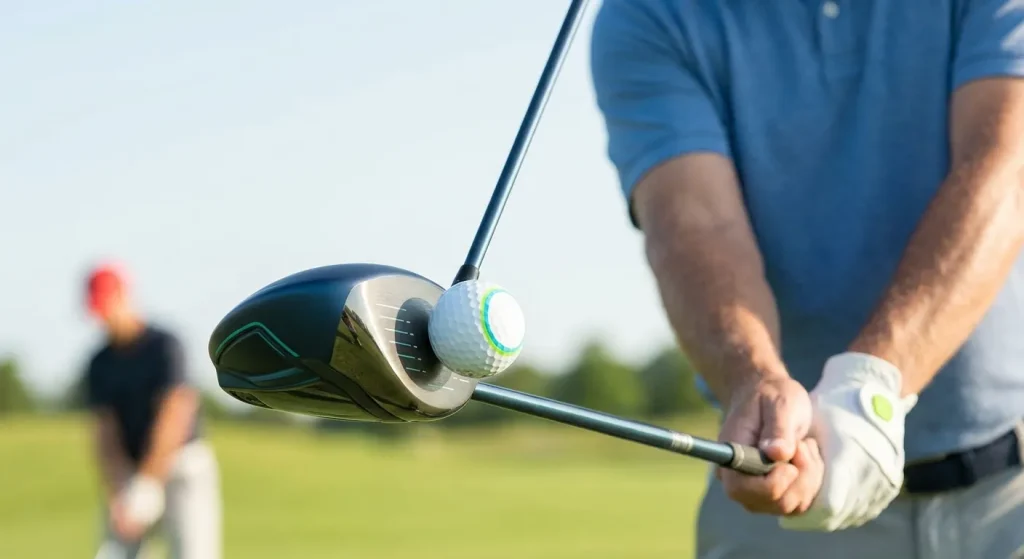
Choosing the right golf ball can be as impactful as selecting the right club. Yet, many golfers overlook one crucial factor: golf ball compression. This often-misunderstood specification refers to how much a golf ball deforms when struck. A higher compression ball requires more force to compress, while a lower compression ball compresses more easily. For golfers of all skill levels, from beginners with slower swings to seniors looking for extra distance, matching the ball’s compression to your swing speed is vital for optimizing performance, particularly for distance and feel. This guide will demystify golf ball compression and help you make an informed choice for your game.
Understanding Golf Ball Compression
At its core, golf ball compression directly correlates with how much energy is transferred from the clubface to the ball. When a ball is properly compressed by your swing, it springs back with maximum energy. Consequently, this leads to greater ball speed and, therefore, more distance. If your swing speed is too slow for a high-compression ball, you won’t be able to compress it fully. This results in a loss of distance. Conversely, if your swing speed is very fast and you play a low-compression ball, you might over-compress it. This also loses some efficiency and potentially affects control. The sweet spot is finding a ball that you can compress effectively with your natural swing speed.
Manufacturers typically rate golf ball compression on a scale, often from around 30 (very soft) to 100+ (very firm). As a general guideline: golfers with slower swing speeds (under 90 mph) often benefit from lower compression balls (70 or below) to achieve maximum distance and a softer feel. This includes many senior golfers and beginners. Golfers with moderate swing speeds (90-105 mph) might find a mid-compression ball (70-90) to be ideal, offering a good balance of distance and control. High swing speed golfers (over 105 mph) can effectively compress higher compression balls (90+) for maximum distance and enhanced feel around the greens. While compression is key for distance, remember that other factors like cover material (urethane for spin, surlyn for durability) also play a significant role in overall performance. Experimentation on the course or with a launch monitor is the best way to determine the perfect match for your game.
How to Measure Your Swing Speed
Before you can effectively choose a golf ball based on its compression rating, you need to know your swing speed. This is a critical piece of information. Fortunately, there are several ways to measure it. The most accurate method involves using a launch monitor. Many golf pro shops and fitting centers have these devices. They provide precise data, including clubhead speed, ball speed, and launch angle. For example, a professional fitting session will give you a clear picture of your swing characteristics.
Alternatively, portable launch monitors are available for personal use. Brands like Garmin and Rapsodo offer relatively affordable options that connect to your smartphone. These devices can give you a good estimate of your clubhead speed. If you don’t have access to a launch monitor, you can also estimate your swing speed based on your driver distance. A general rule of thumb suggests multiplying your total carry distance by 2.3 to get an approximate swing speed in MPH. For instance, if you carry your driver 200 yards, your swing speed is likely around 87 MPH. However, this is less precise than using a dedicated device. Knowing your swing speed is the first step in selecting the correct golf ball compression.
The Impact of Golf Ball Compression on Distance
The relationship between golf ball compression and distance is fundamental. When a golf ball is struck, it compresses, storing energy. As the ball leaves the clubface, it decompresses, releasing that stored energy. A ball with appropriate compression for your swing speed will compress and decompress optimally. This maximizes the trampoline effect and generates the fastest possible ball speed. Therefore, more ball speed equals more distance.
Consider a golfer with a slower swing speed using a high-compression ball. The golfer simply won’t generate enough force to fully compress the ball. Consequently, a significant amount of potential energy remains unused. This results in a shorter, less efficient shot. Conversely, a golfer with a very fast swing speed using a very low-compression ball might over-compress it. This can lead to a loss of energy transfer efficiency and potentially a ‘mushy’ feel. Furthermore, it might even reduce control. The goal is to achieve maximum energy transfer, which directly translates to distance. For senior players looking to regain lost yardage, understanding this concept is vital. You might find our guide on Senior Golfer Distance Fixes helpful in this regard.
How Golf Ball Compression Affects Feel and Control
Beyond distance, golf ball compression significantly influences the feel of the ball off the clubface. Generally, lower compression balls feel softer. This is often preferred by golfers who enjoy a more cushioned impact. This softer feel can also translate to better feedback, especially on shorter shots around the green. Many golfers find that a softer ball provides a more responsive touch, which can be beneficial for chipping and putting.
Higher compression balls, on the other hand, tend to feel firmer. While some golfers prefer this solid feel, others might find it too harsh. The feel is largely subjective. However, it’s an important consideration for confidence and consistency. When it comes to control, especially with wedges and irons, the interaction between the clubface and the ball’s cover material is also crucial. A properly compressed ball, combined with a suitable cover, allows for better spin generation. This gives you more control over shot shape and stopping power on the greens. Ultimately, the best golf ball will offer a balance of distance, feel, and control tailored to your game.
Choosing the Right Golf Ball Based on Your Swing Speed
Matching your swing speed to the correct golf ball compression is paramount for optimizing your game. Here’s a general breakdown to guide your selection:
- Slower Swing Speeds (Under 85-90 mph): If your driver swing speed falls into this category, you’ll generally benefit most from low compression golf balls (typically 30-60). These balls compress more easily, even with less clubhead speed, helping you maximize distance. They also provide a softer feel. This category often includes many senior golfers and beginners. For more specific recommendations, check out our article on the Best Golf Balls for Senior Players.
- Moderate Swing Speeds (90-105 mph): Golfers with moderate swing speeds typically do well with mid-compression golf balls (60-90). These balls offer a good balance, providing solid distance without sacrificing too much feel or control. Many amateur male golfers fall into this range, finding a versatile performance.
- Faster Swing Speeds (Over 105 mph): If you have a powerful swing, higher compression golf balls (90+) are likely your best bet. These balls are designed to withstand significant force without over-compressing, allowing for maximum energy transfer and distance. They also tend to provide more spin control for skilled players. Professional golfers and low-handicappers often gravitate towards these firmer options.
Remember, these are guidelines. Individual preferences and other ball characteristics, such as dimple pattern and cover material, also play a role. For instance, a urethane cover typically offers more spin around the greens compared to a surlyn cover. Furthermore, golf ball manufacturers provide detailed specifications for their products, so reviewing those is always a good idea.
Experimentation and Testing
While understanding golf ball compression is essential, the best way to confirm your ideal choice is through on-course experimentation. Try different balls within your recommended compression range. Pay attention to how they feel off every club, from your driver to your putter. Observe your distance, trajectory, and spin characteristics. A session with a launch monitor at a local golf shop can also provide invaluable data. This helps you see how different balls perform with your swing. Don’t be afraid to try a few sleeves of different models before committing to a specific type. Your perfect golf ball might surprise you!
Beyond Compression: Other Golf Ball Considerations
While understanding golf ball compression is crucial, it’s not the only factor in choosing the right ball. Several other elements contribute to a ball’s overall performance. Knowing these can further refine your selection process.
Cover Material
The cover of a golf ball significantly impacts spin and durability. There are two primary types:
- Urethane: These covers are softer and provide excellent feel and spin, especially around the greens. They allow skilled golfers to shape shots and stop the ball quickly. However, urethane covers are generally less durable and more expensive. Many premium balls feature urethane.
- Surlyn (or Ionomer): These covers are firmer and more durable. They offer less spin than urethane but are more resistant to cuts and abrasions. Surlyn balls are often found in distance-oriented and value-priced options. They are a good choice for beginners or golfers who prioritize durability.
Construction (Layers)
Golf balls come in various constructions, from 2-piece to 5-piece or even more. The number of layers affects feel, spin, and distance:
- 2-Piece Balls: These are typically designed for distance and durability. They have a solid core and a durable outer cover. Often, they feature low golf ball compression.
- 3-Piece Balls: These offer a balance of distance, feel, and spin. They usually have a core, an inner layer, and a cover.
- 4-Piece and 5-Piece Balls: These are multi-layer balls designed for advanced players. They offer precise control over spin, trajectory, and feel, catering to different aspects of the game.
Dimple Pattern
The dimples on a golf ball are not just for aesthetics; they play a critical role in aerodynamics. The number, shape, and depth of dimples affect how the ball flies. This influences lift, drag, and ultimately, trajectory and distance. Manufacturers spend considerable time designing optimal dimple patterns for specific flight characteristics. For instance, some patterns are designed for a higher launch, while others promote a more penetrating flight.
The Role of Golf Ball Compression in Your Overall Equipment Setup
Your golf ball is an integral part of your equipment. It works in conjunction with your clubs to produce your desired shot. Just as you carefully select your driver or irons, the golf ball deserves similar attention. For example, a driver fitting might help you understand your optimal launch conditions. However, the ball you use will also influence those conditions.
Consider how your golf club shaft flex interacts with your swing. A properly matched shaft flex helps you deliver the clubhead squarely and efficiently. Similarly, a properly matched golf ball compression ensures maximum energy transfer upon impact. These elements work in harmony. If one is off, it can negatively impact the performance of the others. Therefore, thinking about your golf ball as part of a cohesive system with your clubs is essential. This holistic approach can lead to significant improvements in your game.
Moreover, for golfers who are consistently working on improving their game, understanding every detail matters. The choice of golf ball can even subtly influence aspects like fixing a slice, as some balls are designed to reduce side spin. While equipment alone won’t fix a swing flaw, it can certainly help mitigate its effects. Our guide on Fix Golf Slice Equipment offers more insights into gear solutions for straighter shots.
Common Misconceptions About Golf Ball Compression
Despite its importance, golf ball compression is often misunderstood. Let’s clarify some common myths:
- Myth 1: Higher Compression Always Means More Distance. This is incorrect. Higher compression only leads to more distance if your swing speed is fast enough to properly compress the ball. For slower swing speeds, a lower compression ball will actually go farther.
- Myth 2: All Premium Balls Have High Compression. Not necessarily. While many tour-level balls do have higher compression, manufacturers now offer premium balls across a range of compressions. This caters to different swing speeds while still providing excellent feel and spin.
- Myth 3: Compression Only Matters for Pros. This is far from the truth. In fact, recreational golfers, especially those with slower or moderate swing speeds, often see the most significant benefits from matching their ball compression. It helps them maximize their limited power.
- Myth 4: Compression Only Affects Driver Distance. While most noticeable with the driver, compression affects all full swing shots. It influences how the ball comes off your irons and even wedges, impacting feel and spin.
Understanding these points will help you make more informed decisions and avoid common pitfalls when selecting your golf ball. For further reading on golf ball technology, resources like the USGA’s equipment standards provide in-depth technical information.
Conclusion
In summary, don’t underestimate the role of golf ball compression in your game. By understanding your swing speed and choosing a golf ball that complements it, you can unlock greater distance, improve feel, and ultimately enhance your enjoyment on the course. It’s a simple adjustment that can yield significant performance improvements. Remember that the right golf ball, paired with the right clubs, creates a synergistic effect that elevates your overall play. Take the time to experiment and find the perfect match for your unique swing. Your score, and your enjoyment, will thank you. For more insights into golf equipment and how it impacts your game, consider exploring resources like Golf Digest.
FAQ
What does golf ball compression mean?
Golf ball compression refers to how much a golf ball deforms when struck by a club. A lower compression ball deforms more easily, while a higher compression ball requires more force to achieve optimal deformation.
How do I know what ball compression is right for my swing?
You should generally match the ball’s compression to your swing speed. Slower swing speeds (under 90 mph) typically benefit from lower compression balls (70 or below). Moderate swing speeds (90-105 mph) often suit mid-compression balls (70-90). Faster swing speeds (over 105 mph) usually perform best with higher compression balls (90+).
Can using the wrong ball compression hurt my game?
Yes, using the wrong ball compression can negatively impact your game. If your swing speed is too slow for a high-compression ball, you’ll lose distance. If your swing speed is too fast for a low-compression ball, you might over-compress it, also losing efficiency and potentially affecting control and feel.
Does ball compression affect shots other than the driver?
While the effects are most noticeable with the driver due to maximum swing speed, ball compression also affects all full swing shots with irons and wedges. It influences the feel, trajectory, and spin characteristics of these shots as well.
Are there golf balls specifically designed for senior players?
Yes, many golf balls are specifically designed for senior players. These typically feature lower compression ratings to help golfers with slower swing speeds achieve greater distance and a softer feel. They often focus on maximizing carry and roll for those looking to regain yardage.