A golf club fitting can help you find equipment that matches your swing, body, and playing goals. Instead of choosing clubs because of advertising or appearance, a fitting uses your shots and measurements to compare options. The process can examine club length, loft, lie angle, shaft characteristics, head design, and grip size. However, golfers often arrive without knowing what to expect. Some also assume fittings only benefit advanced players. In reality, players at many skill levels can gain useful information. Understanding the process before you shop can help you ask better questions, evaluate results, and spend your equipment budget wisely.
What Is a Professional Club Fitting?
A professional fitting is a structured process that matches golf equipment to your individual swing. Rather than assuming a standard club will work, a fitter compares different combinations and measures the results.
Most sessions begin with a conversation. The fitter may ask about your handicap, typical scores, ball flight, common misses, current equipment, and goals.
Next, you usually hit shots with your existing clubs. These swings create a baseline. Without that information, it becomes harder to tell whether a new club actually improves performance.
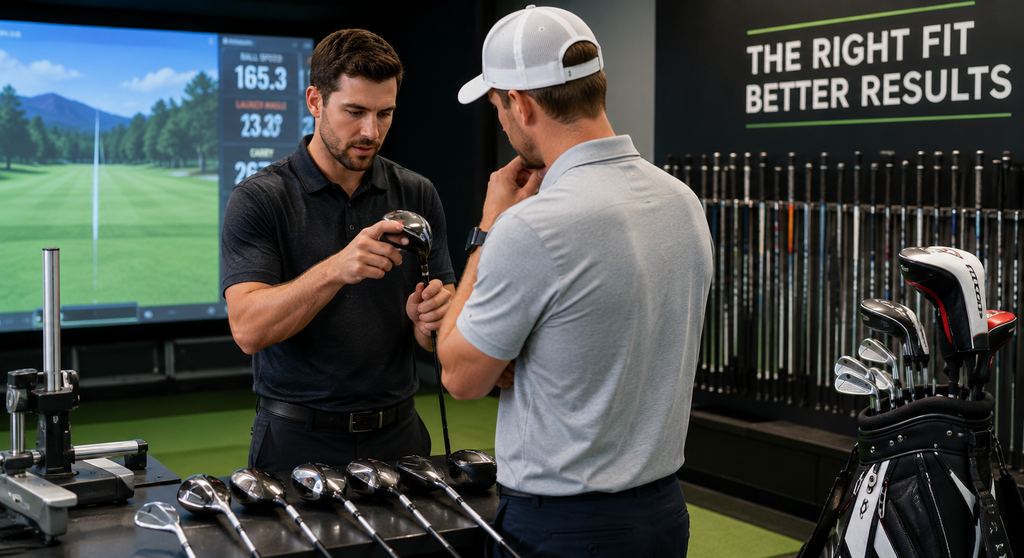
Launch-monitor technology can then measure important data. Depending on the system, this may include club speed, ball speed, launch angle, spin, carry distance, and shot direction.
During a golf club fitting, the fitter uses those results to test suitable equipment. You might compare different clubheads, shafts, lofts, or lengths.
The goal is not to find the most expensive combination. Instead, a good fitting should identify equipment that produces useful, repeatable results.
Feel also matters. Numbers provide valuable evidence, but the club should remain comfortable and confidence-inspiring when you swing it.
Who Can Benefit From Being Fitted?
Many golfers believe custom fitting is only for low-handicap players. However, beginners and recreational golfers can benefit as well.
A beginner may have an inconsistent swing, but basic fitting information can still prevent major equipment mistakes. Clubs that are excessively long, heavy, stiff, or difficult to launch can make learning harder.
High-handicap golfers may benefit from equipment that provides more forgiveness. A fitter can identify designs that protect distance and direction on common mishits.
Mid-handicap players often have enough consistency to fine-tune performance. They may benefit from improved distance gaps, shaft selection, or driver optimization.
Advanced golfers can use detailed fitting information to refine trajectory, spin, workability, and feel.
Therefore, a golf club fitting is not reserved for one ability level. The amount of detail may change, but almost any golfer can learn something useful.
However, brand-new golfers may not need an expensive full-bag session immediately. A basic assessment and forgiving starter equipment can be enough while their swing develops.
What Measurements Matter During a Fitting?
Static measurements provide a useful starting point. A fitter may consider your height, wrist-to-floor measurement, hand size, and physical characteristics.
However, static measurements should not make the final decision. Two golfers of identical height can deliver the club very differently.
Dynamic measurements reveal what happens during the actual swing. These results are often more useful because they show how equipment interacts with your motion.
For drivers, launch angle and spin can influence carry distance. Ball speed and strike location also reveal how efficiently you transfer energy.
For irons, carry distance and dispersion matter greatly. The fitter may also examine launch, spin, descent, and turf interaction.
Lie angle deserves attention because it can influence how the club interacts with the ground and how the face is presented.
A detailed golf club fitting combines measurements rather than relying on one number. For example, maximum ball speed means little if dispersion becomes much worse.
Ultimately, the fitter should search for a combination that produces consistent and playable shots.
Why Club Length Is Important
Club length influences posture, strike location, swing speed, and control. Therefore, it deserves more consideration than simply buying standard-length equipment.
Longer clubs can potentially create more clubhead speed. However, they may also make center contact more difficult.
Shorter clubs can improve control for some golfers. Yet a club that is too short may create uncomfortable posture or setup problems.
Height alone should not determine length. Arm length, posture, swing style, and impact pattern also matter.
During a golf club fitting, you may test multiple lengths to see how they affect contact and consistency. A small adjustment can sometimes produce a meaningful difference.
Driver length is especially worth testing. Retail drivers can be relatively long because additional length may increase potential speed. Still, many golfers perform better with a slightly shorter setup.
Iron length should create a comfortable address position while allowing consistent contact.
The correct choice is the one that supports your natural setup and produces reliable results. Do not assume longer automatically means farther.
Understanding Shaft Flex and Weight
Shaft flex receives a lot of attention, but golfers often oversimplify it. Labels such as regular, stiff, and extra stiff provide general categories rather than universal standards.
One manufacturer’s stiff shaft can feel different from another company’s version. Therefore, choosing solely from the letter printed on the shaft can be misleading.
Swing speed helps narrow the options, but tempo and transition also matter. A smooth swinger may respond differently from a golfer with an aggressive change of direction.
Shaft weight can have an equally important effect. Lighter shafts may help some players create speed. Meanwhile, heavier options can improve control and awareness for others.
During a golf club fitting, pay attention to how easily you can repeat your swing. The ideal shaft should not force you to change your natural rhythm.
Launch and spin characteristics may also change between shafts. However, the effect depends on the golfer and the entire club setup.
Focus on results rather than choosing a shaft because it has a premium reputation or because a professional golfer uses it.
How Lie Angle Affects Your Irons
Lie angle describes the relationship between the shaft and the sole of the club. It can influence turf interaction and directional consistency.
If the lie angle does not suit your delivery, the club may interact with the ground unevenly. In addition, the face orientation can influence where shots start.
However, static measurements alone cannot determine the ideal setting. Your impact position matters more than how the club looks while sitting still.
A fitter may use launch-monitor information, impact observation, or other tools to evaluate lie angle.
During your golf club fitting, try to make normal swings. Changing your motion because you know someone is watching can reduce the value of the data.
Lie adjustments can sometimes improve consistency without requiring an entirely new set of irons.
Still, lie angle should not become an excuse for a major directional problem caused primarily by technique. Equipment adjustments work best when they support a reasonably repeatable swing.
Driver Fitting: Loft, Launch, and Spin
Driver fitting aims to create a useful combination of distance and accuracy. Maximum speed alone should not determine the winner.
Loft is one major factor. Golfers sometimes assume that lower loft always creates longer drives. In reality, many players need enough loft to produce effective launch and carry.
Spin matters too. Excessive spin can reduce efficiency, while very low spin can make certain shots difficult to keep airborne.
Strike location provides another clue. A driver that helps you contact the center more often may outperform a faster model that creates inconsistent strikes.
Adjustable hosels and movable weights provide additional options. A fitter can test settings that influence launch or directional tendencies.
A driver-focused golf club fitting should also examine dispersion. Ten extra yards offer limited value when misses regularly finish in severe trouble.
Therefore, compare average results. A driver that delivers dependable carry and tighter dispersion may be more useful than one producing a single spectacular shot.
Iron Fitting and Distance Gapping
Iron fitting is not simply about finding the longest model. Instead, you need predictable distances and suitable ball flight throughout the set.
Modern irons can have very different loft structures. As a result, one model’s 7-iron may travel farther partly because it has less loft.
Distance is useful, but stopping power also matters. An approach shot needs enough height and suitable descent to hold greens under normal conditions.
Forgiveness should match your strike pattern. Golfers who frequently miss the center may benefit from game-improvement designs. More consistent ball strikers may prefer a smaller head or additional feedback.
During a golf club fitting, compare dispersion as carefully as carry distance. A club that travels five yards farther but creates a wider pattern may not improve scoring.
Also consider where the iron set ends. Some golfers perform better when hybrids replace difficult long irons.
A fitter can help create useful distance gaps rather than forcing every golfer into a traditional set composition.
Wedge and Putter Fittings Matter Too
Drivers and irons receive most of the attention, but wedges and putters can also benefit from fitting.
Wedge fitting should consider loft gaps, bounce, sole design, course conditions, and how you deliver the club. A steep swing may interact with the turf differently from a shallow one.
Your typical course matters too. Firm turf and soft conditions can create different equipment needs.
For putters, fitting may examine length, head shape, loft, lie, alignment, and weighting. Your setup and stroke can influence which design feels easiest to aim and control.
A full-bag golf club fitting should consider how every section works together. There is little value in carrying several clubs that produce almost identical distances.
Putting also accounts for many strokes during a round. Therefore, ignoring putter fit while carefully optimizing every full-swing club can leave an important area unaddressed.
How to Prepare for Your Fitting
Arrive rested enough to make normal swings. A fitting becomes less useful when fatigue changes your motion significantly.
Bring your current clubs. They provide a baseline and allow direct comparison with new equipment.
Use your normal golf shoes if possible. Familiar footwear can help you maintain your usual setup and balance.
Tell the fitter about injuries or physical limitations. Equipment should work with your body rather than force uncomfortable positions.
Also, explain your goals clearly. Perhaps you want tighter driver dispersion, easier long-iron launch, or more consistent wedge gaps.
Before a golf club fitting, avoid trying to create a perfect swing. The fitter needs to see the motion you actually bring to the course.
Finally, bring an open mind. You may arrive expecting one brand or shaft and discover that another option performs better.
Questions to Ask Your Club Fitter
Good communication helps you understand why a particular setup works.
Ask what improvement the recommended club provides compared with your current equipment. The answer should involve measurable or clearly observable benefits.
You can also ask which specification created the largest difference. Was it shaft weight, club length, loft, head design, or another factor?
Discuss your common miss. A good fitter should understand whether the recommended setup makes that miss more manageable.
Ask about alternatives at different price points too. There may be several combinations that provide similar performance.
During the golf club fitting, do not hesitate to request another comparison if two choices feel close. You are making an investment, so understanding the decision matters.
Also, ask whether your current equipment can be adjusted. Sometimes a loft, lie, shaft, or grip change can solve the problem without replacing everything.
Common Fitting Mistakes to Avoid
One mistake is chasing your longest shot. An unusually good strike can make a club look impressive, but it does not represent your average performance.
Instead, focus on shot patterns. Carry distance, dispersion, strike consistency, and ball flight should remain repeatable.
Another mistake is swinging harder than normal. Golfers sometimes try to impress the launch monitor. Unfortunately, those swings may produce equipment recommendations that do not suit their on-course game.
Do not hide your bad shots either. Mishits provide useful information because they reveal how forgiving a setup is.
Brand bias can also interfere with the process. Arriving determined to buy one model limits the value of testing.
A successful golf club fitting should challenge assumptions when the data points toward a better option.
Finally, avoid changing several variables without understanding why. A skilled fitter should explain what is being tested and how each adjustment affects your results.
How Much Should a Fitting Influence Your Purchase?
Fitting results should carry significant weight, but they do not remove personal preference entirely.
A club needs to perform well, yet you also need confidence when looking down at it. Sound and feel can influence your comfort.
If two options produce nearly identical results, choosing the one you prefer visually or physically is reasonable.
Budget matters too. A fitting may identify a premium combination, but that does not mean you must exceed what you can comfortably spend.
Ask whether less expensive alternatives produce similar numbers. In some cases, the difference may be too small to justify a major price increase.
A golf club fitting should help you spend more intelligently, not pressure you into the most expensive equipment.
Remember that lessons and practice may produce greater improvement than equipment when technique is the main limitation. Good clubs support your swing; they cannot replace skill development.
Should Beginners Get Fitted Before Buying?
Beginners can benefit from fitting, but the process does not always need to be extensive.
A basic assessment can identify appropriate club length, shaft weight, flex, and forgiving head designs. These factors can make learning more comfortable.
Beginners should generally avoid highly demanding clubs built for precise ball strikers. Extra forgiveness can help keep imperfect shots playable while technique develops.
However, a new golfer’s swing may change quickly. Therefore, spending heavily on an extremely specialized setup may not be necessary at first.
A practical golf club fitting for a beginner should focus on avoiding major mismatches. The goal is to provide equipment that supports learning.
As the swing becomes more consistent, a more detailed fitting can fine-tune performance.
Package sets can also offer good value for new players. Nevertheless, basic fitting information can help determine whether the standard specifications are reasonable.
Making the Final Buying Decision
After the fitting, review what you learned before making a purchase. You should understand why the recommended clubs performed better.
Compare the improvement with your current equipment. Look at average carry, dispersion, launch, strike pattern, and overall consistency.
Consider whether the recommendation solves a real problem. If your current irons already perform well, a small gain may not justify replacing the entire set.
Also, think about set composition. You may need only a new driver, hybrid, wedge, or putter rather than a full bag.
A well-run golf club fitting gives you information that remains useful even if you do not buy immediately.
Keep a copy of your specifications when possible. They can provide a useful reference when comparing equipment later.
Most importantly, buy clubs that fit your actual game. Do not choose equipment for the golfer you hope to become several years from now.
Conclusion
Choosing golf equipment becomes much easier when your decisions are based on real performance. Club length, lie angle, loft, shaft weight, flex, head design, and grip size can all influence how a club works for you.
A professional fitting helps organize those variables. More importantly, it lets you compare new equipment against clubs you already know.
Focus on repeatable results instead of your longest shot. Ask questions, communicate your goals, and remain open to different brands and configurations.
A golf club fitting should ultimately make buying simpler and more informed. The best recommendation is not automatically the newest or most expensive club. It is the setup that complements your normal swing, improves useful performance, and fits your budget. When those pieces come together, you can buy with greater confidence and spend more time thinking about your next shot instead of your equipment.
FAQ
1. Is custom fitting worth it for an average golfer?
Yes, it can be. Average golfers often benefit from suitable length, shaft characteristics, loft, lie angle, and forgiveness. The fitting can also prevent an expensive equipment mismatch.
2. Should I get fitted before or after taking golf lessons?
If you expect major swing changes, taking several lessons first can be useful. However, a basic equipment assessment can still identify clubs that are clearly unsuitable for your body or current swing.
3. How long does a typical fitting session take?
The time varies by facility and the number of clubs tested. A single-club session is usually shorter than a full-bag assessment. Ask the fitter beforehand so you can arrive prepared.
4. Do I have to buy clubs after getting fitted?
No. A fitting can provide specifications and performance information that help guide your purchase. Check the facility’s policies beforehand because fitting fees and purchase arrangements vary.
5. Can my existing golf clubs be adjusted instead?
Often, yes. Depending on the equipment, a professional may adjust loft, lie, shafts, grips, or other specifications. This can be a cost-effective option when your current clubheads still perform well.