
If you are tall, you have probably felt like a standard set of irons was built for someone else. Choosing golf clubs for tall golfers is less about finding a special product and more about getting length and lie angle right for your body and swing. This guide walks through why off-the-rack clubs can struggle for taller players, what signs to look for, and which adjustments to ask a fitter about.
Disclosure: Best Golf Clubs may earn a commission from qualifying purchases made through links on this site, including as an Amazon Associate, at no extra cost to you.
Why Off-the-Rack Clubs Can Fail Tall Players
Stock clubs are built to a standard length and lie angle that suits a wide middle range of golfers. That makes sense for manufacturers, because most buyers fall somewhere near the middle. However, if you sit well above that range in height, a standard club can force you into compromises.
The most common compromise is posture. To reach a ball with a club that is too short, many tall golfers bend more at the waist, sink lower in the knees, or reach down with their arms. Over time, that posture can make consistent contact harder and may feel uncomfortable on the lower back.
Height alone does not tell the whole story, though. Two golfers of the same height can have very different arm lengths. That is why fitters usually look at the distance from your wrist to the floor, not just how tall you are.
Height vs Wrist-to-Floor Measurement
A tall golfer with long arms may need less extra length than you might expect. On the other hand, a tall golfer with shorter arms often benefits from longer clubs. Many fitting charts published by manufacturers combine height and wrist-to-floor measurement for this reason. Even so, these charts are only a starting point before a dynamic fitting, where a fitter watches you actually hit balls.
How Length Affects Golf Clubs for Tall Golfers
Club length influences how you stand to the ball and where you tend to strike it on the face. When the club is too short for you, several patterns tend to show up:
- A hunched or crouched setup that feels cramped.
- Strikes that drift toward the toe or the heel as you try to adjust mid-swing.
- Thin or topped shots when your posture rises during the swing.
- Back fatigue late in a round or after a range session.
Adding length can help you stand more naturally. However, more length also makes a club harder to control for some players. So the goal is not “as long as possible.” Instead, it is the length that lets you set up comfortably and find the center of the face most often.
Length changes also affect swing weight, which is how heavy the head feels during the swing. A longer club usually feels heavier at the head. A good fitter will check this and may adjust head weight so the club still feels balanced.
Why Lie Angle Matters Just as Much
Lie angle is the angle between the shaft and the ground when the club sits flat at address. If you want a deeper explanation, see our guide to golf club loft and lie.
For tall golfers, lie angle often matters as much as length. When a tall player uses a standard lie, the toe of the club can sit up off the ground at impact. In that case, the heel digs in first. As a result, the face tends to point left of target for a right-handed golfer, which can produce pulls even on good swings.
A more upright lie angle can help the sole sit flatter at impact. That gives the face a better chance of pointing where you aimed. Because lie is easy to misjudge by eye, fitters typically test it with tools rather than guesswork.
How Fitters Check Lie Angle
Fitters commonly use a few simple methods:
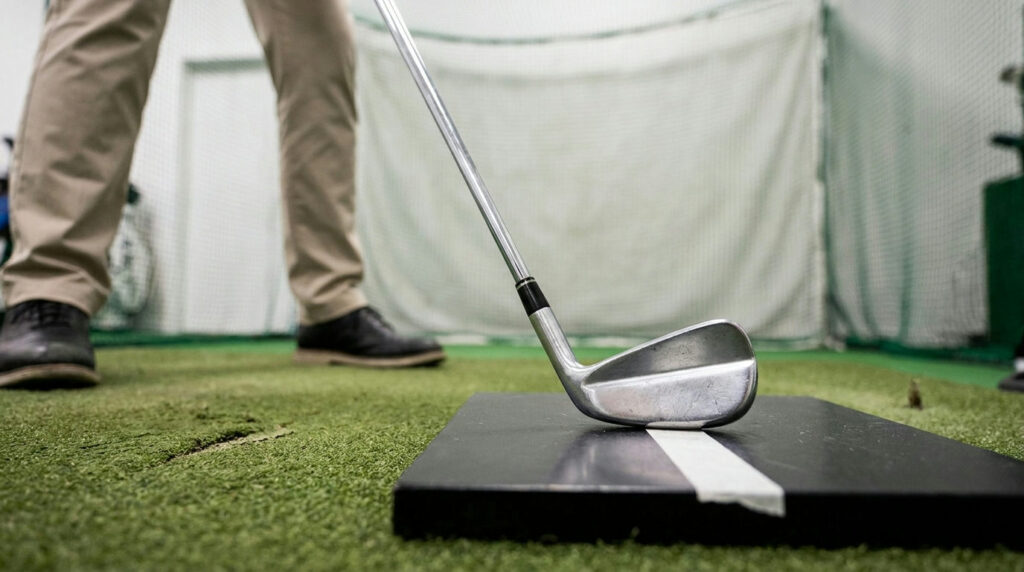
- Lie board: You hit shots off a hard board with tape on the sole. The mark on the tape shows whether the toe or heel contacts first.
- Face tape or spray: Impact marks show where you are striking the face.
- Launch monitor data: Start direction and curve patterns can hint at lie issues.
- Observation: A fitter watches your posture at address and through impact.
Importantly, the right lie depends on your dynamic swing, not just how the club looks at address. That is why hitting balls during a fitting is so useful.
Length and Lie Adjustments to Ask a Fitter About
Going into a fitting with a few clear questions helps you get more from the session. Here is a practical list for golf clubs for tall golfers:
- Should my irons be longer than standard, and by how much?
- Does my wrist-to-floor measurement change that recommendation?
- What lie angle produces the most centered sole contact on a lie board?
- How does adding length change the swing weight, and should we adjust head weight?
- Do my driver and fairway woods also need length changes, or just the irons and wedges?
- Will longer shafts change the flex or feel I need?
- Can my current clubs be bent for lie, or would new shafts be needed for length?
- What grip size suits my hands, especially if my hands are large?
Adjusting Clubs You Already Own
Before buying new clubs, ask whether your current set can be adjusted. Lie angle can often be bent on many irons, although some designs bend more easily than others. Length is trickier. Extending a shaft is possible, but it can affect feel and balance, so a reshaft is sometimes the cleaner option. A qualified club builder can explain what makes sense for your specific set.
Quick Comparison: Common Fit Issues for Tall Golfers
| Symptom | Possible cause | What a fitter may check |
|---|---|---|
| Crouched, uncomfortable setup | Clubs too short | Length and wrist-to-floor |
| Pulls with solid contact | Lie too flat | Lie board and start direction |
| Heel-side divots and contact | Lie too flat or posture change | Lie angle and setup |
| Club feels light or whippy | Swing weight or shaft mismatch | Head weight and shaft profile |
| Grip feels thin in the hands | Grip size too small | Grip size and wraps |
Keep in mind that these patterns can have swing causes too. A fitter or coach can help separate equipment issues from technique.
Other Considerations for Taller Players
Length and lie get most of the attention. Still, a few other details can make a real difference.
Grips: Tall golfers often have larger hands. A grip that is too thin can encourage extra hand action. If your grips feel small or worn, our guide on how to replace golf grips covers the basics.
Shafts: A longer shaft may play differently from the same shaft at standard length. Therefore, ask your fitter to confirm flex and weight after length is set.
Putter length: Many tall golfers also benefit from a putter that lets their eyes sit comfortably over the ball without hunching.
For broader context on fitting and instruction, the PGA of America offers resources for finding a qualified professional. Meanwhile, the gear coverage at GOLF.com regularly discusses fitting concepts and equipment trends worth reading before a session.
Frequently Asked Questions
Do all tall golfers need longer clubs?
Not always. Arm length, posture, and swing style all play a role. Some tall golfers with long arms fit well into standard length with only a lie change.
Is lie angle more important than length?
Both matter, and they work together. Changing length often changes how the club sits at impact, so fitters usually adjust them as a pair.
Can I just choke down on longer clubs instead?
Choking down changes feel and balance. It can work occasionally, but a proper fit is usually more consistent.
Final Thoughts
Golf clubs for tall golfers work best when length and lie match your body and swing rather than an average. Start with your wrist-to-floor measurement, test lie on a board, and ask clear questions during a fitting. Small adjustments often make contact more consistent and the game more comfortable.
This guide is general information. For the best results, consider a professional club fitting or a lesson with a qualified golf professional.