Finding the right equipment when you’re just starting out in golf can feel overwhelming. With countless options available, knowing where to begin is often the hardest part. This guide focuses on helping you select the best golf clubs for beginners, ensuring your first steps on the course are confident and enjoyable. We’ll cut through the jargon and highlight what truly matters for new players. Consequently, you will feel more prepared to make informed decisions.
Why Beginner-Friendly Clubs Matter for New Golfers
Many new golfers make the mistake of buying advanced clubs designed for low-handicappers. These clubs often feature smaller sweet spots, less offset, and stiffer shafts. Consequently, they can make learning the game significantly harder and more frustrating. Beginner-friendly clubs are engineered with forgiveness in mind. They offer larger sweet spots, perimeter weighting, and designs that help get the ball airborne more easily. This forgiveness is crucial for building consistency and confidence as you develop your swing. Furthermore, they help reduce the impact of mishits, making the game more pleasant.
Key Characteristics of Clubs for New Golfers
When evaluating clubs, keep these features in mind. Specifically, look for designs that prioritize ease of use and forgiveness.
- Forgiveness: This is paramount for new players. Look for clubs with a large sweet spot, often achieved through perimeter weighting (weight distributed around the clubhead’s edges) or hollow body designs. This minimizes the penalty for off-center hits, helping you maintain distance and direction.
- Loft: For drivers, higher lofts (10.5 to 12 degrees) help beginners launch the ball higher. This increases carry distance and makes it easier to hit straight. For irons, look for strong but not overly aggressive lofts that still allow for good trajectory.
- Shaft Flex: Most beginners benefit from a regular or senior flex shaft. These shafts are more flexible, allowing the clubhead to lag slightly behind on the downswing. This can help generate more clubhead speed and improve shot dispersion, especially for slower swing speeds.
- Hybrid Clubs: These are a beginner’s best friend. Hybrids replace long irons (3, 4, 5 irons) which can be notoriously difficult to hit consistently. Their larger heads and lower center of gravity make them much easier to get airborne and achieve good distance. Replace Your Irons with Hybrids, for Easier Shots offers more details on this topic.
- Wide Soles (Irons): Irons with wider soles are more forgiving through the turf. This reduces the chance of digging into the ground on fat shots. This helps maintain clubhead speed and produces cleaner contact.
What to Look for in a Starter Set: The Best Golf Clubs for Beginners
Instead of buying individual clubs, many beginners find value in complete starter sets. These sets are curated to provide a balanced selection of clubs ideal for learning. A typical beginner set might include:
- Driver: High loft (10.5° – 12°) for maximum launch and forgiveness.
- Fairway Wood: (e.g., 3-wood or 5-wood) for versatility off the tee or fairway.
- Hybrids: (e.g., 4-hybrid, 5-hybrid) to replace challenging long irons.
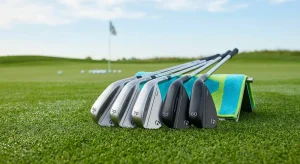
- Irons: (6-PW, SW) with cavity-back design for maximum forgiveness.
- Putter: A simple blade or mallet design for easy alignment.
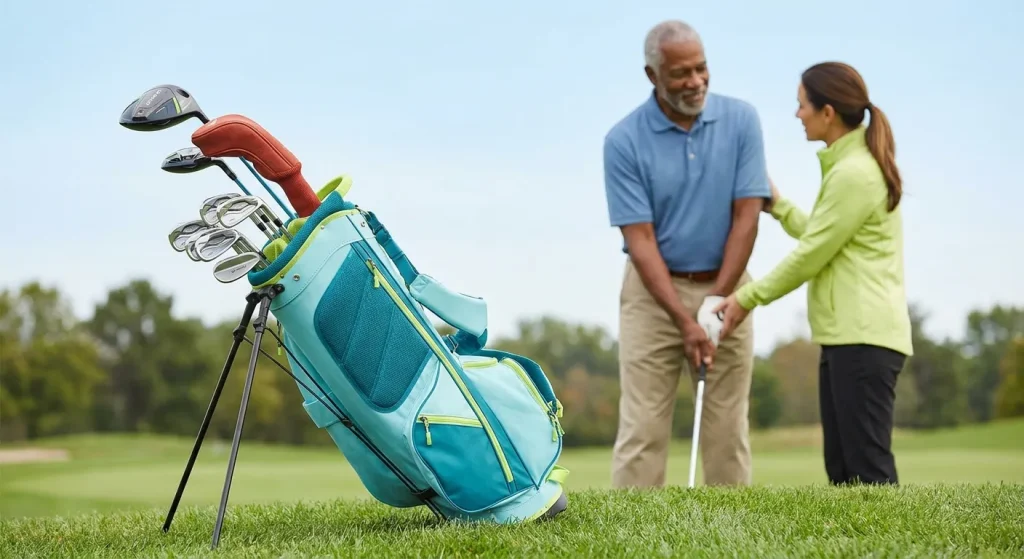
- Golf Bag: Often a stand bag for easy carrying on the course.
When considering a set, focus on reputable brands known for producing quality beginner equipment. Many brands offer excellent entry-level options specifically designed to make the game more accessible. For example, brands like Callaway, TaylorMade, and Wilson often have popular beginner sets. These sets are usually more affordable than buying individual clubs. Moreover, they ensure you have all the necessary tools to get started.
Understanding Club Components for New Golfers
Beyond the type of club, understanding the basic components can further inform your decision. For instance, the grip, shaft, and clubhead all play a role in performance.
Grips: Ensuring a Solid Connection
Grips are your only point of contact with the club. Therefore, their condition and size are important. Beginners generally benefit from standard-sized grips, but those with larger hands might prefer midsize or jumbo grips. A proper grip size allows for a comfortable, secure hold, which is essential for consistent swings. Furthermore, worn grips can lead to slippage and inconsistent shots. Consider replacing grips if they feel slick or hard.
Shafts: The Engine of the Club
As mentioned, shaft flex is critical. However, shaft material also matters. Most beginner clubs feature graphite shafts, especially in woods and hybrids. Graphite is lighter than steel, which can help increase clubhead speed for golfers with slower swings. Irons might come with either graphite or steel shafts. Steel shafts offer more feedback and control, but graphite often provides more forgiveness and distance for new players. Ultimately, the right shaft helps optimize your swing. You can learn more about golf club technology at Golf Distillery.
Clubheads: Forgiveness is Key
Clubhead design is where forgiveness truly shines. Drivers and fairway woods for beginners often have larger clubheads. This increases the moment of inertia (MOI), making them more resistant to twisting on off-center hits. Irons typically feature cavity-back designs, which distribute weight to the perimeter of the clubhead. This creates a larger sweet spot. Hybrids combine the best features of woods and irons, offering a versatile option that is easier to hit than long irons. Notably, these design elements are specifically chosen to assist new players.
Essential Clubs for Your First Golf Bag
While complete sets are convenient, understanding the roles of individual clubs is also helpful. This knowledge allows you to make informed choices, even if you opt for a pre-made set. In fact, knowing what each club does can improve your on-course strategy.
Driver: Your Longest Club
The driver is designed for maximum distance off the tee. For new golfers, a driver with a higher loft (10.5° to 12°) is recommended. This helps get the ball airborne more easily and reduces slices. A larger clubhead (460cc) provides more forgiveness. Remember, the goal is to hit the fairway, not necessarily to hit it the furthest. Moreover, consistency is more important than raw power for beginners.
Fairway Woods: Versatility from the Tee or Fairway
Fairway woods (3-wood, 5-wood, 7-wood) are versatile clubs. They can be used off the tee on shorter holes or from the fairway for long approach shots. A 3-wood or 5-wood is a good starting point for a beginner. They are easier to hit than a driver from the fairway due to their smaller heads and higher loft. Consequently, they offer a reliable option for longer shots.
Hybrids: Bridging the Gap
As previously mentioned, hybrids are excellent for beginners. They replace difficult-to-hit long irons (3, 4, 5 irons). Their design makes them easier to launch and more forgiving. Many starter sets include one or two hybrids, and for good reason. They are incredibly useful for getting the ball out of tricky lies or for long shots from the rough. Therefore, consider these clubs a must-have for your initial set. For more insights into club sets, check out Things to Consider When Looking for the Best Golf Club Sets.
Irons: The Workhorses of Your Bag
Irons are used for a variety of shots, from approach shots to chipping around the green. Beginner iron sets typically include 6-PW and a Sand Wedge (SW). Look for cavity-back irons with wide soles. These features provide maximum forgiveness and help prevent digging into the turf. Perimeter weighting also contributes to a larger sweet spot. Ultimately, these design choices make irons easier to hit consistently.
Wedges: For Around the Green
A pitching wedge (PW) and a sand wedge (SW) are standard in most beginner sets. The pitching wedge is used for shorter approach shots and chipping. The sand wedge, with its higher loft and bounce, is designed for getting the ball out of sand traps and thick rough. Some sets might also include a gap wedge (GW) or lob wedge (LW), but these are less critical for a new player. Initially, focus on mastering the PW and SW. Understanding these clubs is part of finding the best golf clubs for beginners.
Putter: Your Scoring Club
The putter is arguably the most important club in your bag, as it’s used on every hole. Beginners often do well with a mallet-style putter, which offers more stability and easier alignment. A simple blade putter can also work. The key is to find a putter that feels comfortable and allows you to consistently roll the ball on your intended line. Practice with your putter frequently, as it can significantly lower your scores. Therefore, choose one that instills confidence.
Choosing Between New and Used Clubs
For many beginners, the cost of golf equipment can be a barrier. Therefore, considering used clubs is a viable option.
New Clubs: The Latest Technology and Warranty
New clubs offer the latest technology, often designed with forgiveness in mind. They come with warranties and the assurance of pristine condition. However, they are also the most expensive option. If your budget allows, new clubs can provide a great start. Many brands offer specific lines that are the best golf clubs for beginners.
Used Clubs: A Budget-Friendly Alternative
Used clubs can be a fantastic way to save money. You can often find quality clubs from previous seasons that are still perfectly suitable for a beginner. Check reputable online retailers or local pro shops. Inspect clubs for excessive wear, especially on the grooves of irons and the face of woods. While used clubs might lack the latest tech, they can still provide excellent performance for a new player. Moreover, they allow you to get started without a significant financial commitment. Always ensure the shafts and grips are in good condition.
Tips for Your First Golf Club Purchase
Making your first golf club purchase should be an exciting experience. Keep these tips in mind to ensure you make the right choice.
- Set a Budget: Determine how much you’re willing to spend. This will narrow down your options significantly.
- Try Before You Buy: If possible, visit a local golf store or driving range that offers demo clubs. Hitting different clubs can give you a better feel for what works for you.
- Don’t Overbuy: You don’t need a full set of 14 clubs immediately. A starter set of 10-12 clubs is usually sufficient.
- Consider Your Physicality: Are you a senior player? Are you a woman? Clubs are designed differently for various physical attributes. For instance, you might consider Tips and Hints on Buying Golf Clubs for the Ladies or Don’t Ever Consider Yourself Over the Hill – The Best Senior Golf Clubs are Ready and Waiting.
- Seek Advice: Don’t hesitate to ask experienced golfers or golf professionals for recommendations. Their insights can be invaluable.
- Prioritize Forgiveness: Forgiveness will be your best friend as you learn. Resist the urge to buy