
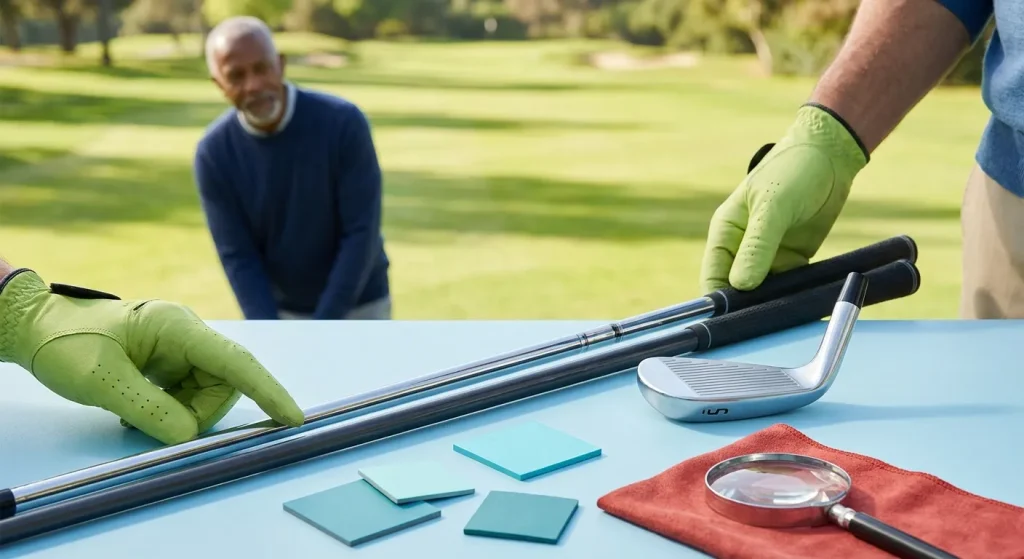
The world of golf equipment is rich with options, and understanding the core differences in choosing golf club materials can significantly impact your performance and enjoyment. From the shafts that connect your hands to the clubhead, to the clubheads themselves, materials play a crucial role in how a club feels, performs, and even sounds. This guide demystifies the choices, helping you select equipment that truly matches your swing, skill level, and physical needs, without the overly technical jargon.
Understanding Your Options: Choosing Golf Club Materials
Manufacturers are continuously innovating with smarter designs and advanced materials to enhance forgiveness and consistency. Knowing the basics of these materials empowers you to make informed decisions, whether you’re a beginner or a seasoned player looking for an upgrade. Furthermore, advancements in golf technology mean there’s always something new to consider.
Drivers: The Power of Composites and Carbonwood
Modern drivers are marvels of engineering, often featuring multi-material constructions. Titanium has long been a staple for its strength-to-weight ratio, allowing for larger clubheads and increased forgiveness. However, the latest trend, exemplified by TaylorMade’s Qi4D (Qi35) for 2026, is Carbonwood face technology. This involves using carbon fiber composites in the clubface and body, which significantly reduces weight. This saved weight can then be strategically redistributed to increase forgiveness and ball speed. These advancements are a direct result of technological integration in golf equipment design. For example, many new drivers feature adjustable weights, allowing for further personalization. You can explore more options in our 2026 Driver Comparison.
Irons: Steel vs. Graphite – What’s Right for You?
Shaft material is a critical decision when selecting your irons. Both steel and graphite offer distinct advantages, depending on your swing characteristics. Therefore, understanding these differences is key to optimizing your performance.
- Steel Shafts: Traditionally favored by stronger players with faster swing speeds, steel offers excellent feedback and control. It’s generally heavier and less flexible than graphite, leading to a penetrating ball flight. Steel is durable and provides a classic, solid feel. Moreover, many professional golfers still prefer steel for its consistency.
- Graphite Shafts: Lighter and more flexible, graphite shafts help generate more clubhead speed for players with moderate to slower swing speeds. This can translate to greater distance and a higher launch. Many seniors and beginners find graphite shafts easier to swing, reducing fatigue and making the game more enjoyable. Given the emphasis on personalization, selecting the correct shaft material and flex is a critical aspect of custom fitting. For instance, a softer flex graphite shaft can be a game-changer for senior golfers looking to regain distance. Learn more about How to Choose Your Golf Club Shaft Flex.
Wedges: Forged vs. Cast
When it comes to wedges, the manufacturing process significantly influences feel and performance. Consequently, golfers often have strong preferences between forged and cast options.
- Forged Wedges: Created from a single piece of soft metal (often carbon steel) that is hammered into shape. This process results in a very soft, responsive feel and allows for extremely precise shaping. Many skilled players prefer forged wedges for the enhanced feedback and workability they offer. In fact, the feel off a forged clubface is often described as buttery smooth.
- Cast Wedges: Made by pouring molten metal into a mold. This process is more cost-effective and allows for more complex designs, often leading to more perimeter weighting and greater forgiveness. Cast wedges are excellent for golfers seeking consistency and value. Furthermore, they tend to be more durable against nicks and dings. For tips on improving your short game, check out our guide on Improve Chipping Accuracy Wedges.
Putters: Milled, Insert, or Multi-Material?
The putter is perhaps the most personal club in the bag, and its material construction greatly affects feel and roll. Therefore, understanding the differences is crucial for confident putting.
- Milled Putters: Precisely carved from a solid block of metal, often stainless steel or carbon steel. This manufacturing process allows for extremely tight tolerances and a consistent, solid feel. Many golfers appreciate the direct feedback and crisp sound of a milled putter face. Consequently, they are often preferred by players who prioritize feel.
- Insert Putters: Feature a different material (like polymer, aluminum, or composite) embedded in the clubface. These inserts are designed to provide a softer feel and often a more consistent roll, especially on off-center hits. They can also influence sound, making contact feel quieter. Furthermore, inserts aim to reduce skidding and promote a smoother roll.
- Multi-Material Putters: Combine various materials to optimize weight distribution, stability, and forgiveness. For example, a putter might use a heavy steel body with a lightweight aluminum sole plate and a soft face insert. This combination aims to maximize Moment of Inertia (MOI), making the putter more stable through the stroke. As a result, these putters are often very forgiving.
Fairway Woods and Hybrids: Blending Power and Forgiveness
Fairway woods and hybrids are designed to offer a balance of distance and playability from various lies. Consequently, their construction often incorporates advanced materials similar to drivers.
- Stainless Steel: A common material for fairway woods and hybrids due to its durability, strength, and relatively low cost. It allows for thin faces that promote ball speed. Furthermore, stainless steel is easy to work with in manufacturing.
- Titanium: Used in higher-end models, titanium offers a superior strength-to-weight ratio compared to steel. This allows for larger clubheads and more weight redistribution, leading to increased forgiveness and faster ball speeds. However, titanium clubs are generally more expensive.
- Carbon Composites: Increasingly integrated into the crowns and soles of fairway woods and hybrids. Similar to drivers, carbon fiber reduces overall weight, allowing engineers to place discretionary mass strategically. This enhances stability and forgiveness on off-center strikes. Moreover, it contributes to a lower center of gravity, promoting higher launch.
Understanding Grip Materials: The Crucial Connection
While not a structural club material, the grip is your only direct connection to the club. Therefore, its material and texture are vital for control and comfort. Grip materials vary widely.
- Rubber: The most common grip material, offering durability, tackiness, and good all-weather performance. Rubber grips come in various textures and patterns.
- Cord: Incorporates cotton fibers woven into the rubber. This provides extra traction, especially in wet conditions, but can feel firmer.
- Synthetic: Modern synthetic materials offer a balance of feel, durability, and shock absorption. These can mimic the feel of leather or provide unique textures.
Ultimately, the best grip material is a matter of personal preference, depending on your hand size, swing speed, and weather conditions. Consider trying different options to find what feels best for you.
The Importance of Custom Fitting for Golf Club Materials
While this guide provides a solid foundation for understanding golf club materials, a custom fitting session is invaluable. A professional fitter can analyze your swing data, including clubhead speed, launch angle, and spin rate. Based on this analysis, they can recommend specific shaft materials, clubhead constructions, and even grip sizes. This personalized approach ensures that your equipment truly complements your unique swing. Furthermore, custom fitting can help you avoid common issues like a golf slice by ensuring your clubs are properly matched to your swing. You can find equipment solutions for a slice in our guide, Fix Golf Slice With Equipment.
Maintaining Your Golf Club Materials for Longevity
Regardless of the materials you choose, proper maintenance is key to extending the life of your golf clubs. Regular cleaning of clubheads and grips is essential. Furthermore, storing clubs in a dry environment prevents rust and degradation. For example, wiping down steel shafts after a round can prevent rust. Similarly, cleaning graphite shafts with a damp cloth keeps them looking new. Taking good care of your equipment ensures consistent performance. Learn more about Maintaining Golf Clubs for Longevity.
Advanced Material Innovations: The Future of Golf Clubs
The golf industry continues to push the boundaries of material science. Manufacturers are exploring lighter, stronger, and more responsive materials. For instance, exotic alloys and advanced carbon composites are constantly being developed. These innovations aim to further increase ball speed, forgiveness, and adjustability. Consequently, the future of golf club design promises even more exciting options for golfers. Understanding these trends helps you stay informed when choosing golf club materials for your next set.
Making Your Decision: Choosing Golf Club Materials Wisely
Ultimately, choosing golf club materials is about finding the right balance for your game. Consider your swing speed, skill level, and personal preferences. For instance, a senior golfer might prioritize lightweight graphite shafts for added distance, while a low-handicap player might prefer the feel and control of forged wedges. There is no single