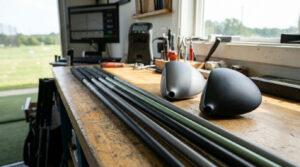

Understanding golf club custom fitting is crucial for every golfer looking to improve their game and make smarter equipment choices. In an industry experiencing dynamic growth and a strong emphasis on personalization, custom fitting stands out as the fastest-growing trend. It’s not just for the pros; golfers of all skill levels, including beginners and seniors, can significantly benefit from clubs tailored specifically to their unique swing and physical characteristics. This personalized approach moves beyond generic off-the-rack sets, promising a more efficient and enjoyable experience on the course. Furthermore, it helps prevent common swing compensations that can lead to inconsistent play.
Why Custom Fitting Matters for Every Golfer
Many golfers believe custom fitting is an advanced luxury, but the truth is, it’s a foundational step towards consistent improvement. A staggering 80% of serious golfers have been custom fitted at least once, and for good reason. When your clubs are built to match you, you’ll experience several key advantages. In addition, this personalized approach minimizes the need for golfers to adjust their natural swing to ill-suited equipment, promoting better mechanics.
- Better Accuracy: Clubs with the correct lie angle, shaft flex, and loft help you strike the ball squarely more often, leading to straighter shots. Consequently, you will hit more greens and fairways.
- More Distance: Optimized shaft length and flex translate to better energy transfer, maximizing your clubhead speed and ball velocity. This often means more yards without extra effort.
- Improved Comfort and Consistency: A grip that fits your hand size and a club that feels balanced in your swing reduces fatigue and promotes a repeatable motion. Therefore, you can play longer with less discomfort.
- Confidence Boost: Knowing your equipment is perfectly suited for you empowers you to swing freely and trust your clubs. This mental edge is invaluable on the course.
For seniors, custom fitting becomes even more vital. As physical capabilities change, adapting equipment can help maintain distance, reduce strain, and continue enjoying the game. Lighter shafts, more flexible options, and adjusted lie angles can make a significant difference in adapting to an evolving swing. Moreover, proper fitting can help mitigate common issues like a golf slice, which often stems from ill-suited equipment. For more on this, you might find our guide on Fix Golf Slice Equipment: Your Guide to Straighter Shots helpful.
The Advanced Fitting Process: Data-Driven Decisions
Modern custom fitting is a science, not guesswork. Advanced fitting systems utilize cutting-edge technology to analyze every aspect of your swing. Launch monitors, high-speed cameras, and sophisticated data analytics provide real-time feedback on critical metrics such as clubhead speed, ball speed, launch angle, spin rate, and attack angle. This data-driven approach allows fitters to make precise recommendations. Ultimately, this ensures that every club in your bag is optimized for your unique swing characteristics.
During a fitting session, an expert fitter will typically assess several key aspects:
- Club Length: Too long or too short can affect your posture and swing plane. An incorrect length often forces compensations, impacting consistency.
- Shaft Flex and Material: Steel or graphite, and how much they bend during your swing, profoundly impacts feel, launch, and spin. Graphite shafts, for instance, are often recommended for seniors due to their lighter weight and ability to generate more clubhead speed. To learn more, read our article on How to Choose Your Golf Club Shaft Flex.
- Grip Size: The correct grip size prevents tension and allows for proper wrist hinge. Too large or too small a grip can lead to unwanted hand action.
- Lie Angle: The angle between the sole of the club and the shaft at address and impact significantly affects ball flight direction. An improper lie angle can cause hooks or slices. Understanding Mastering Your Shots: Understanding Golf Club Lie Angle can provide further insight.
- Loft: Optimizing loft for each club is crucial for achieving ideal launch conditions and maximizing distance and control. This is especially true for drivers and wedges.
- Clubhead Design: Different clubhead designs (e.g., cavity back, blade, perimeter weighted) suit various skill levels and swing types. A fitter helps match the head to your game.
- Set Composition: A fitter will also help determine the ideal mix of woods, hybrids, irons, and wedges for your specific needs, ensuring there are no significant distance gaps in your bag.
The goal of a comprehensive golf club fitting is to create a set of clubs that feels like an extension of your body, allowing you to swing naturally and effectively. This personalized equipment leads to more consistent contact and improved ball flight, ultimately lowering your scores. Remember, even a slight adjustment can make a considerable difference in your performance.
Understanding the Benefits of a Custom Fit Set
Investing in a custom fit set of golf clubs offers tangible benefits that extend beyond just the immediate improvement in your game. First and foremost, you gain confidence. Knowing that your equipment is precisely matched to your swing eliminates doubt and allows you to focus solely on executing your shot. Furthermore, this confidence can translate into more aggressive and effective play on the course.
Secondly, a proper fitting can help prevent bad habits. When you continually compensate for ill-fitting clubs, you develop swing flaws. These flaws become ingrained and are difficult to correct later. Custom fitting removes this need for compensation, fostering a more natural and efficient swing motion from the outset. Consequently, your practice time becomes more effective.
Thirdly, a custom golf club fitting ensures you get the most value from your investment. Off-the-rack clubs might seem cheaper initially, but if they don’t suit your swing, you’re not getting optimal performance. A fitted set, however, maximizes your potential, making every shot count. This means better scores and more enjoyment, which are invaluable. You can explore options for Finding Value: Reviewing Budget Golf Clubs for New Players even after considering a fitting.
Finally, the process itself is educational. You learn about your swing, your tendencies, and how different club specifications impact your ball flight. This knowledge empowers you to make more informed decisions about future equipment purchases and adjustments. Many golfers find this aspect of the fitting process incredibly insightful. You might even discover that a different driver could significantly improve your game, prompting you to look at a 2026 Driver Comparison after your fitting.
Who Should Consider a Golf Club Custom Fitting?
While often perceived as a service for elite players, virtually every golfer can benefit from a professional fitting experience. Specifically, certain groups stand to gain immensely:
- Beginners: Starting with properly fitted clubs helps new golfers develop good habits from the beginning, preventing frustration and accelerating improvement.
- Intermediate Players: As your swing develops, a fitting can fine-tune your equipment to match your evolving technique, helping you break through scoring plateaus.
- Seniors: As mentioned, physical changes can impact swing speed and flexibility. A custom fitting can adapt equipment to maintain performance and comfort, helping senior golfers regain distance. Our article on Senior Golfer Distance Fixes: Regain Your Power & Enjoyment offers more advice.
- Juniors: Growing players need clubs that adapt to their changing size and strength. Regular fittings ensure they always have appropriate equipment.
- Golfers Experiencing Inconsistencies: If you’re struggling with hooks, slices, or inconsistent contact, ill-fitting clubs might be a significant culprit. A fitting can often identify and correct these issues.
It’s important to remember that your swing isn’t static. Over time, due to practice, physical changes, or even just aging, your swing will evolve. Therefore, periodic check-ups with a fitter can ensure your equipment continues to support your game. Many experts recommend a fitting every 2-3 years, or whenever you make significant changes to your swing or physical routine. This proactive approach ensures your equipment remains an asset, not a hindrance.
The Technology Behind Modern Club Fitting
The advancements in golf technology have revolutionized the custom fitting process. Gone are the days of simply hitting balls into a net and relying on a fitter’s eye. Today, sophisticated tools provide objective data that quantifies every aspect of your swing and ball flight. For example, launch monitors like TrackMan, Foresight Sports GCQuad, and FlightScope Mevo+ capture incredibly precise data. These devices measure ball speed, clubhead speed, launch angle, spin rate, carry distance, and much more. This data allows fitters to pinpoint inefficiencies and recommend precise adjustments to club specifications. Furthermore, high-speed cameras provide visual feedback, allowing both the fitter and the golfer to see subtle swing dynamics that might not be apparent to the naked eye.
Moreover, advanced software aggregates this data, generating detailed reports that compare different club and shaft combinations. This analytical approach takes the guesswork out of the equation. It allows fitters to demonstrate empirically how a change in loft, lie, or shaft flex impacts your performance. Consequently, golfers can make informed decisions based on clear, measurable improvements. The integration of artificial intelligence and machine learning is also beginning to play a role, further refining recommendations and personalizing the experience. This constant evolution ensures that the custom fitting experience remains at the forefront of golf improvement strategies. For more information on golf technology, you can explore external resources like Golf Digest’s guide to club fitting or PGA Tour’s equipment section.
What to Expect During Your Custom Fitting Session
A typical golf club custom fitting session is a comprehensive experience designed to analyze your swing and match you with the ideal equipment. First, the session usually begins with an interview. Here, the fitter discusses your golfing goals, current equipment, any physical limitations, and what you hope to achieve from the fitting. This initial conversation helps the fitter understand your unique needs and expectations. Next, you will warm up and hit some shots with your current clubs. This provides a baseline for the fitter to observe your natural swing and gather initial data with the launch monitor. This baseline is crucial for comparison.
Following the baseline assessment, the fitter will begin testing different club configurations. This involves swapping out various clubheads, shafts, and grips. For instance, they might start with a driver, then move to irons, and finally wedges. After each set of swings with a new configuration, the fitter will analyze the data, provide feedback, and explain the impact of the changes. This iterative process continues until the optimal combination for your swing is identified. Throughout the process, the fitter will also pay close attention to static measurements, such as wrist-to-floor distance, to determine initial club length and lie angle recommendations. Finally, once the ideal specifications are determined for each club type, the fitter will provide a detailed report and recommendations for your new set. This ensures you leave with a clear understanding of your customized equipment.
The Long-Term Value of Custom Fitted Golf Clubs
The advantages of a proper golf club custom fitting extend far beyond immediate improvements. In the long run, fitted clubs contribute significantly to a more enjoyable and successful golfing journey. Firstly, they promote consistency. When every club in your bag is tailored to your swing, you develop a more repeatable motion, leading to more predictable ball flights and scores. This consistency is the hallmark of a good golfer. Secondly, fitted clubs reduce the risk of injury. Incorrectly sized or weighted clubs can put undue strain on your body, especially over many rounds. Proper fitting minimizes this risk, allowing you to play comfortably for years to come. This is particularly important for senior golfers, who may benefit from specific considerations like those discussed in Golf Fitness for Seniors: Improve Your Game & Well-being.
Furthermore, custom fitted clubs often have a longer lifespan in your bag. Since they are optimized for your swing, you are less likely to feel the need to replace them frequently in search of better performance. This saves you money over time. Also, a fitted set helps you understand your equipment better, making future purchases more informed. You’ll know exactly what specifications work for you, rather than guessing. Ultimately, a custom fitting is an investment in your golf game, providing dividends in performance, enjoyment, and longevity. It transforms your equipment from a generic tool into a finely tuned instrument designed specifically for you. This personalized approach truly sets the stage for continuous improvement on the golf course.
Conclusion
In conclusion, understanding and embracing golf club custom fitting is a fundamental step for any golfer serious about improving their performance and enjoyment of the game. From beginners to seasoned seniors, the benefits of clubs tailored to your unique swing are undeniable. Enhanced accuracy, increased distance, improved comfort, and a significant boost in confidence are all direct results of a professional fitting. Modern fitting processes, powered by advanced technology, offer data-driven insights that ensure precise recommendations. Therefore, instead of adjusting your swing to your clubs, let your clubs be adjusted to your swing. Investing in a custom fitting is an investment in your golf game, promising a more consistent, effective, and ultimately more rewarding experience on the course. Take the initiative to discover how personalized equipment can elevate your game to new heights.
FAQ
What exactly is club personalization?
Club personalization, also known as custom fitting, involves adjusting the specifications of golf clubs (like length, lie angle, loft, shaft flex, and grip size) to perfectly match an individual golfer’s physical characteristics and swing mechanics. This ensures optimal performance and comfort.
Is a professional club fitting expensive?
The cost of a professional club fitting can vary. While there might be an upfront fee for the fitting session itself, many retailers will waive or credit this fee if you purchase clubs through them. Considering the long-term benefits to your game, many golfers find it a worthwhile investment.
How long does a typical fitting session take?
The duration of a fitting session depends on what clubs you are getting fitted for. A full bag fitting might take 2-3 hours, while a driver or iron fitting could be 60-90 minutes. It’s a thorough process designed to get precise results.
Can I get my existing clubs fitted?
Yes, often you can. Many aspects of your current clubs, such as lie angle, loft, and grip size, can be adjusted by a professional fitter to better suit your swing. However, some elements like shaft type or clubhead design might require new clubs.
What should I bring to my fitting appointment?
You should bring your current set of golf clubs, your golf shoes, and wear comfortable clothing that you would typically wear on the course. Also, be prepared to hit a lot of balls, so ensure you’re well-rested.