Golf club swing weight is one of those specs that shows up on fitting sheets and in club-building forums, yet few golfers know what it actually means. Put simply, it describes how heavy the head of a club feels when you swing it. In this guide, we explain the letter-and-number scale, what changes it, and why matching it across your set can make your clubs feel more consistent.
Disclosure: Best Golf Clubs may earn a commission from qualifying purchases made through links on this site, including as an Amazon Associate, at no extra cost to you.
What Is Golf Club Swing Weight?
Swing weight is a measure of balance, not total weight. Two clubs can weigh exactly the same on a kitchen scale and still feel very different in your hands. That happens because one has more of its mass toward the head, while the other has more toward the grip.
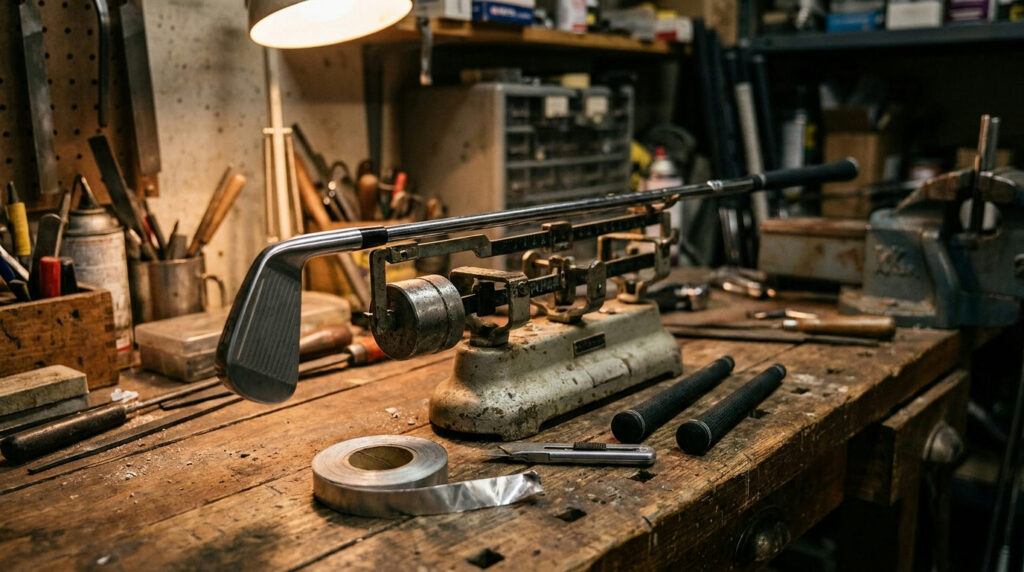
A swing weight scale captures this by placing the club on a balance point, a fixed point a short distance down from the grip end. The scale then shows how much the club tips toward the head. The more it tips, the higher the swing weight and the heavier the head feels during the swing.
In other words, swing weight answers a simple question: how much does the clubhead “pull” when you move it?
How the Swing Weight Scale Works
The most common system uses letters and numbers. Letters run from A to G, and each letter is split into points from 0 to 9. So the scale moves from A0, through B and C, up to D, E and beyond.
- Lower readings (such as the C range) mean the head feels lighter.
- Higher readings (such as the D range and up) mean the head feels heavier.
- Each single point is a small step, but golfers with sensitive hands can often feel a few points of difference.
Off-the-rack clubs aimed at stronger players tend to feel heavier in the head than lighter clubs designed for slower swings. However, there is no single correct number. The right golf club swing weight depends on your strength, tempo and preferences.
Swing Weight vs Total Weight
It is easy to confuse these two specs, so it helps to separate them clearly.
| Spec | What It Measures | What You Feel |
|---|---|---|
| Total (static) weight | The overall mass of the club | How heavy the club is to pick up and carry through the swing |
| Swing weight | How mass is distributed between head and grip | How heavy the head feels as it moves |
Both matter. A club that is too heavy overall can tire you out, whereas one with the wrong balance can disrupt your timing. Shaft weight is a big driver of total weight, which is why our guide to steel vs graphite shafts is a useful companion to this topic.
Why Club Balance Matters
Swing weight influences how you sense the clubhead during the swing. That sense affects tempo, release and, ultimately, contact.
When the Head Feels Too Heavy
If swing weight is too high for you, the club may feel sluggish. As a result, you might struggle to square the face on time, which can lead to pushes or weak shots to the right for a right-handed golfer. Some golfers also notice fatigue late in a round.
When the Head Feels Too Light
On the other hand, a club that is too light in the head can feel vague. You may lose track of where the head is, and your tempo can get quick and handsy. For some golfers, this shows up as inconsistent strike or a tendency to pull shots.
Consistency Across the Set
Perhaps the biggest benefit of matching swing weight is consistency. When your irons share a similar balance, each one feels familiar. Consequently, you can make the same swing with every club instead of adjusting to how each one feels.
What Changes Golf Club Swing Weight
Several common adjustments shift balance. Understanding them helps you avoid surprises after a regrip or a repair. Exact effects vary from club to club, so a reading on a proper scale is the only way to know for sure.
Grips
A heavier grip adds weight to the butt end, which lowers swing weight and makes the head feel lighter. Conversely, a lighter grip raises swing weight. Even a modest difference in grip weight can move the reading noticeably, so it is worth checking after any regrip. If you are planning new grips, our practical guide to replacing golf grips covers what to check first.
Lead Tape
Lead tape is the simplest way to add head weight. Placing a small strip on the clubhead raises swing weight. Because the tape sits at the far end of the club, only a small amount is needed to make a difference you can feel. Where you place the tape can also nudge ball flight slightly, so it is worth experimenting carefully.
Club Length
Length has a large effect. Making a club longer moves the head farther from the balance point, so swing weight increases. Shortening it does the opposite. In fact, even a small length change can move the reading by several points. That is why cut-down clubs often feel unusually light unless head weight is added back.
Shafts and Head Weight
Swapping shafts can also shift balance, especially if the new shaft has a different weight distribution. Similarly, interchangeable weights in modern drivers and some irons let you tune head weight directly.
How to Check and Adjust Swing Weight
You do not need to become a club builder to use this information. Here is a practical approach:
- Ask for a reading. Many club repair shops and fitters have a swing weight scale and can check your set quickly.
- Look for outliers. If one club reads noticeably higher or lower than its neighbors, that may explain why it feels odd.
- Test small changes. Try a strip of lead tape on the range before making permanent adjustments.
- Recheck after changes. New grips, length changes or reshafting all affect balance, so measure again afterward.
- Focus on results. A better feel only matters if it leads to more consistent contact and direction.
Common Mistakes to Avoid
Because balance is invisible, it is easy to change it by accident. Watch out for these common slip-ups:
- Regripping without checking weight. Switching to an oversize or heavier grip can make every club feel lighter in the head, even though nothing else changed.
- Cutting down clubs for a junior or shorter golfer. Shortened clubs often end up very light in the head, which can make them feel hard to control.
- Adding lead tape to one club only. Fixing one club’s feel may leave it out of step with the rest of the set.
- Chasing a number instead of a feel. Ultimately, the best reading is the one that helps you swing smoothly and strike the ball well.
Golf Club Swing Weight FAQs
Does swing weight matter for beginners?
It matters less than fundamentals like length, lie and shaft flex. However, if a club feels noticeably different from the rest of your set, balance could be part of the reason.
Should my driver and irons have the same swing weight?
Not necessarily. Drivers are longer and built differently, so their swing weight is often handled separately. Matching usually focuses on the irons and wedges.
Where can I learn more about club specs?
The equipment coverage at Golf Digest and the GOLF.com gear section regularly discuss fitting and club-building topics.
Final Thoughts
Golf club swing weight describes how heavy the head feels, not how heavy the club is. Grips, lead tape, length and shafts all shift it, sometimes more than golfers expect. Therefore, if a club feels off after a change, balance is a good place to look. Get a reading, make small adjustments, and judge everything by the quality of your shots.
This guide is general information. For the best results, consider a professional club fitting or a lesson with a qualified golf professional.