Buying junior golf clubs is easier when you begin with the player rather than the longest set on the shelf. A young golfer needs equipment they can hold, lift, and swing comfortably now. Clubs bought mainly for future growth may be too long or heavy to help them enjoy the game today. This guide gives parents and caregivers a practical way to compare starter options, inspect a set in person, and decide when a fitting is worth the effort.
The central questions are simple: Does the club suit the player’s current height? Can they make a relaxed swing without fighting the weight? Does the set contain clubs they will actually use? The PGA’s junior fitting guide emphasizes length, flexibility, and weight. U.S. Kids Golf’s fitting center begins with the player’s measured height. Use those sources as a starting point, then let the child try the clubs when possible.
Measure the golfer before comparing junior golf clubs
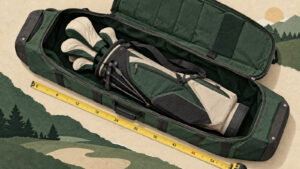
Measure the child standing naturally in the footwear they would use to play. Record their height and which hand they use to swing. Golf brands may divide junior sets by height bands rather than age, because children of the same age can be very different sizes. U.S. Kids Golf’s fitting tool, for example, asks for player height and hand selection. Its bands are a product-specific system; another maker may use different ranges.
Take the measurement to a store or fitting location and compare it with the manufacturer’s current chart. Do not rely only on a label such as “for ages eight to ten.” That label can be useful for browsing, but height and the actual swing tell you more. If buying online, check the stated player-height range for each set and the return policy before ordering. Some product pages list club lengths but not the intended player range; ask the seller for that information.
Keep a note of the child’s current height, set size, and the date. They may outgrow a club, but replacing equipment on a calendar alone makes little sense. Watch how the club looks and feels during a real swing. A coach or fitter can help distinguish growth-related fit changes from a temporary change in technique.
Check length with a real stance and swing
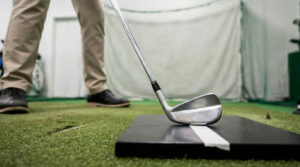
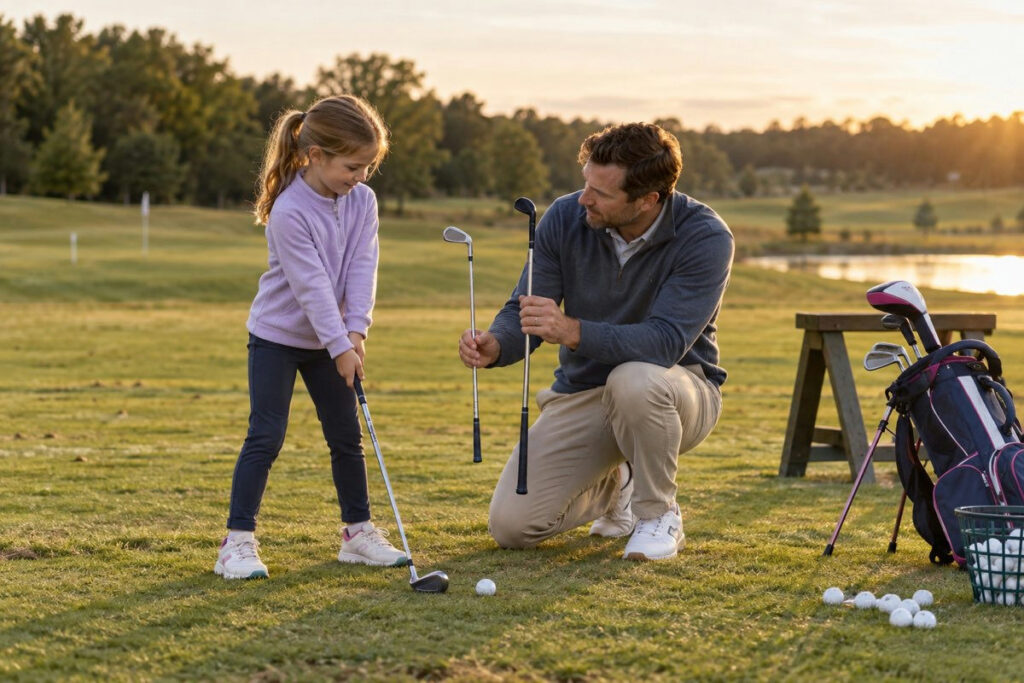
Have the junior address a ball in a comfortable stance and make a few easy swings. A club that forces them to stand unusually upright, reach far, or grip down excessively deserves a second look. The PGA warns against giving a child an adult driver that is too long and notes that a child should not need to slide their hands far down the grip just to control it. Try a suitable junior length beside the longer option so the difference is tangible.
Do not assume that buying long will always save money. If a club is difficult now, the child may learn to compensate instead of enjoying a normal motion. The best value may be a smaller starter set that fits the current season, particularly if the player is still deciding whether they like golf. Ask whether a local program or instructor has loaner clubs before buying. The PGA’s advice for parents recommends prioritizing fit and fun over the brand name and notes that many instructors have loaner clubs.
A size chart is still only a first filter. Two children with the same height may hold a club differently or have different strength and coordination. Let the player make a few swings and give them room to say what feels awkward. If the set is sealed and cannot be tried, choose a retailer whose exchange terms are clear.
Feel the weight, not just the length
Ask the child to pick up the club, take a normal address, and move it through a gentle swing. A club can be short enough but still feel too heavy. The PGA’s fitting guide explains that overly heavy clubs can make it difficult for a junior to reach the top of a swing comfortably. Junior-specific clubs often use lighter components, but the exact feel varies by model and player.
Check the full set rather than only the shortest iron. A driver or fairway wood may feel different from a putter. If the child can swing one club easily but struggles with another, do not assume the whole set is suitable. Watch for a steady, relaxed motion instead of judging by how far the ball goes during one trial. A few mishits are normal when trying unfamiliar clubs.
Weight is also part of the buying decision for a bag. A large stand bag packed with clubs can be burdensome for a younger player. If they will carry their own set, have them lift the bag with the clubs inside and walk a short distance. A lighter, simpler setup may make practice and short rounds more inviting.
Choose a small set of useful clubs
A beginning junior does not need to copy a full adult bag. Start with a putter, one or two lofted clubs they can hit comfortably, and a longer club only if it is easy to control. The exact mix can come from an instructor, a junior program, or a height-matched starter set. A smaller set helps the player learn different shots without facing too many similar choices.
Look at where the child will play. Short practice areas and beginner-friendly courses may call for a putter and a few irons more often than a driver. If a coach is teaching a particular progression, ask which clubs they use in lessons. This prevents buying a large set that stays in the garage while the player borrows the coach’s club.
As the child progresses, add a club to solve a real gap. Do they need a longer shot option? Are they ready for a different loft around the green? Let experience shape the next purchase. A complete matching set looks tidy, but a well-fitted smaller set can be a more practical starting point.
Avoid the cut-down adult-club shortcut
A used adult club with a shorter shaft may look like a bargain. Yet shortening a club changes more than its overall length. The PGA’s junior fitting guide explains that a heavily cut-down adult shaft can become too stiff for a child, while the head may still feel heavy. The result may be much harder to swing than a junior club built for a smaller player.
This does not mean every older club must be discarded. If you already have one, let a qualified club fitter or junior coach assess its length, weight, shaft, and the player using it. Avoid making irreversible changes simply because a child has reached a certain age. For a new purchase, compare the cut-down option with a purpose-built junior club at a similar total cost.
When buying used junior clubs, check that the height range still fits your player. Inspect grips for slickness, shafts for damage, and clubheads for cracks or loose parts. Ask whether the seller has changed any club length or grip. A gently used, properly sized junior set can be sensible if its condition is clear; an unknown modification can make comparison difficult.
Know when a fitting adds value
A manufacturer’s height chart is often enough to shortlist a beginner set. For a growing player who practices regularly or begins competing, a fitting can answer more detailed questions about length, lie, weight, and shaft feel. The PGA notes that experienced juniors may benefit from more individual fitting as they get taller and their game develops. Its overview of youth equipment
Bring the child’s current clubs to a fitting or lesson. Ask the fitter to show the player how two options differ in stance and ball flight, not simply to recommend the newest model. Take notes on the specification and why it was suggested. A professional fitting is most useful when it produces an understandable choice, including the option to keep the current set a little longer.
Before committing, ask how the seller handles growth. Some junior equipment programs offer a trade-in or upgrade route, while other brands do not. Read the current terms directly from the company. Do not treat a future credit as guaranteed unless it is written into the offer you are buying.
Compare the total purchase, not just the price tag
Make a short comparison table for each candidate: player-height range, number of clubs, handedness, bag, condition, ability to try, and return terms. Add the cost of any missing essentials such as a bag or putter. For a used set, budget for a grip replacement if needed. Avoid choosing on a per-club price alone when half of the clubs are too long or rarely used.
If buying through a link on a golf website, check for an affiliate disclosure and read the seller’s actual specifications. This guide does not claim hands-on testing of any named junior set and does not guarantee fit. Product designs and prices change; confirm both with the manufacturer or retailer before purchase.
Junior golf clubs buying checklist
- Measure the player’s current height in playing footwear and check handedness.
- Compare that measurement with each brand’s current junior size chart.
- Let the child address a ball and make easy swings with the main clubs.
- Watch for excessive gripping down, reaching, or struggle with weight.
- Choose a manageable starter mix rather than a large bag by default.
- Inspect used clubs and ask about any modifications.
- Record the fit and return terms; revisit fit as the player grows.
The right junior golf clubs give a young player a comfortable starting point and room to enjoy learning. Measure first, try the clubs when possible, and buy for the swing the child can make today. A simple, fitting set can leave more attention for the game itself.