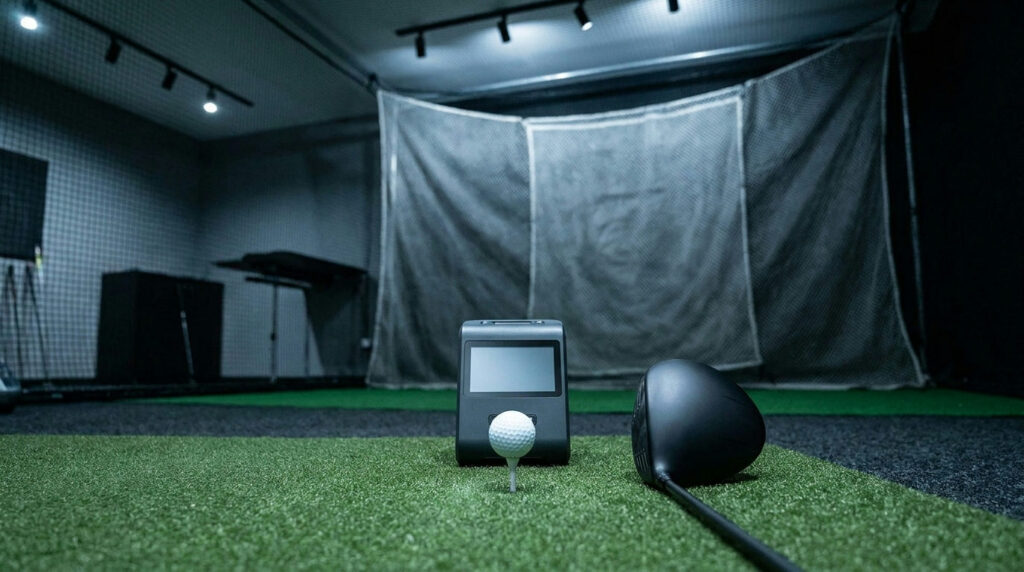
Launch Monitor Numbers Explained for Club Buyers
A plain-language guide to fitting printouts: ball speed, launch angle, spin, carry, smash factor and dispersion, and which numbers matter for each club.

A plain-language guide to fitting printouts: ball speed, launch angle, spin, carry, smash factor and dispersion, and which numbers matter for each club.

Use an iron-specific worksheet to understand measured specifications, actual comparison information and the next decision without promised gains or fixed prices.

Learn how to stop topping golf ball shots with practical drills that will improve your iron contact and consistency on the course.

Many new golfers struggle with a persistent slice, but learning how to fix golf slice for beginners can dramatically improve your game and enjoyment.

Better wedge distance control comes from predictable contact, repeatable swing lengths, consistent tempo, and knowing how far each wedge carries with different swings.

Learning to hit long irons higher starts with better contact, enough clubhead speed, proper ball position, and a balanced swing that lets the club’s loft work naturally.

Learning how to stop topping the golf ball starts with understanding why contact happens too high on the ball. Better posture, balance, ball position, and low-point control can help you produce cleaner strikes.

Learning to hit more fairways starts with improving your setup, contact, swing control, and target selection. These practical driver fixes can help you find more playable positions from the tee.
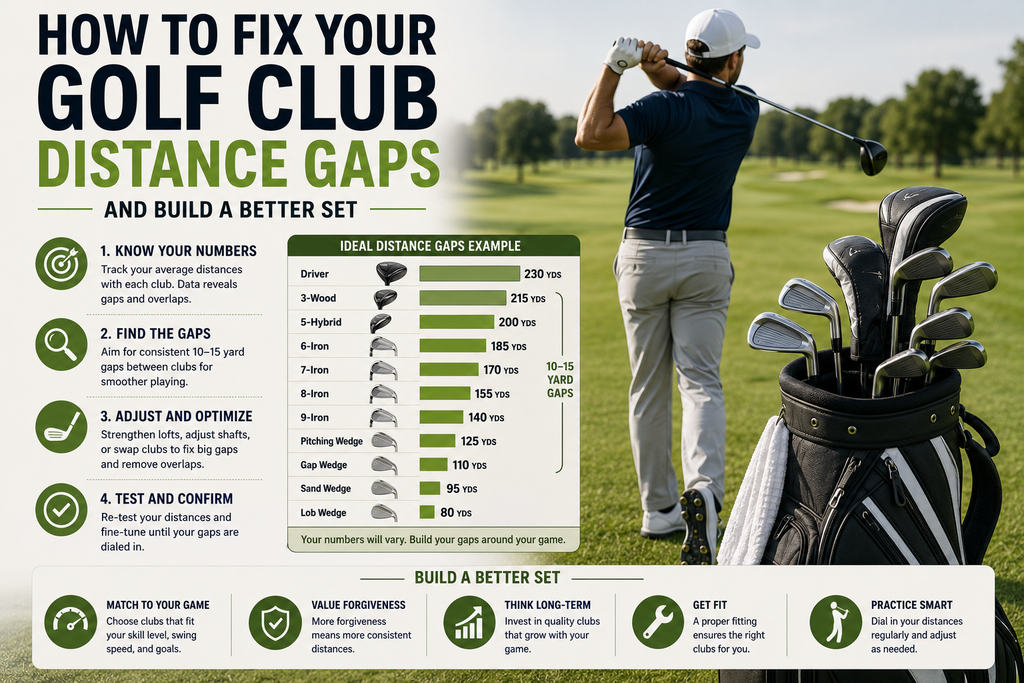
Poor golf club distance gaps can leave you between clubs and make approach shots harder. Learn how to measure your yardages and build a more useful set.
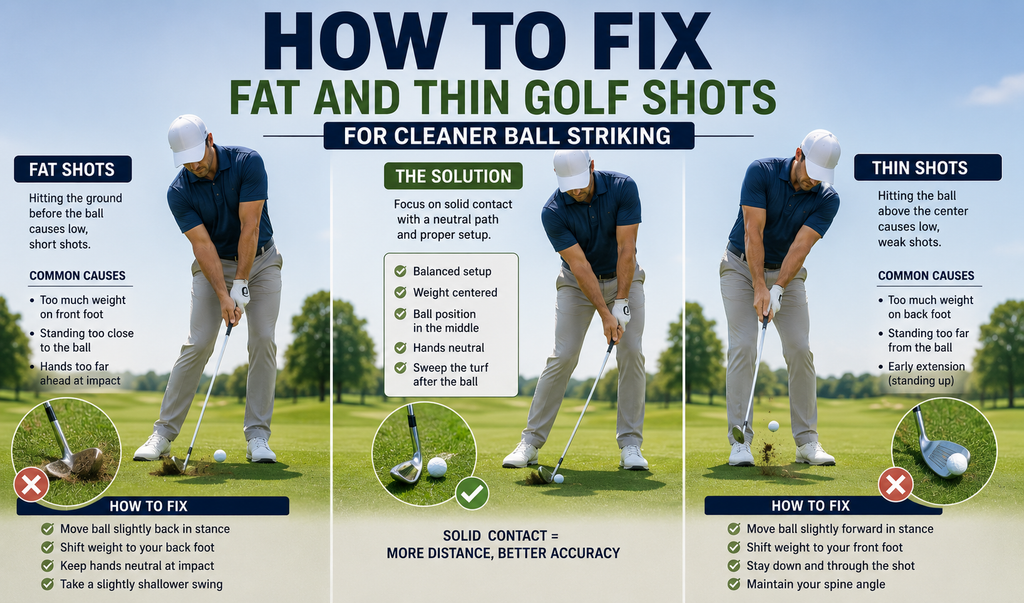
Learning to fix fat and thin shots starts with understanding where your swing reaches its lowest point. Better setup, balance, and contact can make your iron play far more consistent.